Best Korean Language Schools: Top Programs Ranked (2026)
Top 5 Korean language programs in 2026: 1) Yonsei KLI (most established, best for overall experience), 2) Sogang (best for speaking skills), 3) SNU (most prestigious), 4) Ewha (best campus, female-friendly), 5) Kyung Hee (best for TOPIK prep). All offer D-4 visa sponsorship and start from Level 1 (complete beginner).
Top University Programs Compared
| School | Strength | Tuition/Term | Location | Class Size |
|---|---|---|---|---|
| Yonsei KLI | Most established, balanced | ~$1,800 | Sinchon (central) | 12-15 |
| Sogang | Speaking-focused | ~$1,600 | Mapo (central) | 12-15 |
| SNU | Academic rigor, prestige | ~$1,700 | Gwanak (south) | 10-15 |
| Ewha | Beautiful campus, balanced | ~$1,600 | Sinchon (central) | 12-15 |
| Kyung Hee | TOPIK prep, grammar | ~$1,500 | Dongdaemun | 12-15 |
| Korea University | Campus life, networking | ~$1,600 | Anam (northeast) | 12-15 |
| Hanyang | Affordable, practical | ~$1,400 | Seongdong | 12-18 |
Best School by Learning Goal
- Speaking from day one
- Small group activities
- Less grammar, more practice
- Role-play and real-life scenarios
- Student satisfaction: highest
- Systematic grammar approach
- TOPIK prep integrated
- Strong reading/writing
- Academic Korean focus
- Good for university prep
- Balanced all-skills approach
- Largest international community
- Best cultural programs
- Central Sinchon location
- Most recognized name
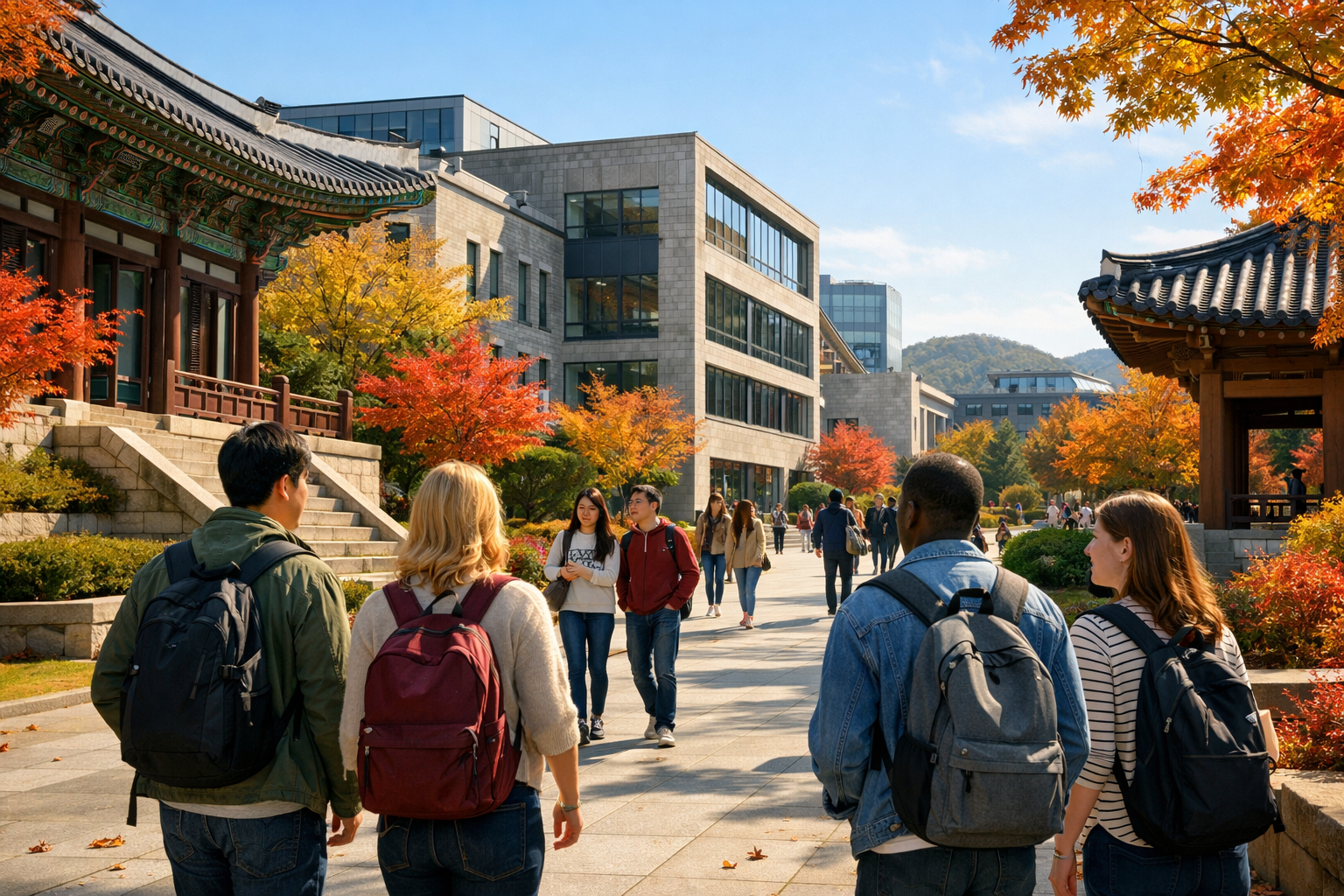
Schools in central Seoul (Yonsei, Sogang, Ewha — all near Sinchon/Hongdae) offer the best student social life and convenience. SNU’s Gwanak campus is more suburban but has a dedicated campus atmosphere. Consider commute time from your accommodation when choosing — Seoul traffic can add 30-60 minutes each way.
How to Choose the Right School
Define Your Goal
Want to speak fluently? Choose Sogang. Need TOPIK certification? Choose Kyung Hee. Want the best overall experience and name recognition? Choose Yonsei. Planning to continue to a Korean degree? Choose the university you want to attend for your degree.
Consider Location
Central Seoul schools (Sinchon area) offer the best nightlife, dining, and social opportunities. They’re also closest to Gangnam and major tourist areas. Suburban campuses (SNU, Kyung Hee) are quieter and better for focused study.
Check Reviews
Read current student reviews on Reddit (r/Korean, r/korea), Google reviews, and YouTube vlogs. Student experiences vary by term and teacher, so check the most recent reviews. Ask about class demographics and teaching style.
Budget Realistically
Factor in tuition + accommodation + living costs. Cheaper tuition may mean a longer commute (higher transport costs) or a less central location (higher isolation). The cheapest option isn’t always the best value overall.
Frequently Asked Questions
Which school has the most international students?
Yonsei KLI has the largest and most diverse international student body. It’s also the most well-known program internationally. Ewha and Sogang also have strong international communities. SNU tends to attract more academically focused students.
Can I switch schools between terms?
Yes, though it requires some paperwork (visa sponsor transfer). Some students start at one school and switch to another if they prefer a different teaching style. Credits/levels are generally transferable between major university programs.
Are private academies (hagwon) worth considering?
For flexibility: yes. Private academies offer part-time schedules (mornings only, evenings, weekends), month-to-month enrollment, and no visa commitment. For serious study and D-4 visa: university programs are better. Private academies cannot sponsor student visas.
What about studying outside Seoul (Busan, Jeju)?
Busan (Pusan National University, Dong-A University) and other cities offer Korean language programs at lower living costs. The trade-off: fewer international students, less English support, and a smaller social scene. For maximum immersion in Korean culture, non-Seoul cities can actually be better — you’re forced to use Korean more.