Korean Language Schools: Find the Course That Fits
Start with the time you have, the weekly study schedule you want and your total budget. Compare a university language programme with a private school, then confirm the current term dates, tuition and application requirements directly with your shortlist.
Use the comparisons below to plan your questions. This is a planning guide, not a school ranking or a guarantee of admission, a scholarship or a visa. Official school and government requirements take priority.
Types of Korean Language Programs
University Language Programs (어학당)
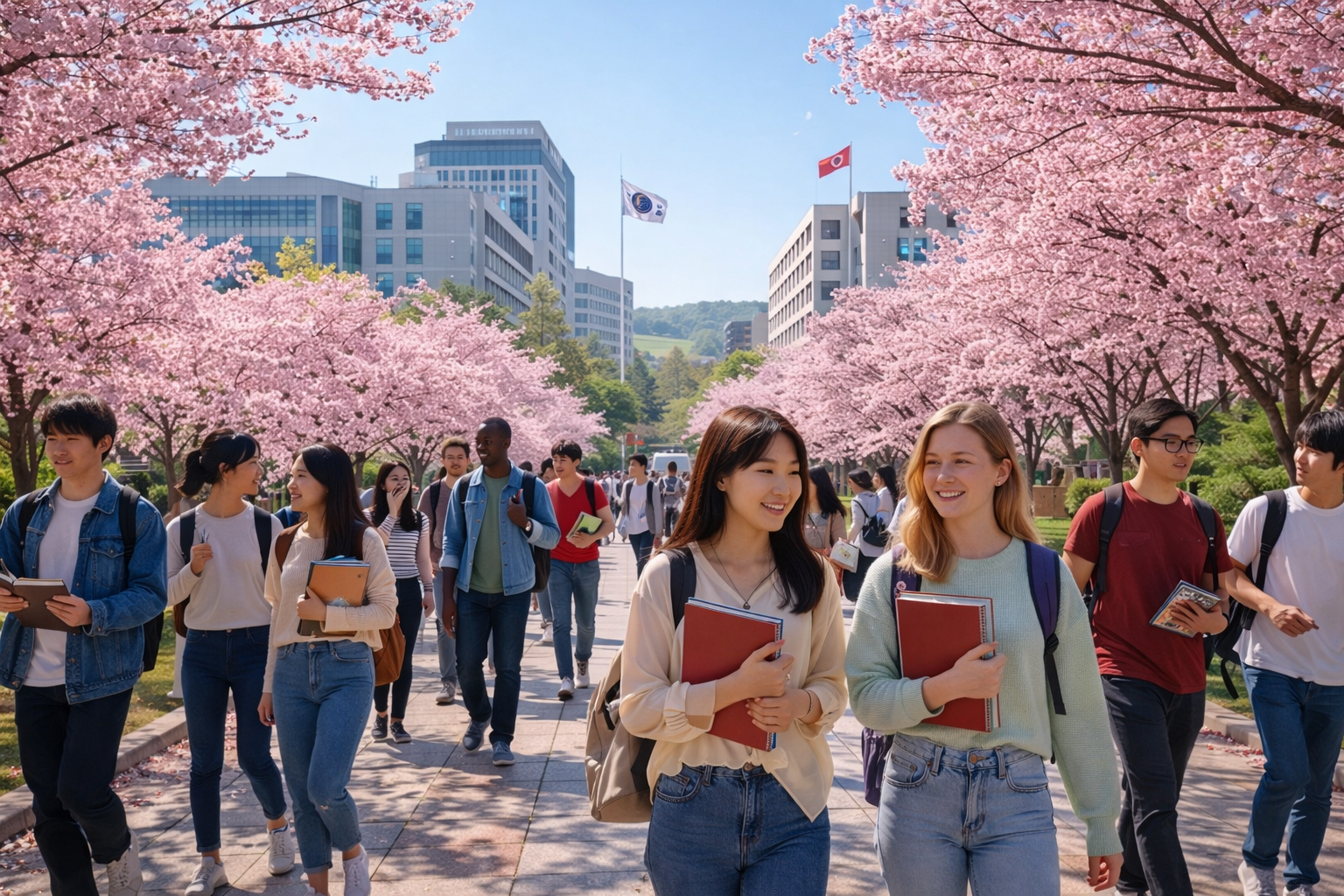
The most popular option for serious learners. Major Korean universities run intensive Korean language programs (10-20 hours/week) in 10-week terms. These programs are well-structured, follow TOPIK levels, and provide student visas.
Top university programs:
- Seoul National University (SNU) — Most prestigious. Academically rigorous. Competitive admission.
- Yonsei University — Oldest Korean language program. Strong reputation. Excellent for beginners.
- Korea University — Good balance of academics and social activities. Popular with international students.
- Sogang University — Known for conversation-focused teaching method. Best for practical speaking skills.
- Ewha Womans University — Open to all genders. Beautiful campus. Strong program.
Private Language Schools (학원)
More flexible schedules, smaller classes, and often cheaper than university programs. Good for short-term visitors or working professionals. Classes range from 2 hours/week to full-time intensive.
Online + In-Person Hybrid
Some schools offer online prep before arriving in Korea, then transition to in-person classes. Good for maximizing your time in Korea.
How Much Does It Cost?
| Program Type | Duration | Cost (USD) |
|---|---|---|
| University (per term) | 10 weeks | $1,300 – $1,800 |
| University (full year) | 4 terms | $5,200 – $7,200 |
| Private school (per month) | 4 weeks | $300 – $800 |
| Private tutoring | Per hour | $20 – $50 |
| Living expenses (Seoul) | Per month | $800 – $1,500 |
Scholarships
Several scholarships are available for international students studying Korean:
- Korean Government Scholarship (KGSP/GKS) — Full tuition + living stipend + airfare. Highly competitive. Requires 1 year of Korean language study before degree program.
- University-specific scholarships — Many universities offer partial tuition waivers (30-50%) based on grades, nationality, or TOPIK score.
- TOPIK score scholarships — Some programs offer discounts for students who already have a TOPIK level (usually level 3+).
- Country-specific programs — Some governments (Japan, Vietnam, etc.) have bilateral agreements with Korean universities.
Visa Requirements
- D-4 Visa (Language Training) — Required for programs over 90 days. Your school handles the invitation letter. Processing takes 2-4 weeks.
- Visa-free entry — Many nationalities can study for up to 90 days without a visa. Check your country’s agreement with Korea.
- Part-time work — D-4 visa holders can work up to 20 hours/week after 6 months of study (with permission).

What to Expect
Class Structure
University programs typically run Monday-Friday, 4 hours/day (9 AM – 1 PM). You’ll be placed in a level (1-6) based on a placement test. Each level takes one term (10 weeks) to complete. Levels roughly correspond to TOPIK levels.
Progression
| Level | TOPIK | Can Do |
|---|---|---|
| Level 1 | TOPIK 1 | Basic greetings, ordering food, simple conversations |
| Level 2 | TOPIK 2 | Daily life topics, shopping, directions |
| Level 3 | TOPIK 3 | Express opinions, understand news, social conversations |
| Level 4 | TOPIK 4 | Professional topics, university lectures, complex discussions |
| Level 5-6 | TOPIK 5-6 | Near-native fluency, academic writing, nuanced expression |
Student Life
- Housing: University dorms ($300-500/month), goshiwon ($250-400), officetel ($500-800)
- Language exchange: Most universities have language exchange programs pairing Korean and international students
- Cultural activities: Field trips, cooking classes, K-pop dance, taekwondo — included in most university programs
How to Choose
- Goal: Academic Korean → University program. Conversational Korean → Private school or Sogang.
- Budget: Private schools are cheaper per month. University programs offer more structure and visa support.
- Duration: Under 3 months → Private school. 6+ months → University program.
- Location: Seoul has the most options. Busan and Daegu offer lower living costs.
Next Steps
- Compare top schools — Find the right program for your goals
- Check costs — Tuition + living expenses breakdown
- Find scholarships — Financial aid opportunities
- Guide for foreigners — Practical tips for international students
- Travel essentials — SIM card, transport, and more