Korean Market Food: What to Eat at a Traditional Indoor Market
Korean traditional markets serve dishes you will not find in most restaurants. Bindaetteok at Gwangjang Market, fresh sashimi at Jagalchi and street snacks at Bupyeong night market each offer a different side of Korean food culture. This guide explains what to order, how to pay and which markets to choose by city.
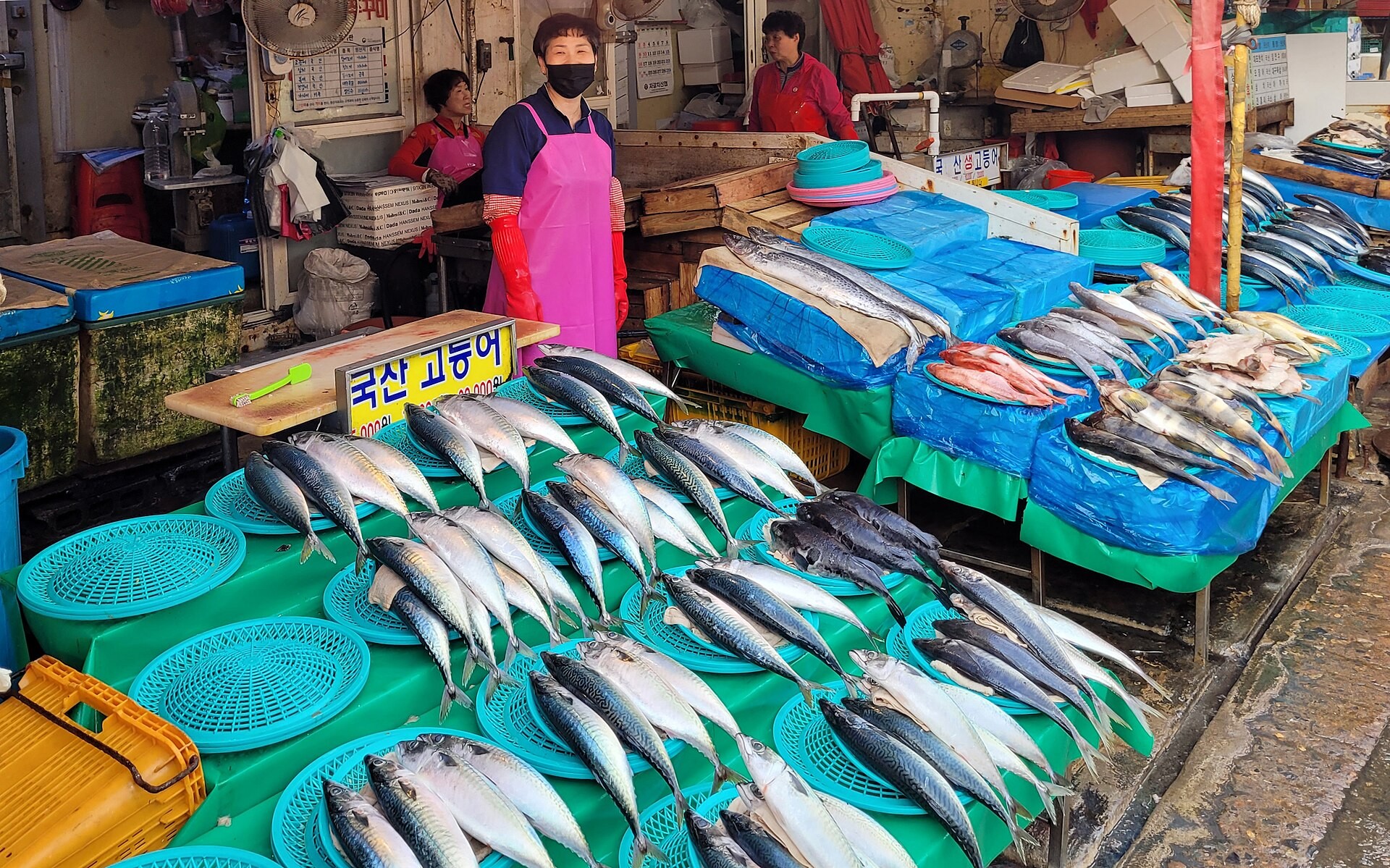
Photo credit
Bernard Gagnon / CC0. Resized/cropped for display; the photograph retains its license.

Gwangjang Market: Seoul's Most Accessible Food Market
Lunch or afternoon snack
Bindaetteok
Crispy mung bean pancake fried on a griddle, served with soy dipping sauce
Fit it into your day: Gwangjang Market food alley, Seoul
Snack between meals
Mayak gimbap
Bite-sized seaweed rice rolls with sesame oil, sometimes called addictive gimbap
Fit it into your day: Gwangjang Market food alley, Seoul
Gwangjang Market in Jongno-gu is one of Korea's oldest traditional markets and the most visited by international tourists. The main food alley runs through the center of the building, with vendors sitting behind low counters and cooking in front of you.
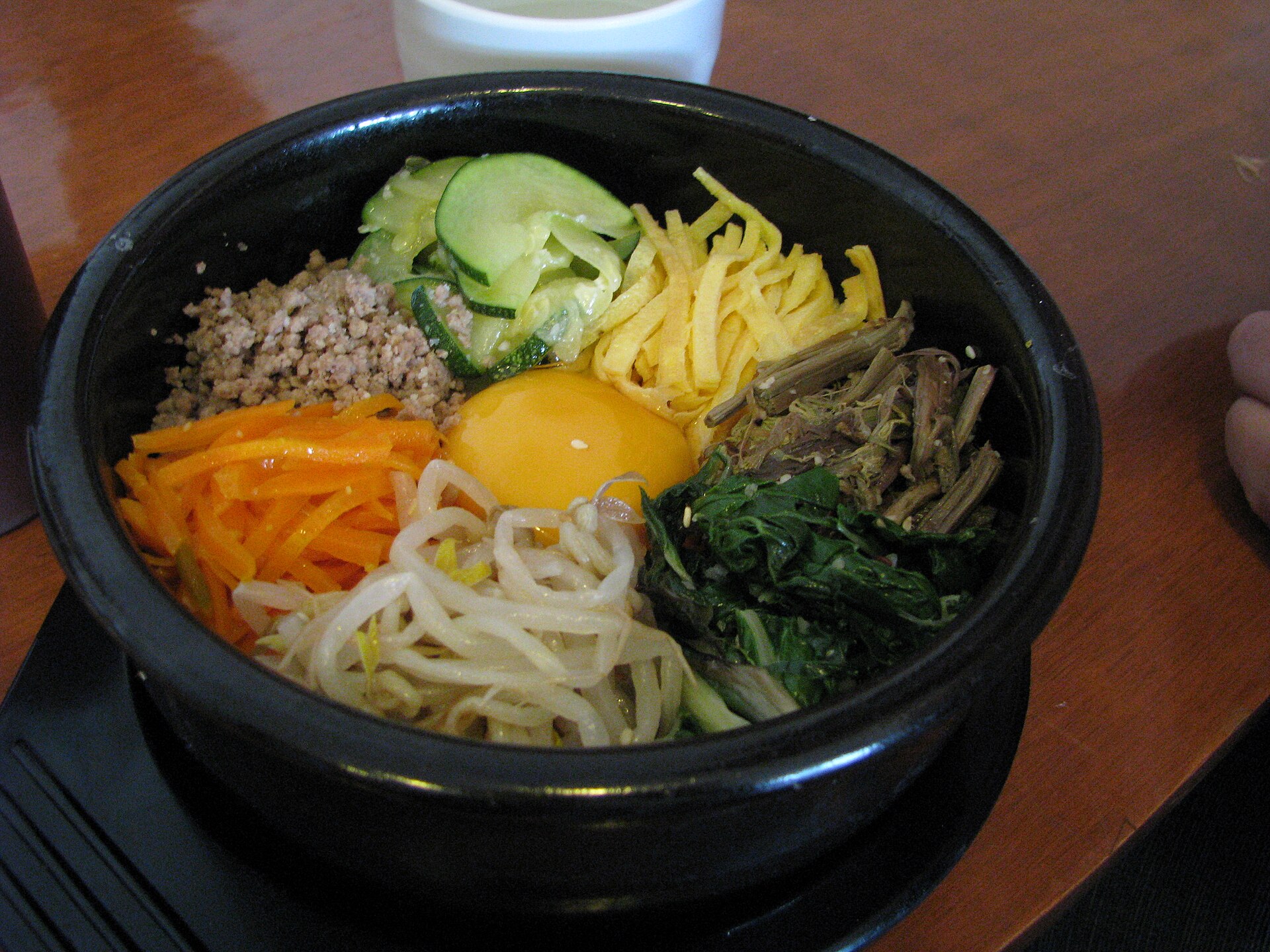
Photo credit
Jerine Lay / CC BY 2.0. Resized/cropped for display; the photograph retains its license.

The market is open daily and most food stalls operate from late morning through the evening. Seating is on shared benches beside the counter. Vendors are accustomed to non-Korean-speaking visitors and many have picture menus or numbered items you can point to.
The stall layout at Gwangjang follows a rough pattern: bindaetteok vendors cluster near the main entrance while mayak gimbap and tteokbokki stalls fill the interior alleys. Expect to share bench space with strangers and eat quickly, as turnover is fast during peak hours. Some vendors close their stalls when ingredients run out, so arriving before the lunch rush improves your chances.
Official reference: english.visitseoul.net
What Else to Try at Gwangjang Market
Afternoon snack
Tteokbokki
Chewy rice cakes in sweet and spicy red pepper sauce, a staple Korean street snack
Fit it into your day: Gwangjang Market, Seoul
Beyond the two signature items, Gwangjang Market offers tteokbokki, sundae (Korean blood sausage) and various banchan. The market has recently attracted younger visitors who combine traditional food stops with nearby pop-up stores and vintage shops.
For a sit-down meal, look for the knife-cut noodle stalls serving kalguksu in hot broth. The portions are large and prices remain lower than restaurant equivalents in the surrounding neighborhood.
Official reference: english.seoul.go.kr
Jagalchi Market: Fresh Seafood in Busan
Lunch
Hoe (raw fish sashimi)
Fresh-cut sashimi selected live from the market floor, served with perilla leaves and ssamjang
Fit it into your day: Jagalchi Market, Busan
Jagalchi Market is Korea's largest seafood market, located near Nampo-dong in Busan. The ground floor is a wet market where fishmongers display the day's catch on ice. You choose your fish and they prepare it as sashimi, known locally as hoe.
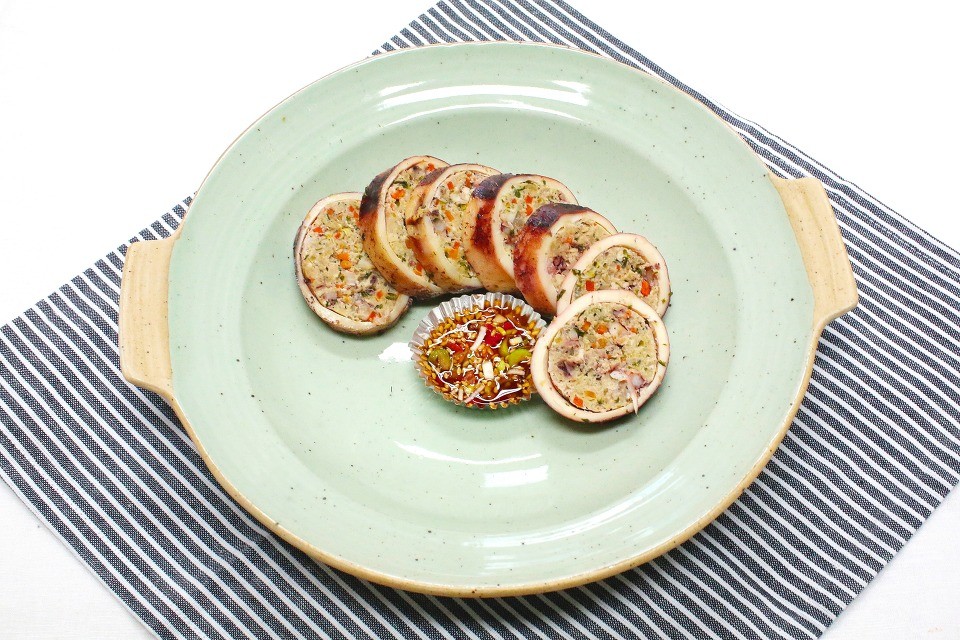
Photo credit
(Shinae Bang) 방신애 / CC BY 4.0. Resized/cropped for display; the photograph retains its license.

The upper floors house sit-down restaurants that cook your selection. Prices vary by season and catch. Squid, flatfish and sea bream are common choices. If raw fish is not your preference, grilled or stewed options are available at nearby stalls.
If you prefer cooked seafood over raw preparations, ask for a specific cooking style. Grilled fish and spicy seafood stew are common alternatives that use the same fresh ingredients. The ground floor vendors often display illustrated signs showing the available preparation methods, which helps when language is a barrier.
Official reference: english.visitkorea.or.kr
Bupyeong Kkangtong Night Market: Korea's First Permanent Night Market
Bupyeong Kkangtong Market in Busan holds the distinction of being Korea's first permanent night market. The covered arcade lights up in the evening with food stalls serving grilled skewers, dumplings, hotteok and other street snacks.
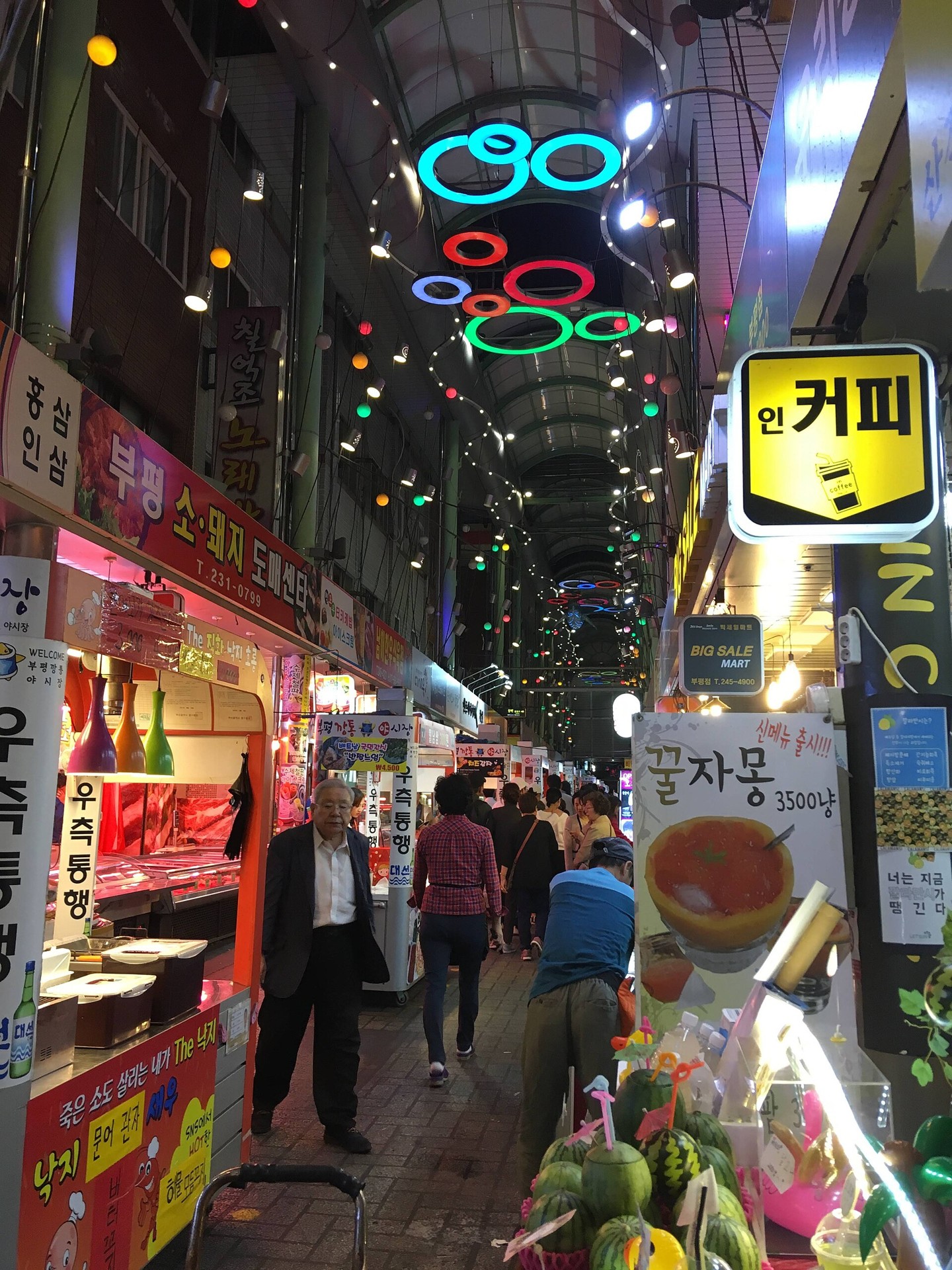
Photo credit
Christophe95 / CC BY-SA 4.0. Resized/cropped for display; the photograph retains its license.

The night market operates in the evening hours and draws a mix of locals and tourists. Unlike morning fish markets, Bupyeong is designed for casual browsing and eating while walking. The atmosphere is lively and vendors often offer small tasting portions.
The covered walkways protect visitors from rain, making Bupyeong a reliable evening option regardless of weather. Prices at the night market stalls tend to be slightly higher than daytime market equivalents, but portions are generous. The market connects to the broader Bupyeong commercial district, which has convenience stores and restrooms nearby.
Official reference: www.visitbusan.net
How to Order at a Korean Market Stall
Most traditional market stalls do not have English menus. Point at what you want or at what another customer is eating. Hold up fingers to indicate quantity. The phrase igeo juseyo, meaning this one please, works at nearly every stall.
Cash is still preferred at many market stalls, especially smaller ones. Carry small bills in denominations of one thousand and five thousand won. Larger stalls and the Jagalchi sit-down restaurants increasingly accept credit cards, but do not count on it everywhere.
- Point at the dish you want or use a photo on your phone.
- Show fingers for the number of servings.
- Say igeo juseyo (this one please) to confirm your order.
- Pay in cash with small bills; check if cards are accepted before ordering at sit-down counters.
Official reference: english.visitseoul.net
Which Market to Choose by City and Interest
In Seoul, start at Gwangjang Market for the widest variety of cooked food in one location. In Busan, Jagalchi is essential for seafood lovers, while Bupyeong suits evening visitors who prefer street food browsing to a sit-down meal.
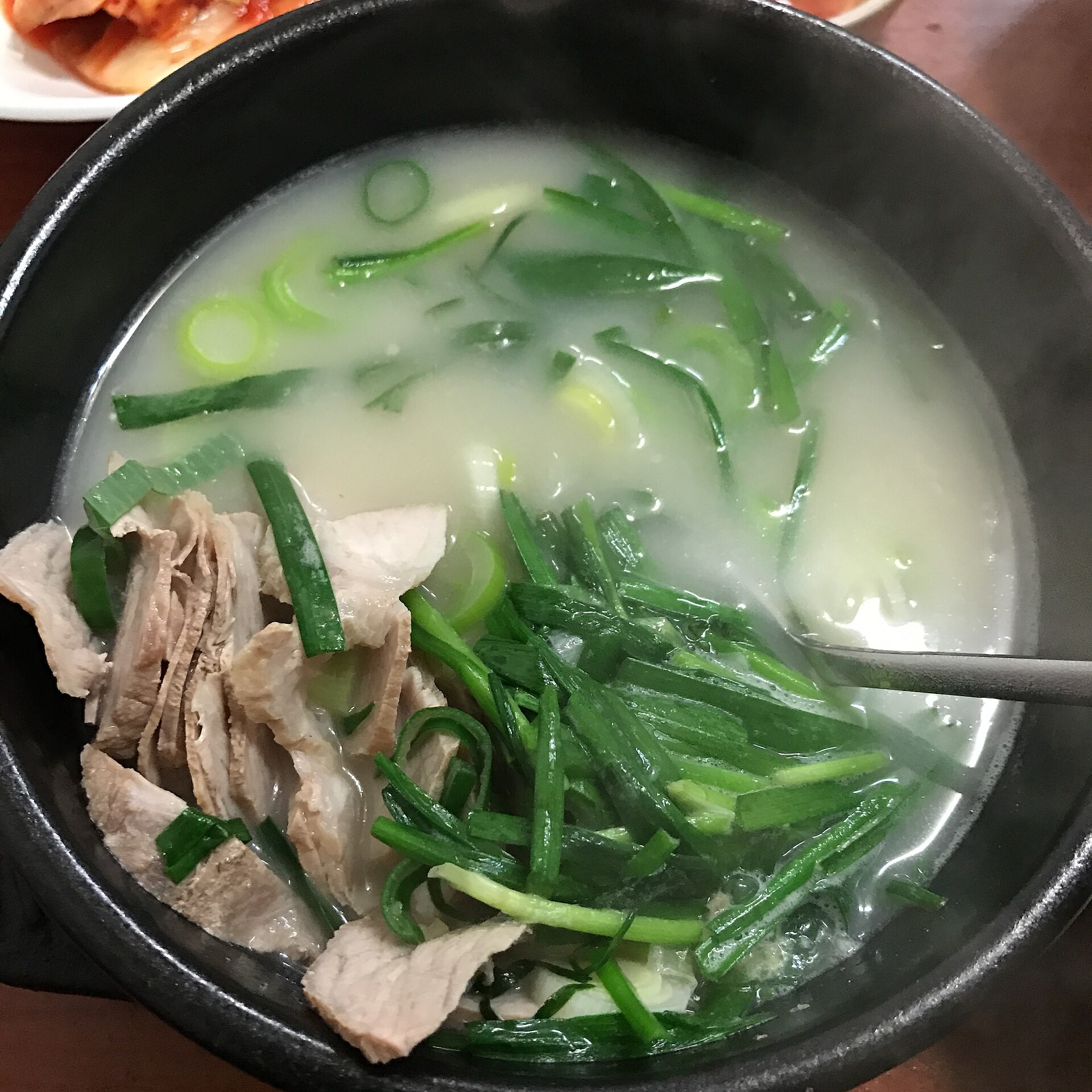

If your trip includes both cities, visiting Gwangjang in Seoul and Jagalchi in Busan gives you contrasting market experiences without repeating the same type of food.
| Market | City | Best For | When to Go |
|---|---|---|---|
| Gwangjang Market | Seoul | Bindaetteok, gimbap, noodles | Late morning to evening |
| Jagalchi Market | Busan | Fresh seafood and sashimi | Morning to afternoon |
| Bupyeong Night Market | Busan | Street snacks and atmosphere | Evening |
Official reference: www.visitbusan.net · english.visitseoul.net
Sources and trip notes
Official information checked 19 September 2026. Routes are editorial suggestions. Check date-specific conditions with the operator before travel; photographs are archival.
KEEP THE GOOD FINDS
This could be part of your Korea.
Save this guide alongside your other ideas. You can come back to compare, plan, or explore something new.