Gyeongju Historic Sites: A Practical Guide to the UNESCO Zones
The Gyeongju Historic Areas UNESCO inscription (2000) organises 52 cultural assets across five named zones: Daereungwon, Wolseong, Hwangnyongsa, Namsan and Sanseong. Bulguksa Temple and Seokguram Grotto are a separate 1995 listing. Three downtown zones are walkable in sequence; Bulguksa and Namsan each need a dedicated half-day trip away from the centre.
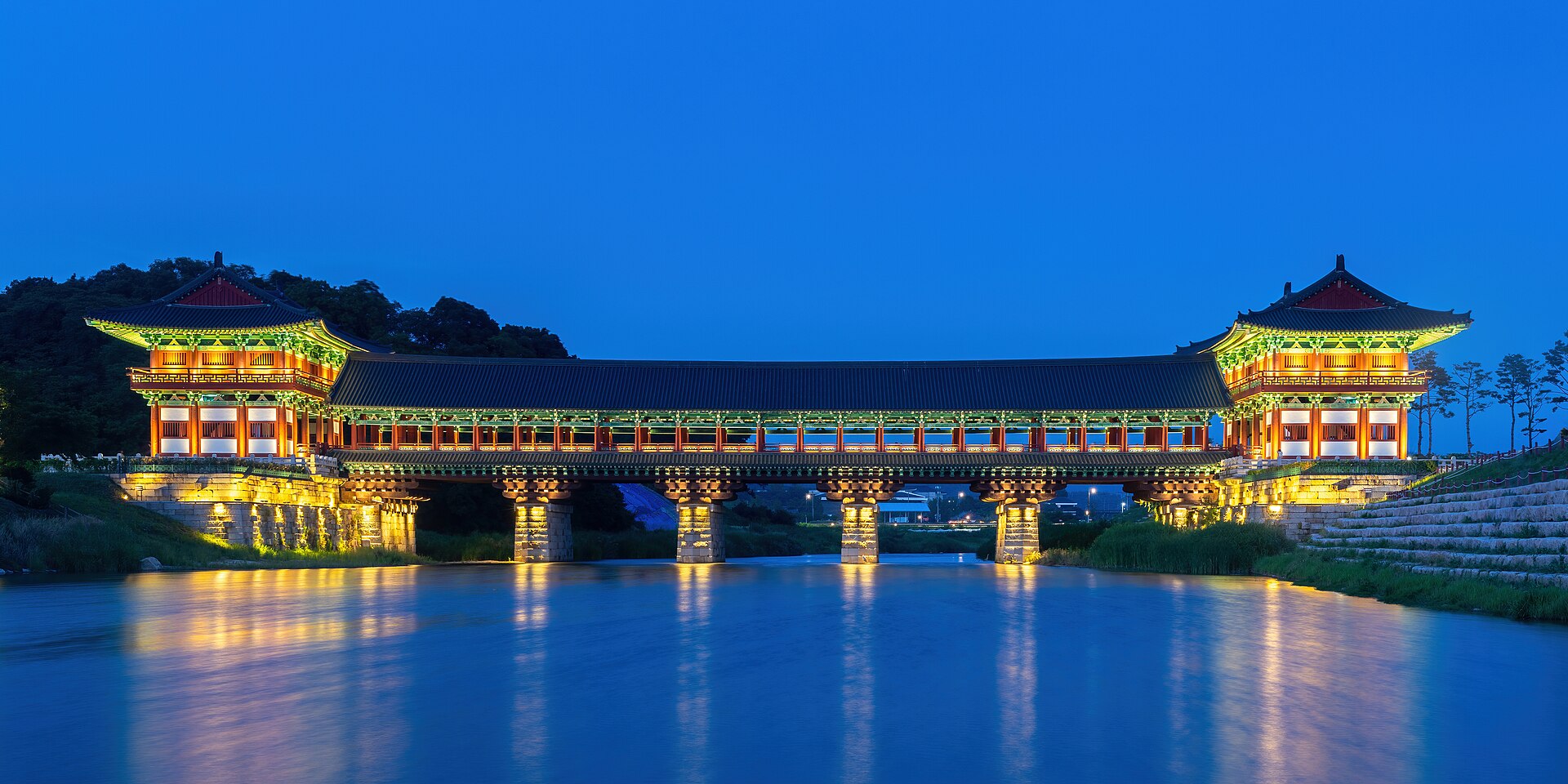
Photo credit
Basile Morin / CC BY-SA 4.0. Resized/cropped for display; the photograph retains its license.

Two UNESCO listings, not one — what the designation actually covers
Most visitors arrive thinking of Gyeongju as a single UNESCO site. It is actually two distinct inscriptions. Bulguksa Temple and Seokguram Grotto were listed in 1995. The Gyeongju Historic Areas, listed separately in November 2000, cover the former capital of the Silla Kingdom (57 BC–AD 935) and comprise 52 designated cultural assets spread across five named zones.
Understanding this split matters for planning: Bulguksa and Seokguram sit outside the city centre and require a bus or taxi, while three of the five Historic Area zones are within easy walking distance of each other downtown. Getting the geography clear before you arrive is the single most useful thing you can do.
The five zones at a glance
The overview below summarises what each zone contains, roughly where it sits, and how long a typical visit takes. The Wolseong, Daereungwon and Hwangnyongsa zones form a walkable downtown cluster. Namsan Mountain and the Sanseong area require separate planning.
| Zone | Key sites | Location | Realistic visit time | Transport from centre |
|---|---|---|---|---|
| 1 · Namsan | Extensive Buddhist art — rock-carved Buddhas, stone pagodas and relics across forested trails (KTO lists major treasures including Poseokjeong Pavilion Site, Rock-carved Buddhas in Tapgok Valley and Chilburam Hermitage among 37-plus Buddhist relics) | South of city | Half-day minimum per trail | Bus or taxi; not walkable |
| 2 · Wolseong | Cheomseongdae Observatory (National Treasure), Wolseong palace site, Donggung Palace & Wolji Pond, Gyerim Forest | Downtown | 2–3 hrs | Walkable from city centre |
| 3 · Daereungwon | Royal burial mounds of the Silla period; Cheonmachong is the tomb visitors can enter | Downtown | 1–1.5 hrs | Walkable; 2 min from Cheomseongdae |
| 4 · Hwangnyongsa | Foundation stones of Hwangnyongsa Temple site; Bunhwangsa Stone Pagoda nearby | Near downtown | 30–45 min | Short walk or bike from Wolseong |
| 5 · Sanseong | Myeonghwalsanseong Fortress defensive walls (estimated c. 400 years old) | Hills east of city | 1–2 hrs | Taxi or car recommended |
Daereungwon Tomb Complex — the downtown centrepiece
Daereungwon is where most first-time visitors anchor their day. The complex contains a cluster of grass-covered royal burial mounds from the Silla period in the heart of the city, and walking the looping path among them — particularly near sunset — gives a strong sense of the scale at which Silla royalty was commemorated.
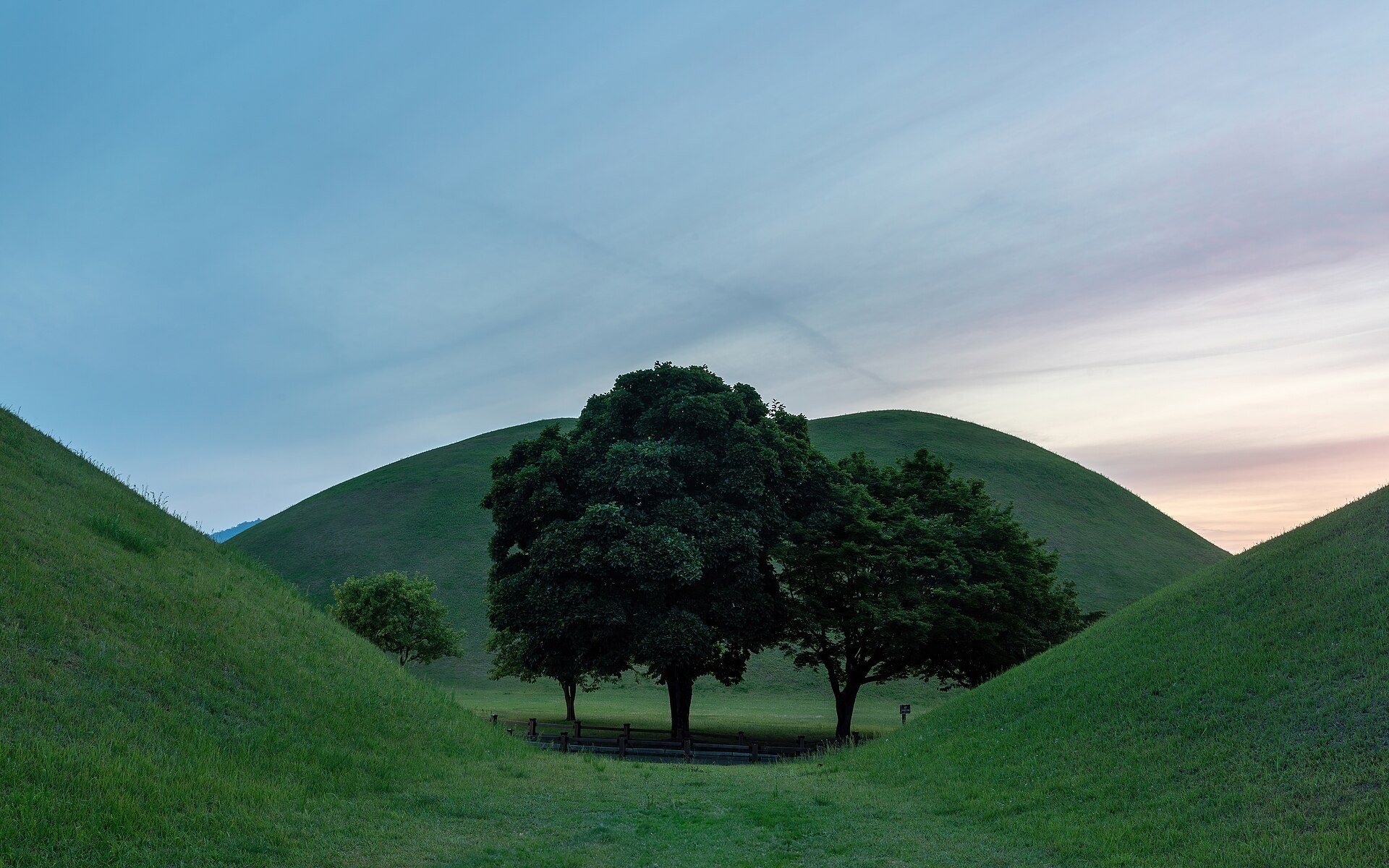
Photo credit
Basile Morin / CC BY-SA 4.0. Resized/cropped for display; the photograph retains its license.

Cheonmachong is the tomb visitors can enter. It takes its name from the Cheonmado, a painting of a flying horse discovered on a saddle flap inside and described by KTO as a historically significant artefact. According to KTO, the main gate is open 09:00–22:00 (last admission 21:30), with the rear gate and Cheonmachong Tomb on slightly shorter hours (09:00–21:30). A small admission fee applies: adults 3,000 won, teenagers 2,000 won, children 1,000 won. Budget around 90 minutes to walk the complex at a relaxed pace.
Official reference: english.visitkorea.or.kr
Wolseong District — observatory, palace ruins and the pond
The Wolseong zone packs three very different experiences within a short walk of each other. Cheomseongdae Observatory is the natural first stop — built during the reign of Queen Seondeok in the Silla period and designated a National Treasure, and described by KTO as the oldest observatory in Asia. It stands in an open field and can be circled in ten minutes, but many visitors stay longer to photograph it in different light. Entry is free. KTO lists summer hours as 09:00–22:00 and winter hours as 09:00–21:00.
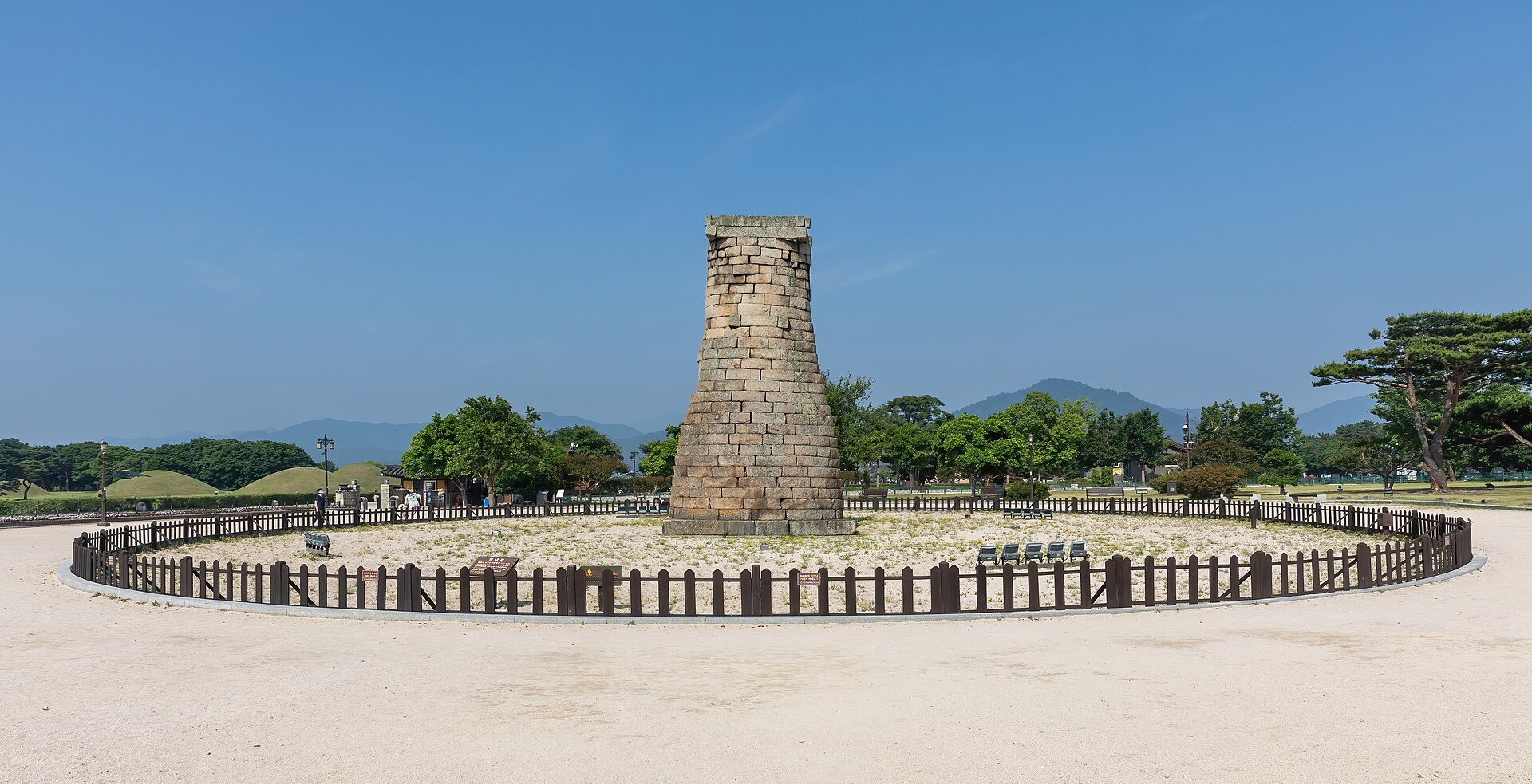
Photo credit
Basile Morin / CC BY-SA 4.0. Resized/cropped for display; the photograph retains its license.

The Wolseong zone also includes Gyerim Forest, listed as a Historic Site, which is accessible on the walking trail linking Cheomseongdae to the Tomb of King Naemul and surrounding heritages according to KTO.
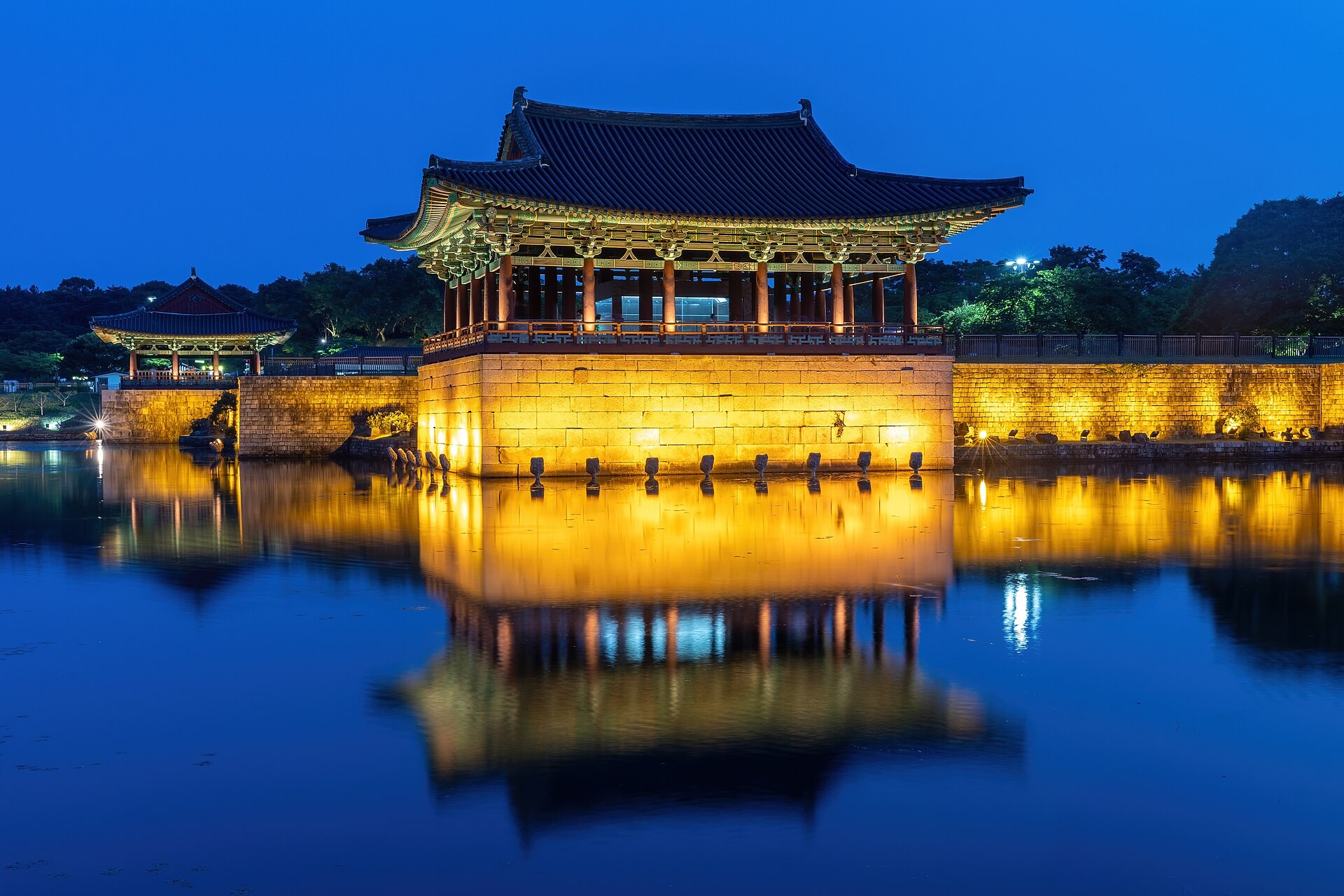
Photo credit
Basile Morin / CC BY-SA 4.0. Resized/cropped for display; the photograph retains its license.

Donggung Palace and Wolji Pond is the third major stop in this zone. The reconstructed palace buildings reflected in the still water of the pond are one of Gyeongju's signature images, and the effect is strongest at blue hour — roughly 30–40 minutes after sunset — when the building lights come on and the sky still holds colour. Plan to be here in the early evening if possible.
Official reference: english.visitkorea.or.kr · english.visitkorea.or.kr
Bulguksa Temple and Seokguram Grotto — the separate 1995 listing
Bulguksa and Seokguram are the sites most people picture when they hear 'Gyeongju UNESCO', yet they are not part of the five-zone Historic Areas. They form their own inscription, listed in 1995. Both sit outside downtown Gyeongju and require a bus or taxi from the city centre. A separate shuttle or taxi continues up the mountain to Seokguram from Bulguksa.
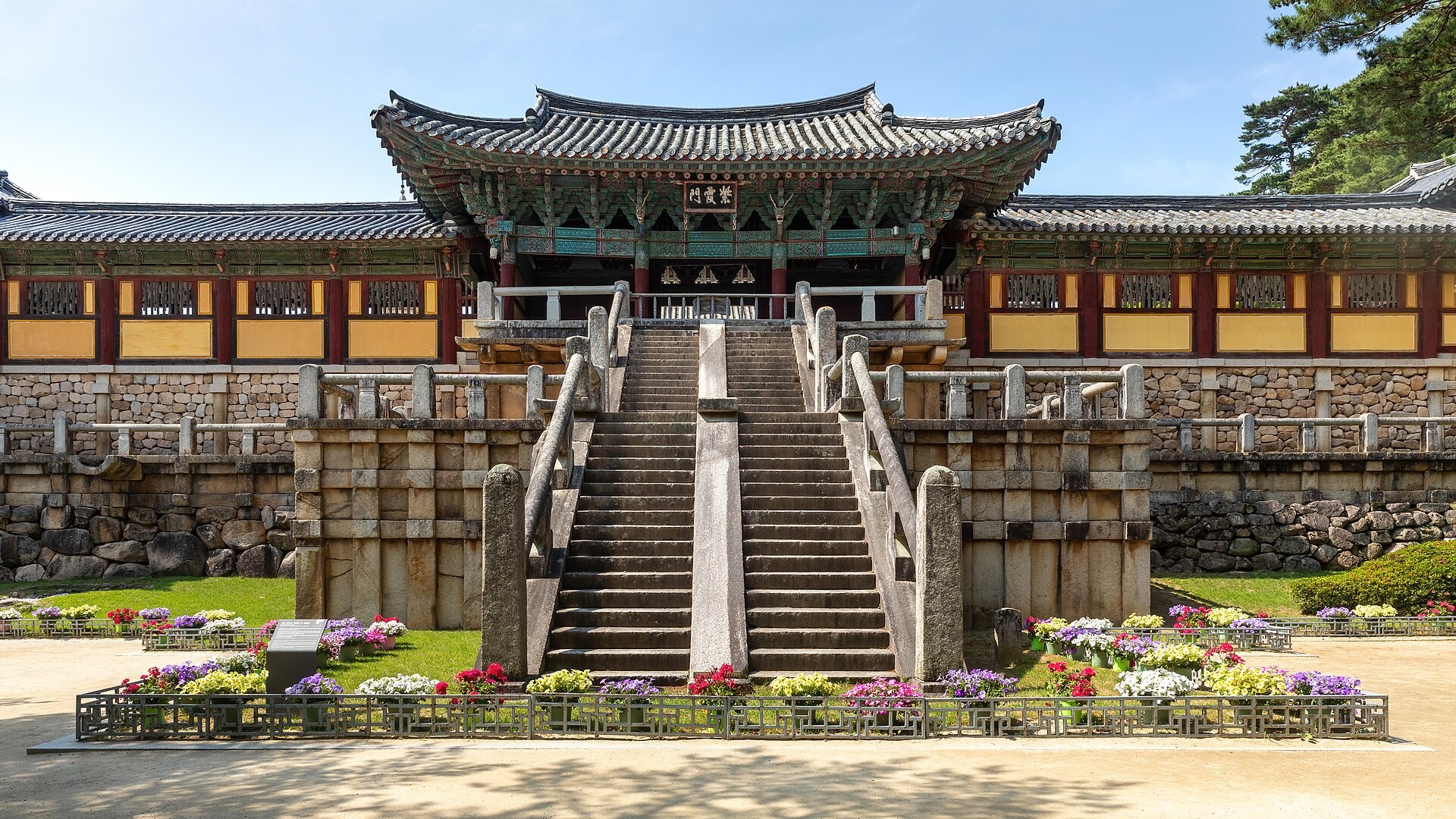
Photo credit
Basile Morin / CC BY-SA 4.0. Resized/cropped for display; the photograph retains its license.

The temple and grotto together deserve a dedicated half-day — attempting to squeeze them into a downtown loop on the same day means either rushing the tombs or missing the grotto entirely. Treat it as a morning excursion: take the bus out early, visit Seokguram before the midday crowds, and be back downtown by early afternoon.
How to sequence one day or two days
One day is possible but requires clear priorities. The most practical single-day sequence: take the first morning bus to Bulguksa, visit Seokguram, and return to the city centre by early afternoon. Then walk the downtown loop — Daereungwon first (ticket required, around 90 minutes), then Cheomseongdae (free, 30 minutes), then a late-afternoon wander through Gyerim Forest and the Wolseong grounds. Time your arrival at Donggung and Wolji Pond for blue hour. Hwangnyongsa fits between Wolseong and the pond if you have energy; it adds around 45 minutes.
Two days is the more comfortable choice, and it allows Namsan Mountain or a more relaxed Bulguksa visit. A natural split: Day 1 for Bulguksa and Seokguram in the morning, then the downtown walkable loop in the afternoon and evening. Day 2 for Namsan — choose your trail the night before — plus the Sanseong fortress area if that appeals. The Sanseong zone (Myeonghwalsanseong Fortress) is the least-visited of the five and the least essential for first-time visitors; skip it if time is short.
An overnight stay in Gyeongju almost always results in a better trip than a very long day excursion, particularly because the Donggung and Wolji Pond blue-hour window — one of the city's finest experiences — falls in the evening.
Official reference: english.visitkorea.or.kr · english.visitkorea.or.kr
Sources and trip notes
Official information checked 15 September 2026. Routes are editorial suggestions. Check date-specific conditions with the operator before travel; photographs are archival.
KEEP THE GOOD FINDS
This could be part of your Korea.
Save this guide alongside your other ideas. You can come back to compare, plan, or explore something new.