Korea Train Travel: How to Book, Board and Get the Most from the KTX and ITX Network
Korea's intercity rail network links Seoul to Busan, Jeonju, Gangneung and dozens of other cities quickly and comfortably. Choose between high-speed KTX or SRT and slower ITX or Mugunghwa trains depending on your route, book online up to one month in advance, and walk straight to the platform — no ticket barriers to pass.
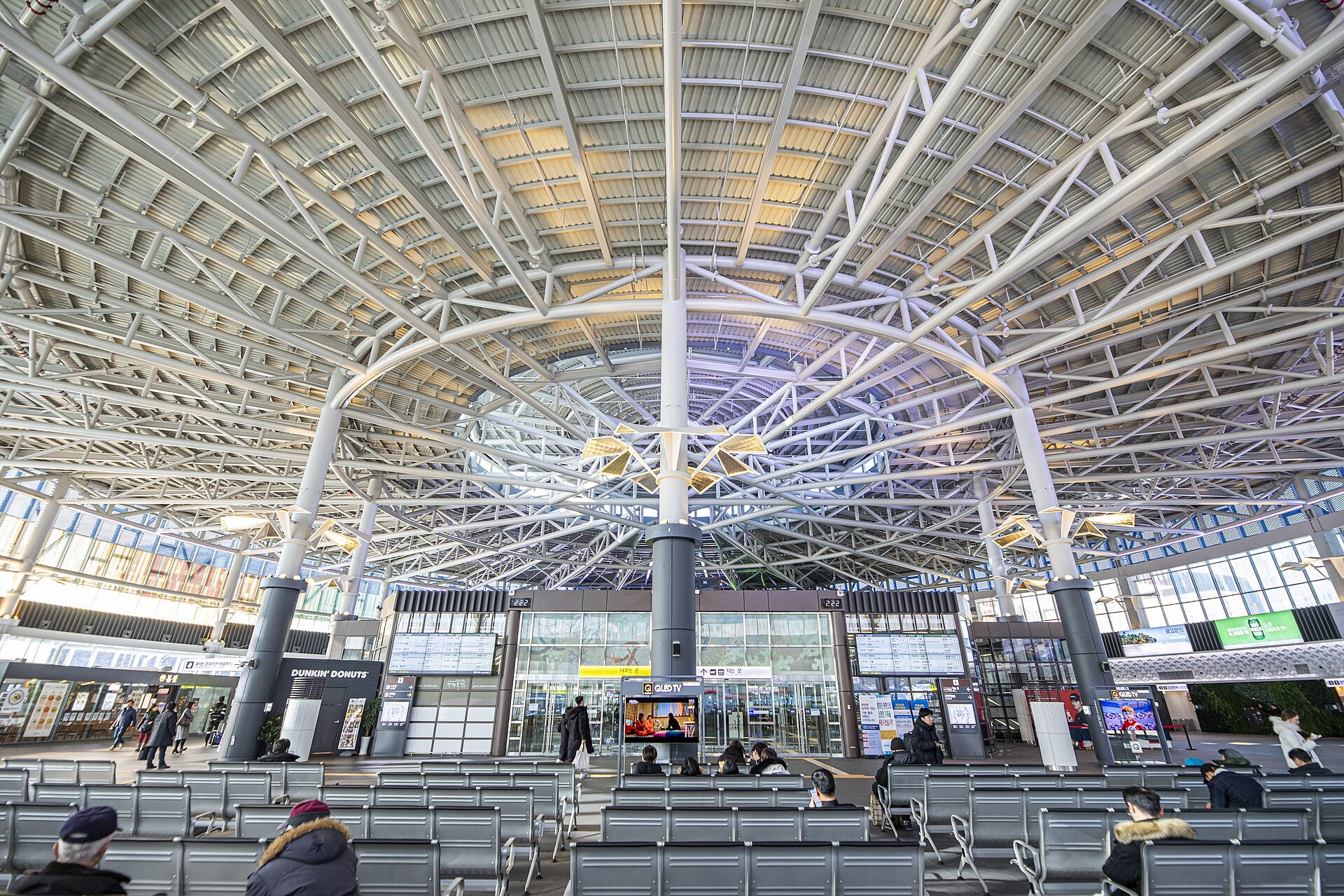
Photo credit
Arne Müseler / CC BY-SA 3.0 de. Resized/cropped for display; the photograph retains its license.

Which train should you take — KTX, SRT, ITX or Mugunghwa?
The most important distinction for first-time visitors is not speed but departure station. KTX and SRT are both high-speed, but they leave from entirely different parts of Seoul. Mixing them up is the most common source of confusion and missed trains.
KTX departs from Seoul Station, Yongsan Station and Cheongnyangni Station, reaching Busan, Pohang, Mokpo, Yeosu, Gangneung and other cities at up to 330 km/h. SRT leaves from Suseo Station — on the Gangnam side — and serves Busan and Mokpo at up to 300 km/h. If your accommodation is in Gangnam and you are heading to Busan or Mokpo, SRT may save you a subway leg; otherwise KTX from Seoul Station or Yongsan is the default.
ITX-Cheongchun connects Yongsan to Chuncheon at up to 180 km/h and is the train to take for that northeastern corridor. ITX-Saemaeul is a premium conventional train on the main Gyeongbu and Honam lines, useful when KTX seats are sold out and you want a reserved seat. Mugunghwa is a conventional train that stops at smaller stations that high-speed trains bypass, making it valuable for off-the-beaten-path destinations.
Tourist trains operate on themed routes to mountain, coastal and market destinations and are a separate category; check the KORAIL website for current offerings as routes and schedules change seasonally.
| Train | Max speed | Main Seoul departure station(s) | Best for |
|---|---|---|---|
| KTX | 330 km/h | Seoul Station, Yongsan, Cheongnyangni | Busan, Mokpo, Gangneung, Yeosu, Pohang |
| SRT | 300 km/h | Suseo (Gangnam) | Busan, Mokpo — if starting from Gangnam |
| ITX-Cheongchun | 180 km/h | Yongsan | Chuncheon |
| ITX-Saemaeul | — | Seoul Station, Yongsan, Cheongnyangni | Backup when KTX is full; reserved seating |
| Mugunghwa | — | Seoul Station, Yongsan, Cheongnyangni | Small intermediate stations; budget travel |
Official reference: english.visitkorea.or.kr
Which Seoul station does your train leave from?
Seoul Station is the hub for Gyeongbu Line trains heading south toward Daejeon and Busan, and for trains on the Gangneung Line heading east. Yongsan Station — a few stops south on subway Line 1 — is the main departure point for Honam Line trains toward Jeonju, Gwangju and Mokpo. Many visitors searching only from Seoul Station find fewer options or sold-out seats on popular routes like Seoul–Jeonju; switching the departure field to Yongsan often reveals more availability.
Cheongnyangni Station in northeastern Seoul serves trains toward Gangneung on the east coast and the Andong-bound corridor. Suseo Station is the exclusive departure point for SRT. Knowing which station you need before you leave your accommodation prevents a last-minute scramble across the city.
How far in advance can you book, and how quickly do trains sell out?
Tickets go on sale at 07:00 KST exactly one month before the departure date. For popular routes — Seoul to Busan or Seoul to Jeonju on weekends, public holidays and during autumn festival season — seats on the most convenient KTX departures can sell out quickly after opening. Booking the moment sales open for those dates is the safest strategy.
According to VisitKorea, the online booking window closes 20 minutes before departure; in the case of apps, tickets can be purchased even right before the train leaves. Station kiosks and counters are best used well ahead of your departure time during busy periods.
If your travel dates are flexible, mid-week departures on most routes tend to have more availability than Friday evenings and Sunday afternoons.
Where to buy your ticket: website, app, kiosk or counter
Foreigners can book without a Korean phone number or local identity verification through the KORAIL English website at korail.com, which accepts overseas-issued Visa and Mastercard through a dedicated foreigners' payment window. The KORAIL-Talk app offers the same functionality. After payment, an e-ticket arrives by email or displays in the app as a QR code — screenshot it as a backup before you lose mobile signal underground.
NAVER Train Booking and KakaoT also connect to the KORAIL system. Third-party global platforms such as Klook support multi-currency payment and issue a digital voucher that works at the platform, which suits travelers who prefer a single booking interface for multiple activities.
Station kiosks support multiple languages and accept overseas credit cards; they are the reliable fallback if online payment fails. Manned counters at major stations can assist with complex itineraries. For SRT, bookings are made separately through the SRT website or app, not through KORAIL.
If you are departing from or connecting through Incheon International Airport, the Korail Pass+ — the integrated rail and transit card for international visitors — can be picked up and topped up at dedicated kiosks at the airport and at Seoul Station.
KORAIL Pass vs. individual tickets: which fits your trip?
The KORAIL Pass is designed for international visitors making multiple intercity journeys. It comes in 2-, 3-, 4- and 5-day flexible options, all usable within a 10-day window from first activation. Within those travel days you get unlimited use of standard-class cabins and can make seat reservations up to twice per day. Standing-room tickets can be added an unlimited number of times on top of those reservations.
Upgrading to first class with a KORAIL Pass costs only 50% of the normal first-class fare difference. Important exceptions: SRT trains, Seoul subway lines and temporary special tourist trains are not covered by the pass. If your itinerary relies entirely on SRT out of Suseo, the pass will not help you on those legs.
For a focused two- or three-city trip — say, Seoul to Busan and back — individual tickets are often more economical and give you full flexibility on departure times without using a pass day. Pass terms are non-changeable after purchase, so confirm your itinerary before buying.
Seat selection: class, direction and car number
Online booking lets you choose your exact seat by clicking the seat map after selecting your train. Standard class on KTX has four seats per row; first class has three, with more legroom.
Some trains have seats positioned in two directions: forward-facing and backward-facing. According to VisitKorea, you can choose your preferred orientation when booking online. If motion sickness is a concern, a forward-facing seat tends to feel steadier. Your car number and seat number are printed on the ticket — note both before boarding, as the train is long and coaches are not always arranged in obvious order on the platform.
Boarding: no barriers, just check the display board
Korean intercity train stations do not have platform barriers or turnstiles. You do not scan or insert your ticket to reach the platform — you simply walk through. This surprises many first-time visitors who expect a gate system similar to airports or some European rail networks.
Instead, find the large electronic display board inside the station concourse. It lists each train by number (for example, KTX 511), its destination and the platform track number. Once you see your train and track, proceed directly to that platform, locate the car number marked on the platform floor or overhead signs, and board.
Keep your ticket or e-ticket visible on your phone during the journey. Ticket inspectors check on board, and sitting in the wrong reserved seat carries a penalty surcharge. If another passenger is in your seat, show them your ticket — seat assignments are fixed and the inspector will resolve any dispute.
What to do if the KTX you want is fully sold out
A sold-out KTX does not mean the trip is impossible — it means choosing a different strategy. The first option is a standing-room ticket on the same sold-out train. You pay the full fare but have no assigned seat. This is a legitimate KORAIL option and is available an unlimited number of times for KORAIL Pass holders.
If you are traveling on the Gyeongbu or Honam corridor and can get to Suseo Station, check SRT availability — it runs parallel high-speed services and its booking system is separate, so it sometimes has seats when KORAIL is full. For the Seoul–Jeonju route specifically, the Visit Jeonju transportation guide notes that direct SRT trains to Jeonju are limited, but an SRT to Iksan Station with a transfer to a Mugunghwa or ITX for the short Iksan–Jeonju leg (around 15–20 minutes) is a practical alternative.
ITX-Saemaeul offers reserved seating on the same Gyeongbu and Honam routes and is a viable fallback when high-speed trains are fully booked.
Sources and trip notes
Official information checked 15 September 2026. Routes are editorial suggestions. Check date-specific conditions with the operator before travel; photographs are archival.
KEEP THE GOOD FINDS
This could be part of your Korea.
Save this guide alongside your other ideas. You can come back to compare, plan, or explore something new.