How Many Days in Busan Is Enough? An Honest Answer by Trip Style
Two full days lets you touch Busan's headline sights but leaves little breathing room. Three days is the comfortable minimum for most first-timers, covering all three of the city's main zones. A fourth day suits culture-focused travelers or anyone adding a Gyeongju leg. The right answer depends on your trip style — here is how to decide.
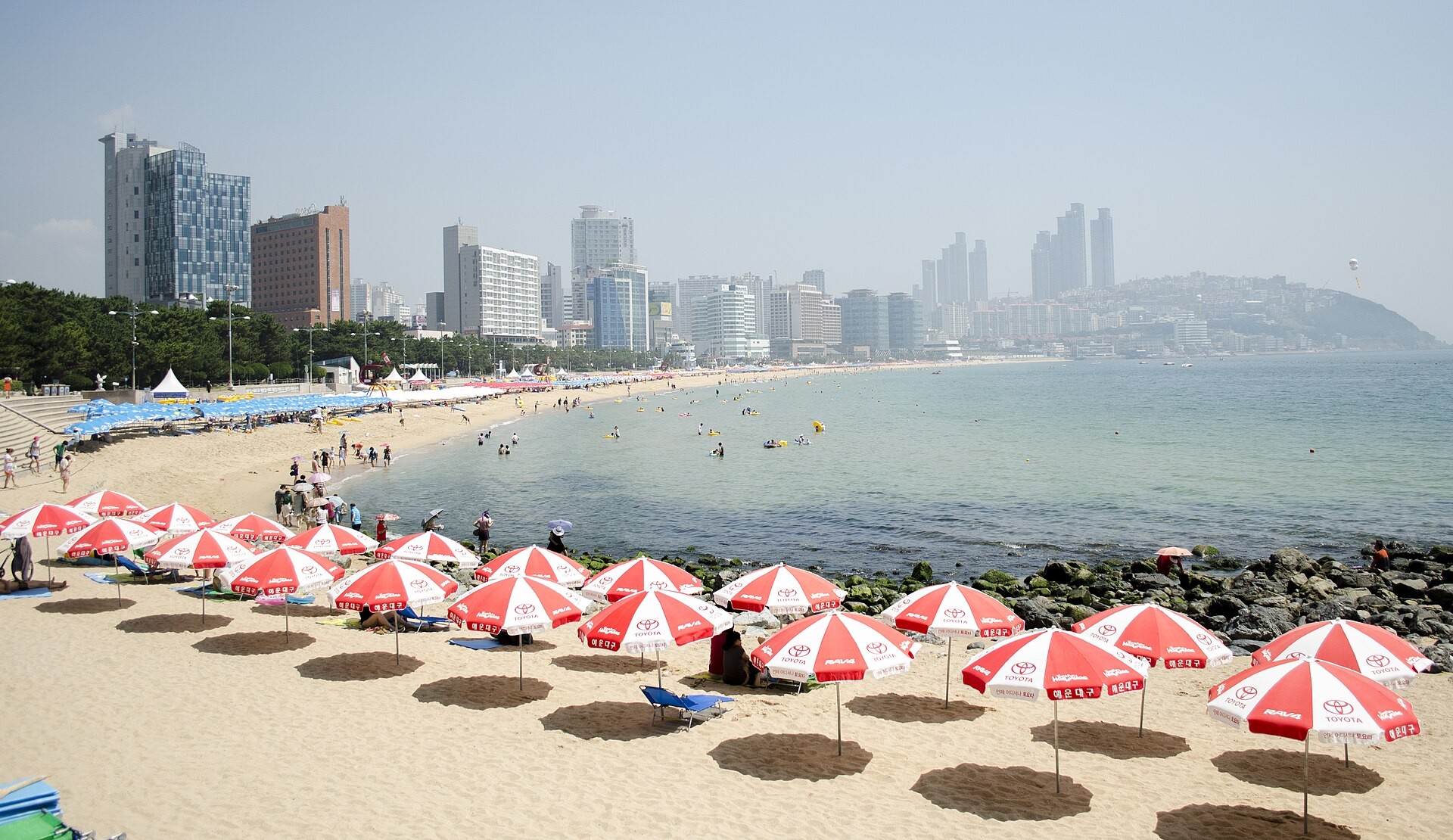
Photo credit
StephNurnberg / CC BY 2.0. Resized/cropped for display; the photograph retains its license.

Why days in Busan map to zones, not just sights
Busan is a long, coastal city where the main tourist areas are separated by real distance. East Busan — Haeundae Beach and Gwangalli — sits at one end of Metro Line 2. Central Busan — Nampo-dong, Jagalchi Market and BIFF Plaza — clusters around Metro Line 1. West Busan — Gamcheon Culture Village — requires a village bus transfer on top of the metro. You cannot comfortably combine all three zones in a single day without skipping most of what makes each one worth visiting.
That geographic spread is the main reason two days feels tight. Each additional day essentially unlocks the next zone and its food stops. If you plan your days around zones rather than individual sights, the sequence becomes logical and the commuting time drops considerably.
Day 1 — Haeundae Beach, Dongbaek Island and a Gwangalli evening
Haeundae Beach draws visitors year-round, not only in summer, and its 1.5 km white sandy stretch takes a relaxed morning to walk end to end. At the eastern edge of the beach, the Dongbaek coastal trail loops through a forested headland with open sea views — a straightforward walk that pairs naturally with the beach without requiring a separate trip.
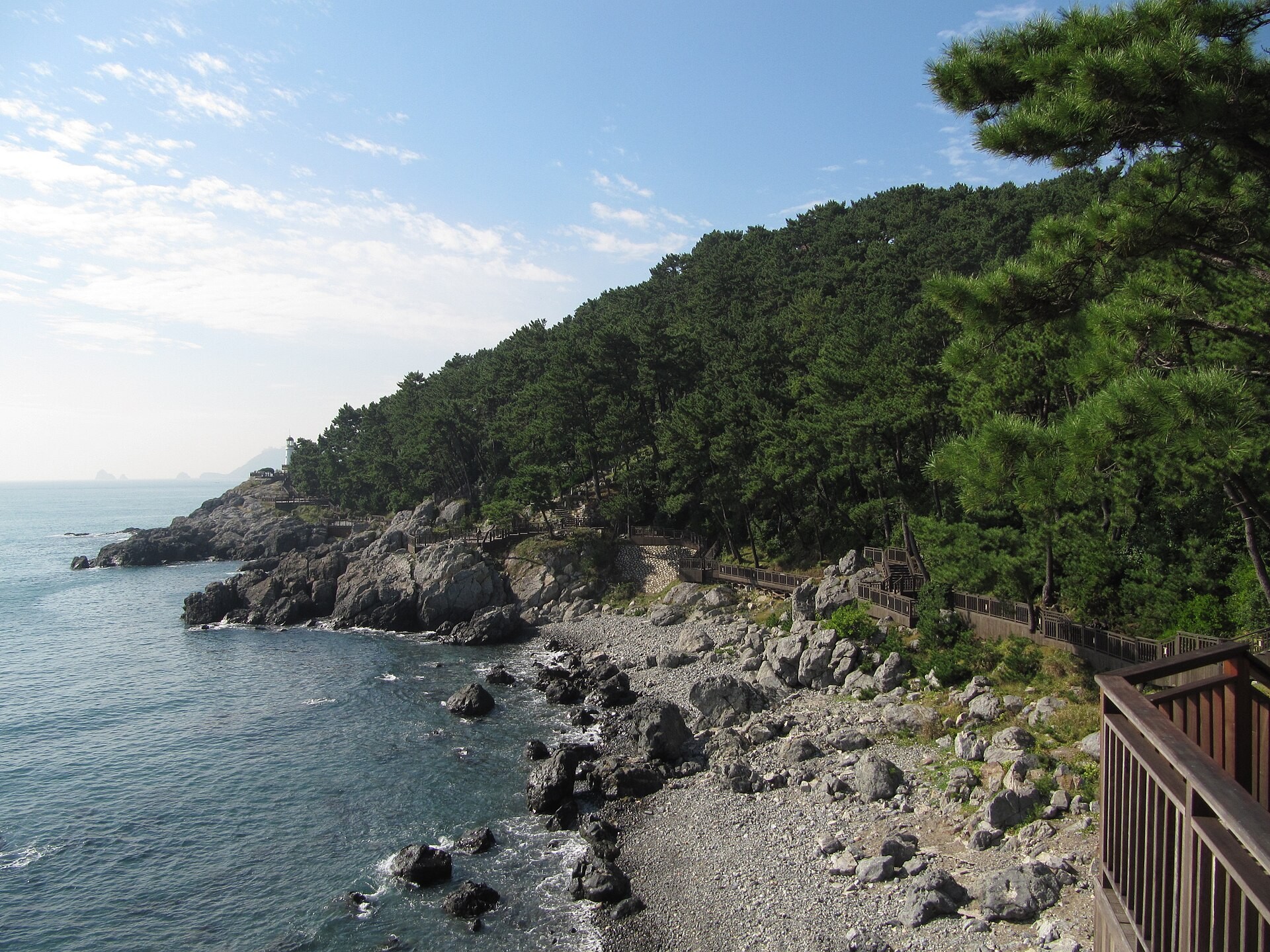
Photo credit
Michiel1972 / CC BY-SA 3.0. Resized/cropped for display; the photograph retains its license.

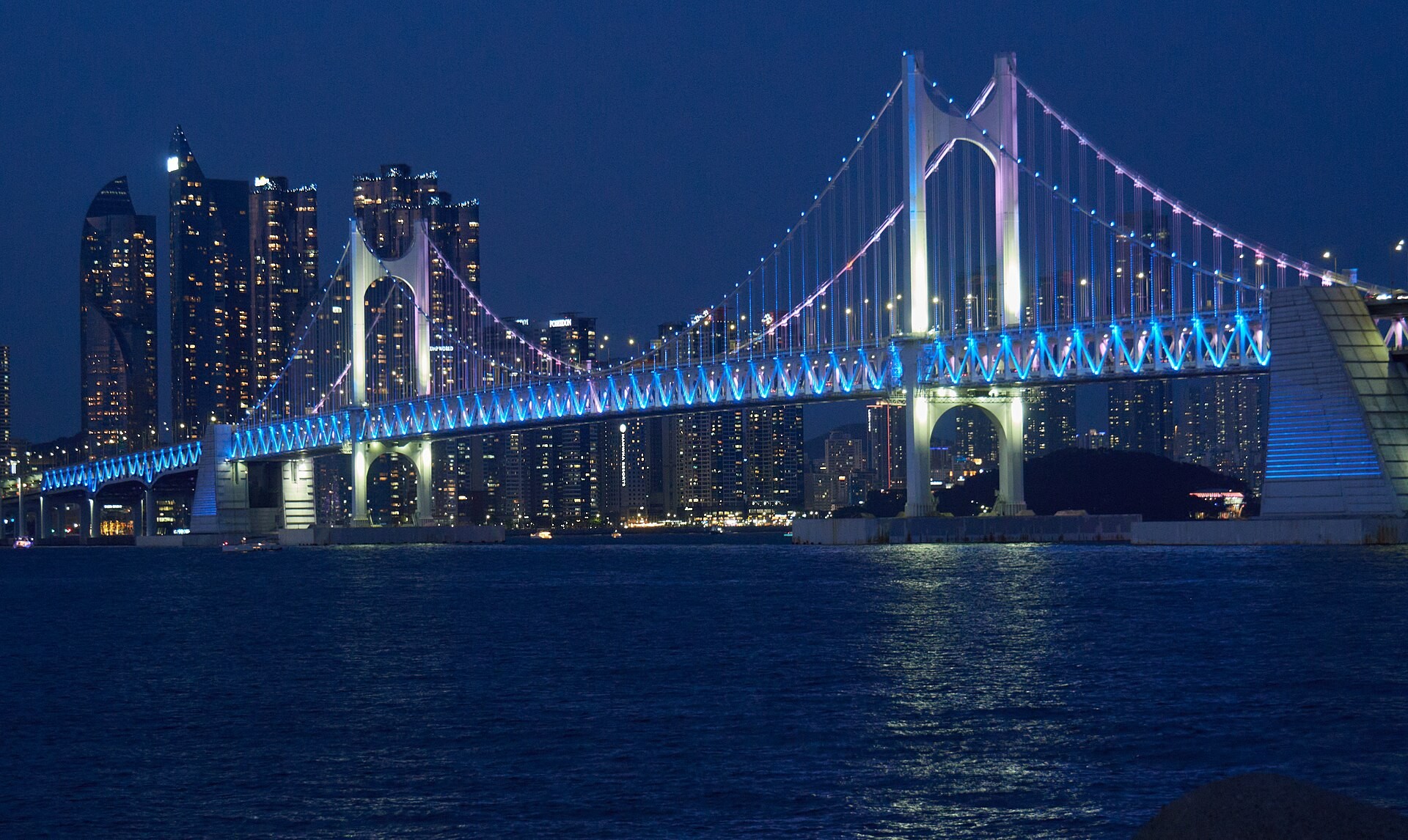
Gwangalli, about a 15-minute metro ride from Haeundae, earns the evening slot because the character of the beach shifts dramatically after dark. The Gwangandaegyo suspension bridge illuminates with changing lights after sunset, and the beachfront restaurants and bars fill up around the same time. Seeing Gwangalli twice — once by day and once at night — is worth doing if you have a third day, but for a two-day itinerary the night visit captures its best version.

Official reference: visitbusan.net
Day 2 — Nampo-dong, Jagalchi Market and Bupyeong Night Market
Jagalchi Market is one of Korea's largest seafood markets, and Visit Busan groups it with the nearby Gukje Market and Bupyeong Kkangtong Market as the city's main traditional market cluster. The outdoor stalls along the waterfront operate from early morning, so arriving before noon lets you see the market in full activity — vendors selling live fish, octopus, dried seafood and more directly from their stalls. The indoor section allows visitors to buy fresh-sliced raw fish and eat it at tables overlooking the harbour.
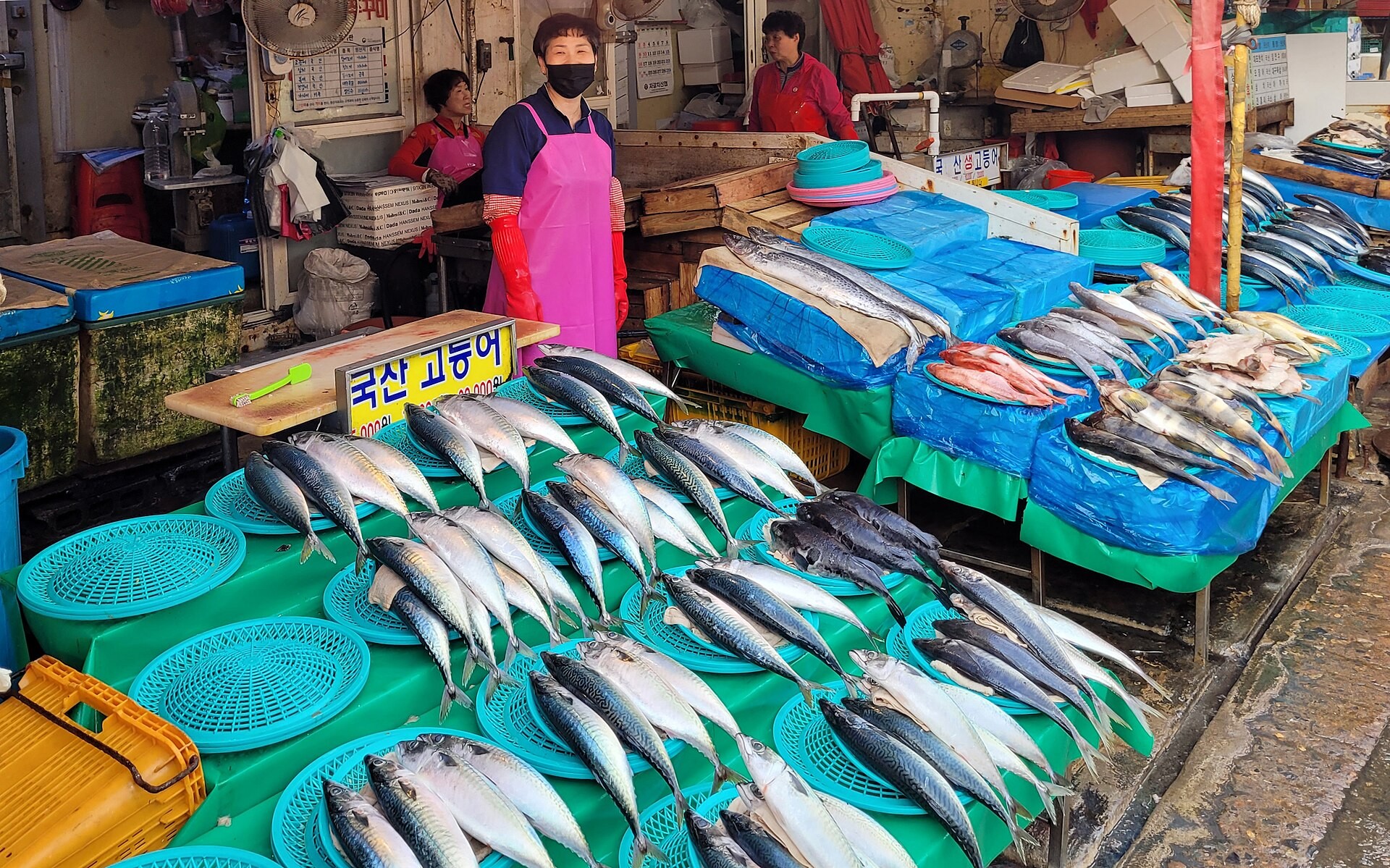
Photo credit
Bernard Gagnon / CC0. Resized/cropped for display; the photograph retains its license.

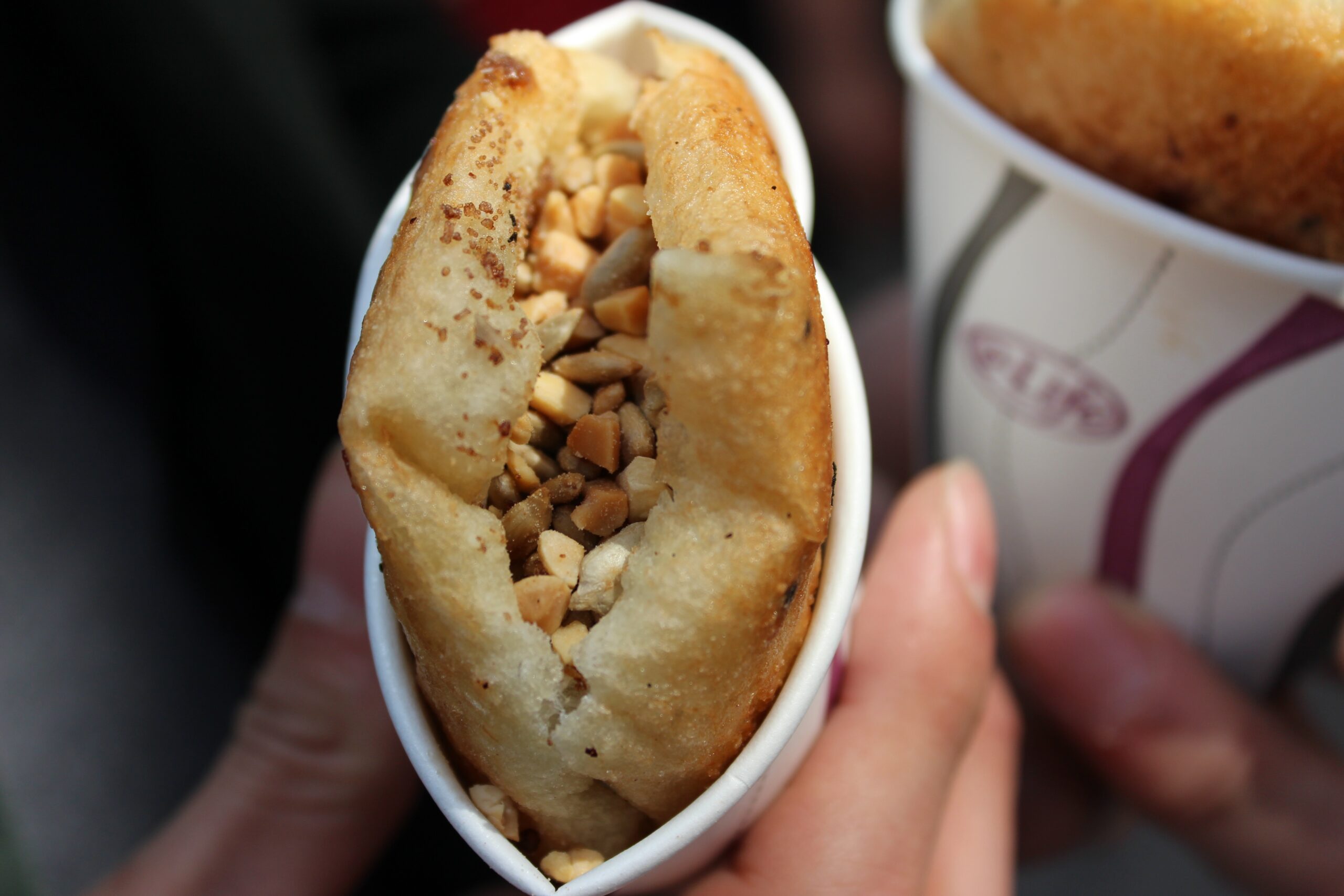
BIFF Plaza, a short walk inland from Jagalchi, is the central strip in Nampo-dong and the place to find ssiat hotteok — a seeded, sugar-filled griddlecake that is one of the area's signature street snacks. The plaza stays busy through the afternoon. In the evening, Bupyeong Kkangtong Market, which opened in 2013 as Korea's first permanent night market, comes to life from 19:30 with food stalls selling Korean and international dishes side by side. It operates every day except traditional holidays.
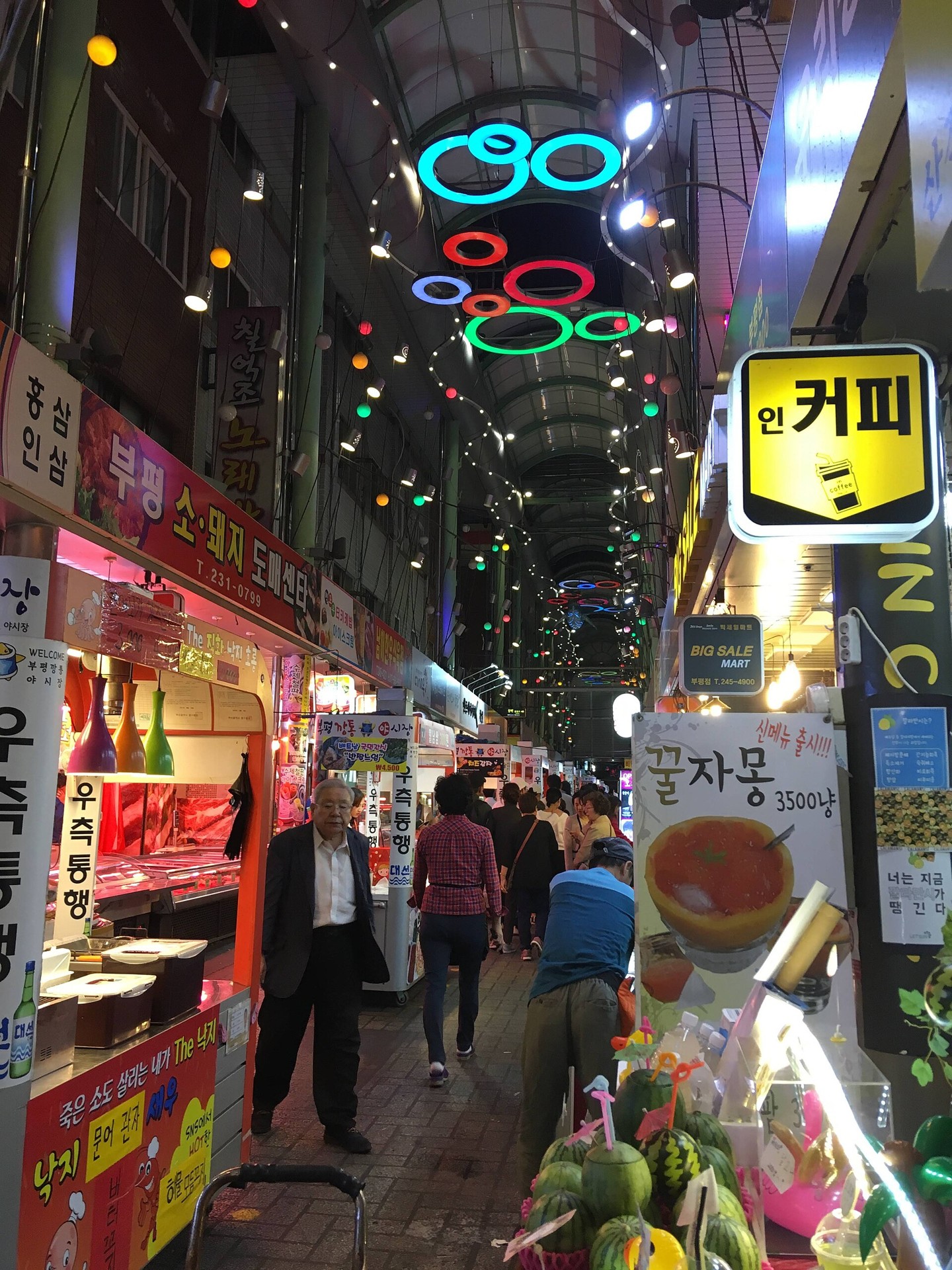
Photo credit
Christophe95 / CC BY-SA 4.0. Resized/cropped for display; the photograph retains its license.


Official reference: www.visitbusan.net · www.visitbusan.net
Day 3 — Gamcheon Culture Village and Gwangalli by daylight
Gamcheon Culture Village in west Busan requires a village bus transfer after the metro — the standard route is to exit at Toseong or Goejeong Station on Line 1, then take a village bus to Gamjeong Elementary School. The village itself is a hillside maze of pastel-coloured houses decorated with murals and art installations that began as a community art project in 2009. Picking up the stamp map at the information centre and following the alley route takes most of a half-day, especially if you stop for the popular Little Prince photo zone or browse the small workshops and souvenir shops. The village is open from 09:00 to 18:00 between March and October, and 09:00 to 17:00 from November to February.
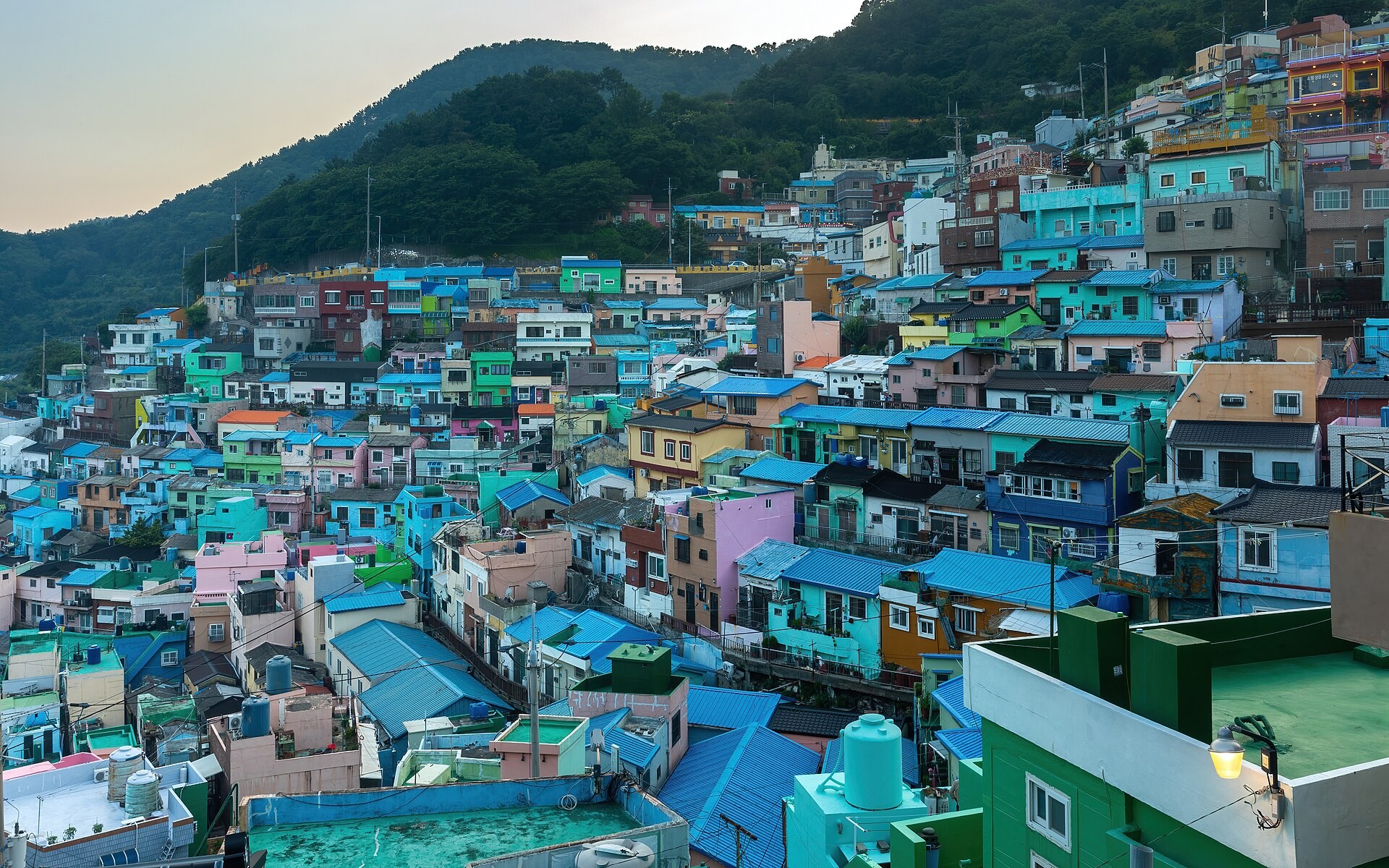
Photo credit
Basile Morin / CC BY-SA 4.0. Resized/cropped for display; the photograph retains its license.

After returning from Gamcheon, a visit to Gwangalli by day gives you a very different perspective from the night version seen on Day 1. The daytime beach is quieter, the bridge is visible in its full span, and the cafes along the strip are good places to rest. If your schedule allows, this is also the most comfortable day to add milmyeon — Busan's cold wheat noodle dish — for lunch before or after the journey between west and east Busan.
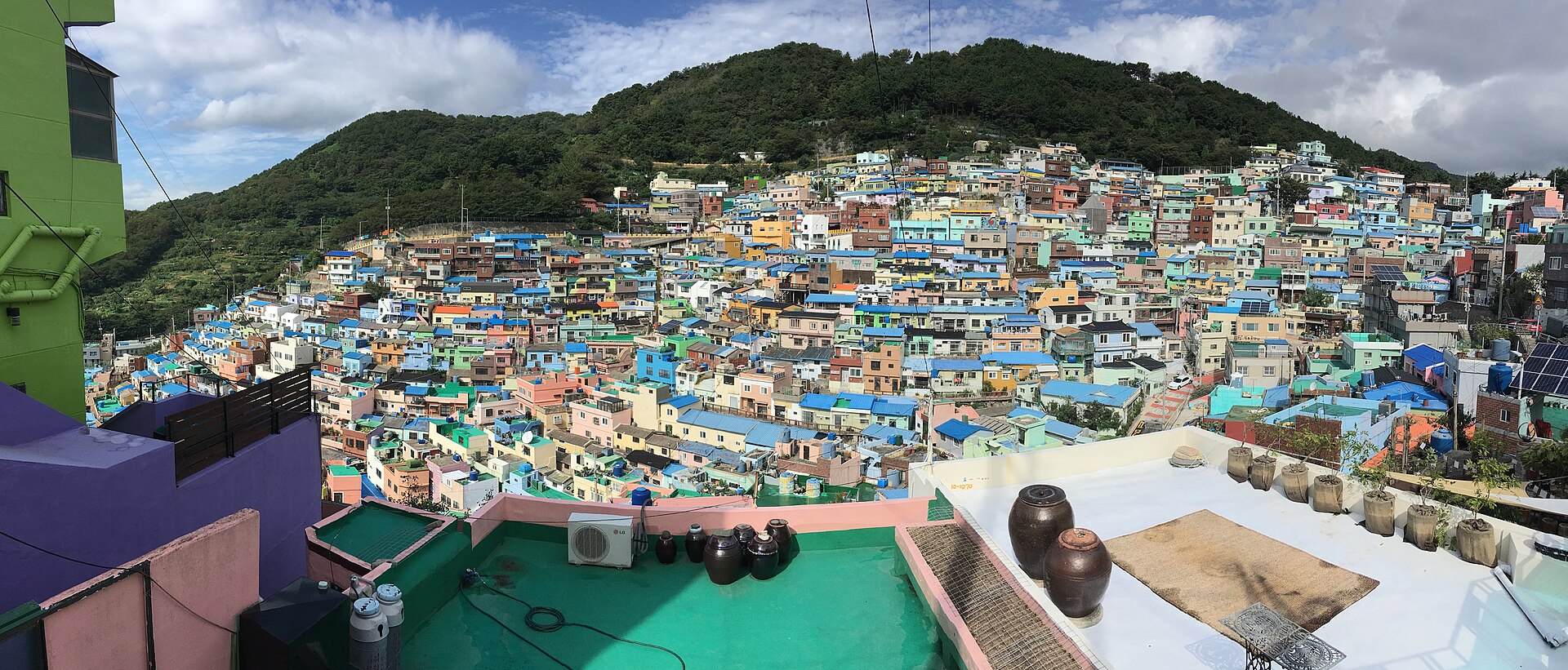
Photo credit
Christophe95 / CC BY-SA 4.0. Resized/cropped for display; the photograph retains its license.

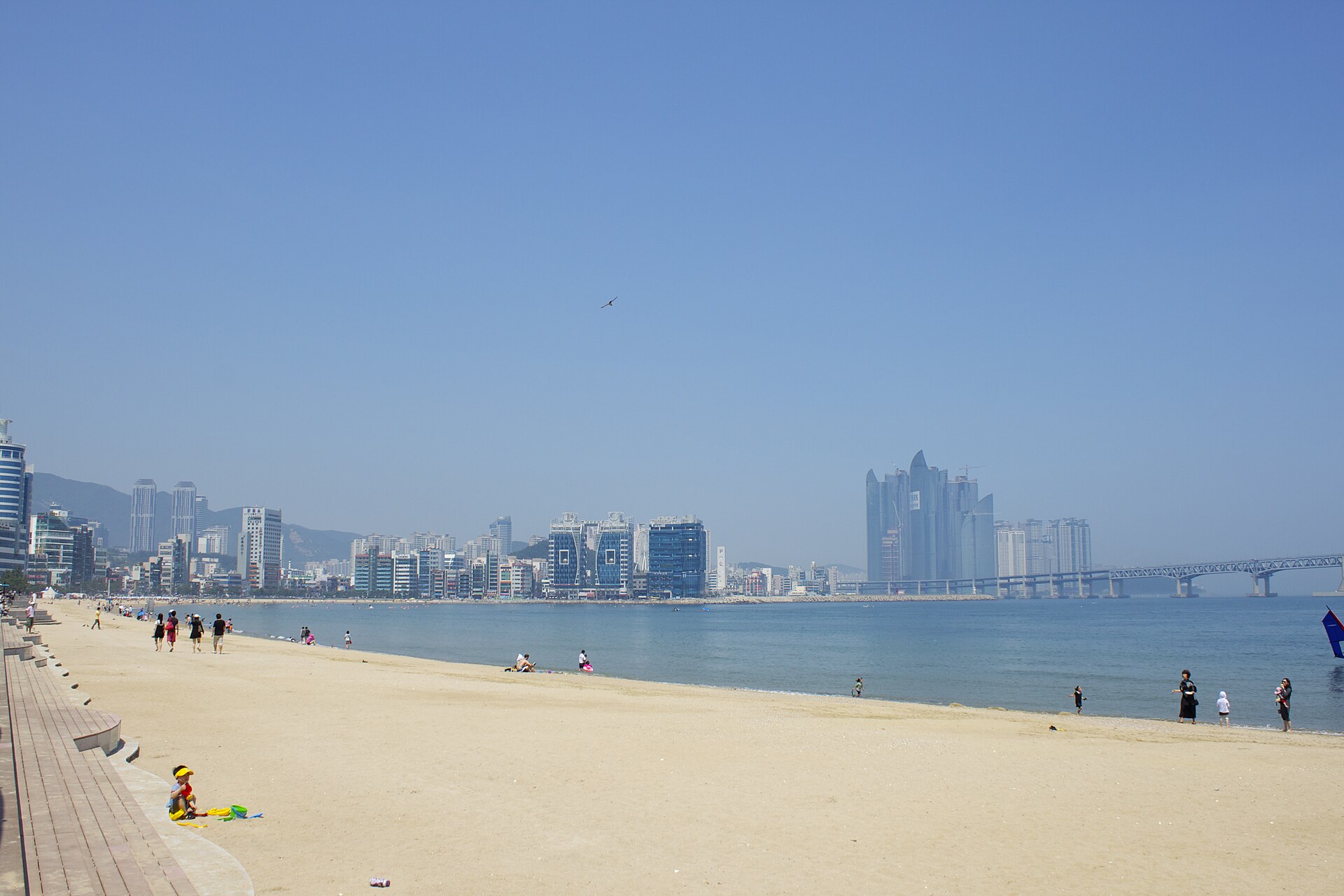
Photo credit
Chelsea Hicks / CC BY 2.0. Resized/cropped for display; the photograph retains its license.

Official reference: www.visitbusan.net
Busan's food by zone — what to eat and when
Day 1 — breakfast before the beach or dinner after the Dongbaek trail
Dwaeji gukbap
Pork and rice soup, a Busan breakfast staple associated with the Haeundae Traditional Market area
Fit it into your day: Haeundae
Day 2 — afternoon snack during the Nampo-dong exploration
Ssiat hotteok
Seed-and-sugar-filled griddlecake, a signature Nampo-dong street snack sold fresh at BIFF Plaza stalls
Fit it into your day: Nampo-dong / BIFF Plaza
Day 2 — lunch at Jagalchi Market
Hoe (fresh raw fish)
Fresh-sliced raw fish bought and eaten at Jagalchi's indoor market, typically with a sea view from the upper floor
Fit it into your day: Jagalchi Market, Nampo-dong
Day 3 — lunch after the Gamcheon morning, before returning to east Busan
Milmyeon
Cold Busan-style wheat noodles in a chilled broth, a local specialty available near Haeundae
Fit it into your day: Haeundae
Day 2 — evening after Jagalchi and BIFF Plaza
Night market street food at Bupyeong Kkangtong
Multi-national street food stalls including grilled meats, Korean snacks and international options, open from 19:30
Fit it into your day: Bupyeong, Jung-gu
Busan's signature dishes are spread across its different zones, which means each extra day you stay also opens up another food stop. Planning one key food moment per zone keeps the itinerary practical without turning every meal into a logistics exercise.
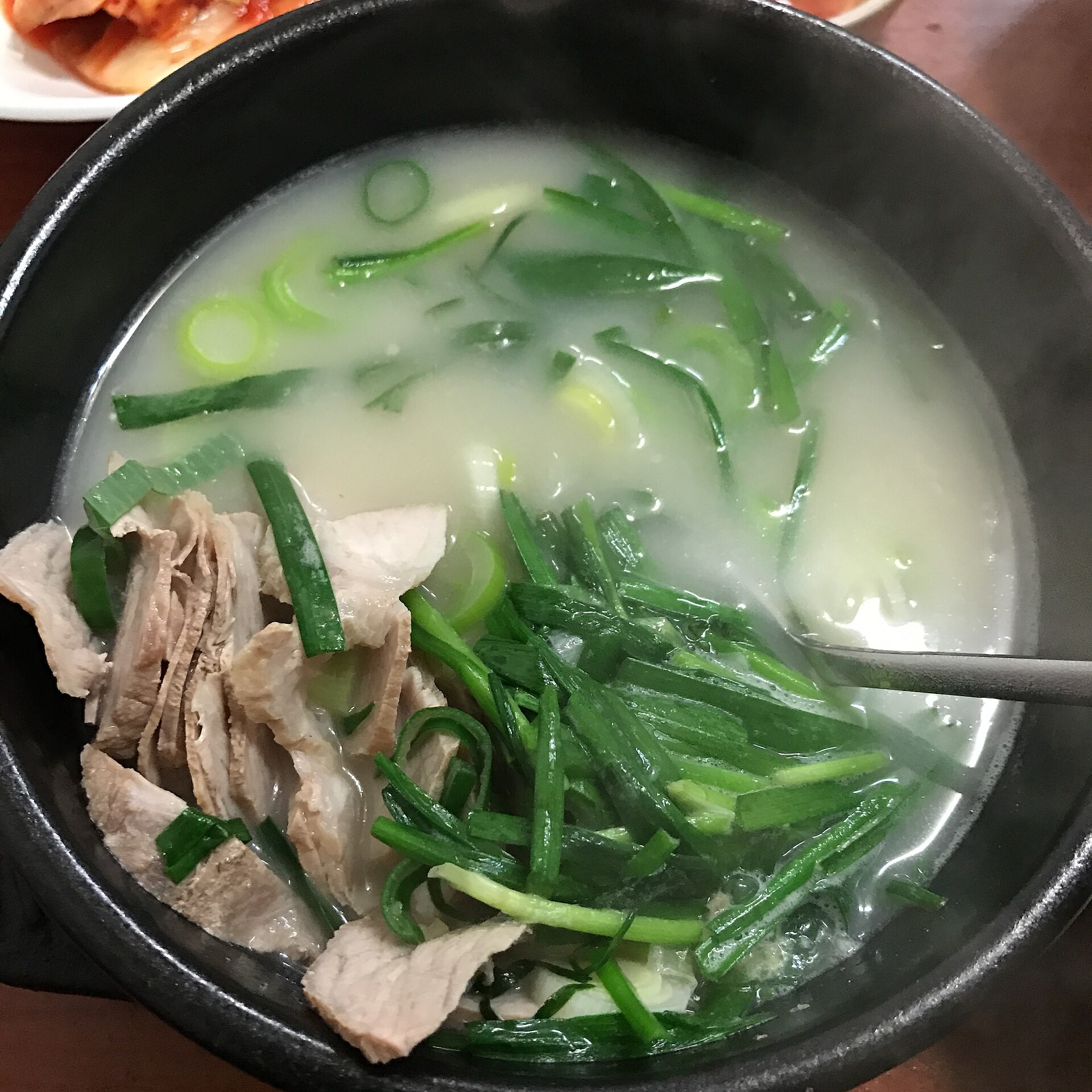

Dwaeji gukbap (pork and rice soup) is the dish most closely associated with the Haeundae area. The Visit Busan Haeundae page notes that Haeundae Traditional Market is known for its affordable gukbap — it works equally well as a breakfast before the beach or a warming dinner after the Dongbaek walk. Ssiat hotteok, a griddlecake filled with seeds and sugar syrup, is a Nampo-dong street food eaten as an afternoon snack at BIFF Plaza — it is inexpensive, sold fresh from griddles and best eaten standing up. At Jagalchi, the fresh hoe (raw fish slices) eaten at the indoor market with a sea view is a lunch rather than a snack, since the portions tend to be substantial. Milmyeon — cold wheat noodles in a chilled broth — is a Busan specialty associated with the Haeundae area and a natural lunch stop on Day 3 when you are crossing between the west and east sides of the city.
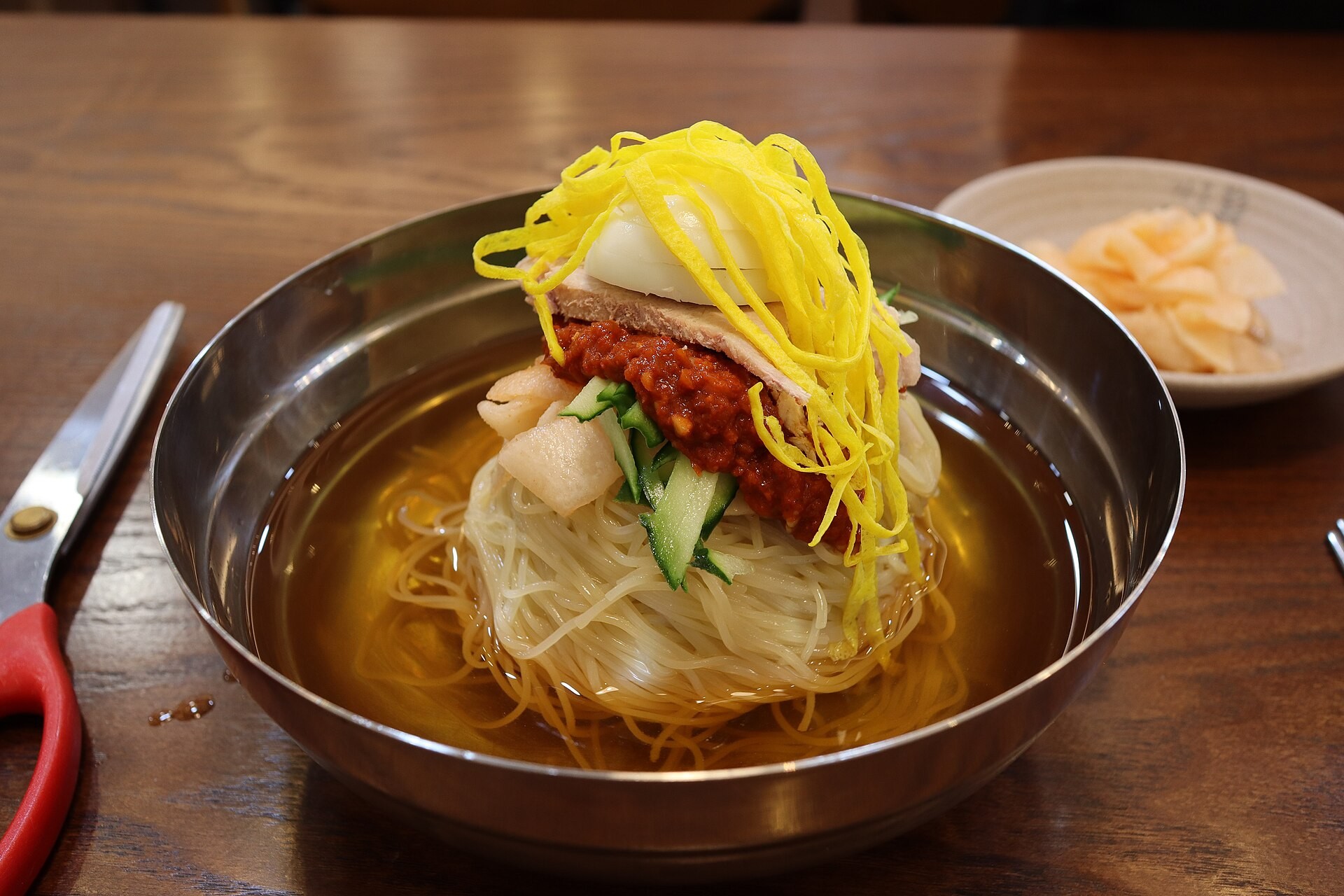
Photo credit
Mobius6 / CC BY-SA 4.0. Resized/cropped for display; the photograph retains its license.

Official reference: visitbusan.net · www.visitbusan.net · www.visitbusan.net
Day 4 and beyond — culture focus, Beomeosa and the Gyeongju question
A fourth day in Busan suits travelers whose priority is temples, hiking or a slower pace at sights already visited. Beomeosa Temple in the northern hills of Busan requires a metro ride to Beomeosa Station on Line 1 followed by a short bus connection — a destination that most three-day itineraries drop for lack of time. Haedong Yonggungsa, a coastal temple in northeastern Busan, has a similar problem: the journey from central Busan takes around an hour each way, making it difficult to combine with anything else on the same day.
Gyeongju is a separate decision. The city is reachable by KTX in a short journey from Busan Station, which makes it practical as a day trip — but the historic sites, from Bulguksa Temple to the Daereungwon tumuli and Donggung Palace, genuinely reward an overnight stay rather than a rushed single day. If Gyeongju is on your list, the realistic approach is to treat it as an added night rather than a morning excursion, which pushes the combined Busan-plus-Gyeongju trip to at least five nights total. The Koreaful guide to Busan and Gyeongju in 4 Days maps out one workable sequence for a two-city itinerary.
Trip-style comparison: beach, food and culture
The table below summarises the recommended stay by trip style, based on which zones and food stops each style prioritises. Beach-focused travelers can cover Busan's two main beaches in two days without feeling shortchanged, since Haeundae and Gwangalli are within easy metro range of each other. Food-focused travelers need a third day to reach Jagalchi and Bupyeong without sacrificing the Haeundae food stops. Culture-focused travelers need three days at minimum and benefit from a fourth if Beomeosa or a Gyeongju visit is on the list.
| Trip style | Recommended days | Priority zones | Key food stop |
|---|---|---|---|
| Beach focus | 2 days | Haeundae, Gwangalli, Dongbaek | Dwaeji gukbap at Haeundae Traditional Market |
| Food focus | 3 days | Nampo-dong, Jagalchi, BIFF Plaza, Haeundae | Ssiat hotteok, hoe at Jagalchi, milmyeon |
| Culture focus | 3–4 days | Gamcheon, Beomeosa, optional Gyeongju day-trip | Milmyeon; Bupyeong night market |
| First-timer all-round | 3 days | All three zones in sequence | One stop per zone: gukbap, ssiat hotteok, milmyeon |
Official reference: visitbusan.net · www.visitbusan.net · www.visitbusan.net
What you realistically miss at each duration
With two days, you almost certainly skip Gamcheon Culture Village and Jagalchi Market — both in the western half of the city — unless you are willing to sacrifice meaningful time at Haeundae or Gwangalli. You also miss the food stops in that zone: the ssiat hotteok at BIFF Plaza and fresh hoe at Jagalchi.
With three days, the main things left out are the northern and northeastern temples (Beomeosa and Haedong Yonggungsa) and any time in Gyeongju. Most first-time visitors find this a reasonable trade and leave Busan feeling they covered the city well. With four days, the main risk is running short of new things to do in Busan itself rather than running out of time — which is why the fourth day works best either as a Gyeongju excursion or a deliberately slower revisit of the spots you enjoyed most.
If you are pairing Busan with Seoul, the most common approach is three nights in Busan and three nights in Seoul connected by KTX. Adding Gyeongju pushes that combination to at least seven nights total for a Korea trip, which suits travelers with ten days or more in the country.
Sources and trip notes
Official information checked 16 September 2026. Routes are editorial suggestions. Check date-specific conditions with the operator before travel; photographs are archival.
MAKE THIS PART OF YOUR TRIP
Two days, a different side of Busan
Explore the places in photos, then take the food shortlist, Korean addresses and step-by-step route with you.
KEEP THE GOOD FINDS
This could be part of your Korea.
Save this guide alongside your other ideas. You can come back to compare, plan, or explore something new.