Seoul Subway Guide for Tourists: Card, Transfers and Station Tips
Seoul's subway is fast, bilingual and runs on a tap-in, tap-out card system. Buy a T-money card at any convenience store before you reach the station, tap on entry and again on exit, and transfers between lines cost nothing extra. Trains run from around 05:30 until midnight, with N buses covering the gap after that.
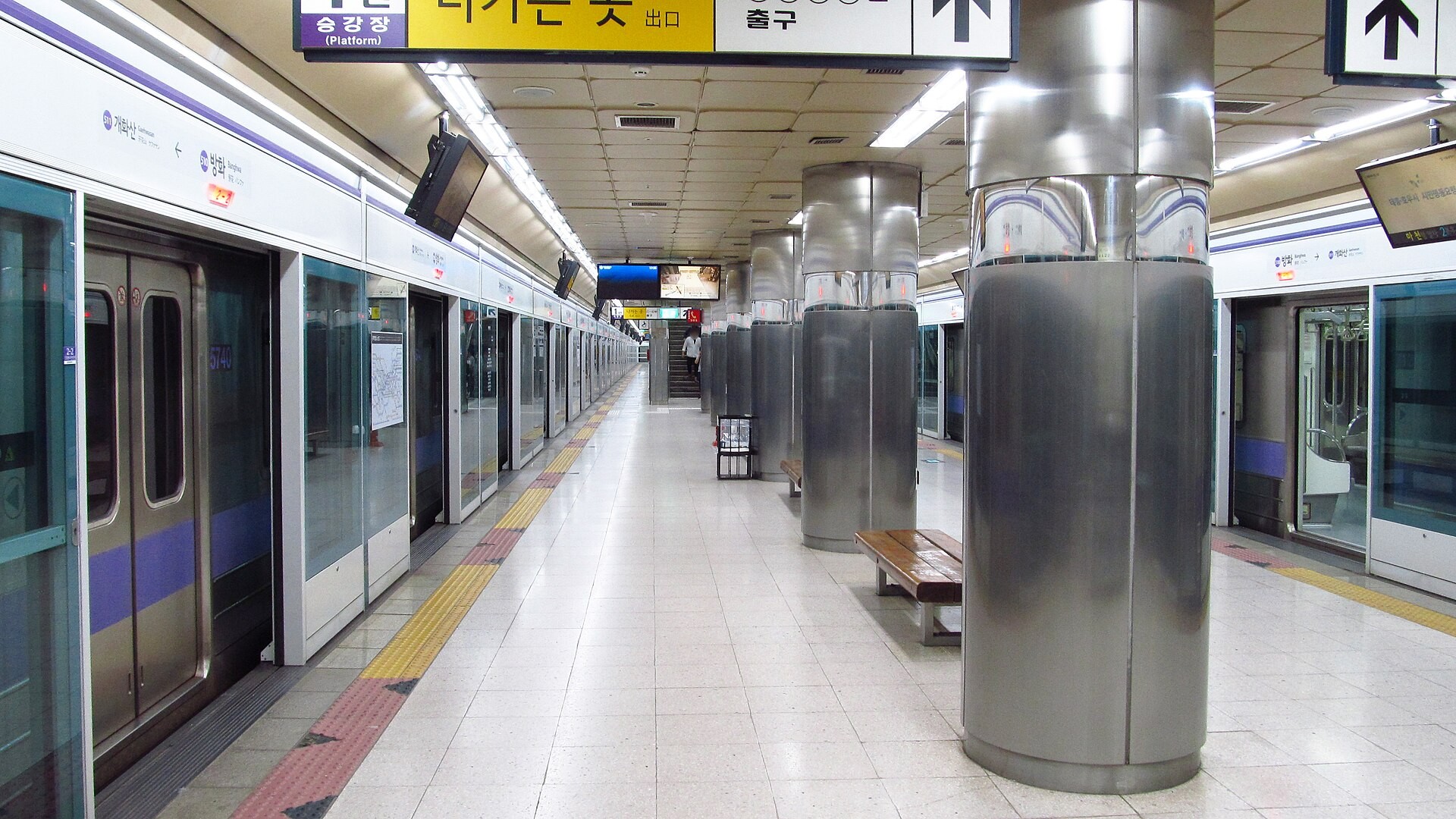
Photo credit
LERK / CC BY-SA 4.0. Resized/cropped for display; the photograph retains its license.

Which transit card should you buy — and where do you get it?
Three cards are worth comparing before you arrive at your first station. The standard T-money card costs ₩3,000 to buy and works on every subway line, city bus, taxi, and most convenience stores. You top it up with cash as you go, and it never expires, so any remaining balance carries over to your next trip. T-money cards are sold at GS25, CU, 7-Eleven and other convenience stores nationwide, as well as at Seoul Metro information centers on Lines 1–8.
The Climate Card Short-Term Pass suits visitors who plan to ride frequently across several days. It gives unlimited access to Seoul-licensed subway lines and buses for a fixed period — one to seven days — loaded in a single charge. Physical cards cost ₩3,000 and are sold at Seoul Metro information centers and select convenience stores near stations. Importantly, from March 20, 2025, international credit and debit cards are accepted at charging kiosks for the short-term passes, so you are no longer limited to cash or a Korean bank card.
The Mpass is a foreigner-exclusive T-money card offering up to 20 rides per day on Seoul subways and city buses, sold only at Tmoney Town near Seoul Station Exit 10 and paid in Korean won cash only. It suits visitors with an intensive schedule who will exceed a daily flat-rate calculation, but the purchase location is inconvenient on arrival day. Unless you are staying near Seoul Station and know you will use the system heavily, the T-money or Climate Card is a simpler first choice.
| Card | Best for | Where to buy | Payment at kiosk |
|---|---|---|---|
| T-money | Flexible, multi-city use | Convenience stores nationwide, subway info centers Lines 1–8 | Cash |
| Climate Card Short-Term (1–7 day) | Frequent Seoul-only riders | Subway info centers, select convenience stores | Cash or international credit/debit card (from Mar 2025) |
| Mpass (1–7 day) | Heavy daily users (up to 20 rides/day) | Tmoney Town, Seoul Station Exit 10 only | Korean won cash only |
Official reference: english.visitkorea.or.kr · english.seoul.go.kr
How to tap in, ride, and tap out correctly
The process at the turnstile is the same on every line. Place your card or phone against the yellow reader when entering — the gate opens and a beep confirms the fare was deducted. When you reach your destination, do the same at the exit turnstile. That second tap is not optional: it closes the transaction, calculates any distance surcharge, and records the journey for transfer eligibility.
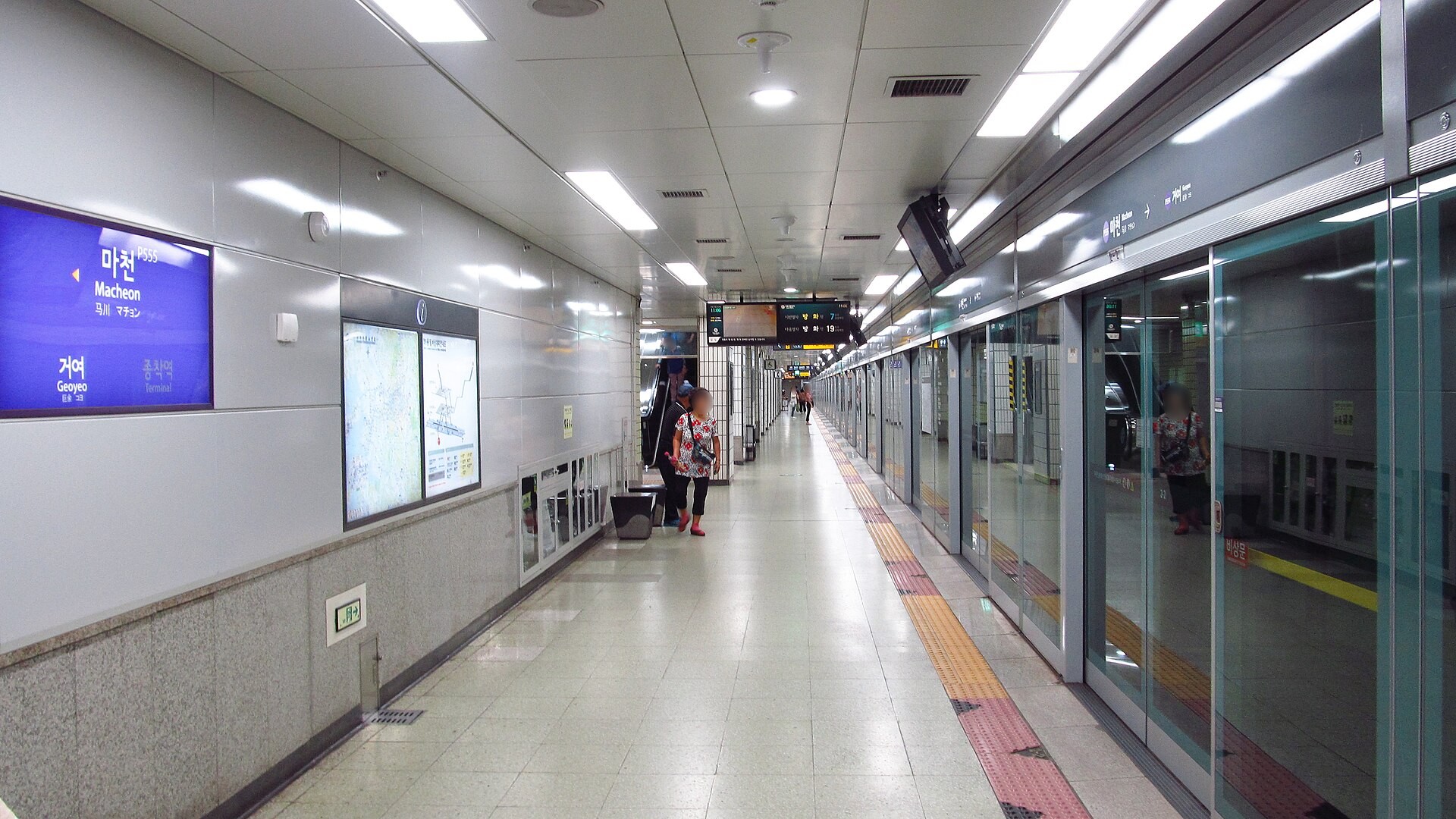
Photo credit
LERK / CC BY-SA 4.0. Resized/cropped for display; the photograph retains its license.

Forgetting to tap out twice triggers a 24-hour suspension of the Climate Card. With a T-money card the consequence is financial rather than a lockout — you lose the transfer discount for that journey. If your card balance is too low to complete a journey, fare adjustment machines positioned near the turnstiles let you top up before you exit.
Single-journey paper tickets are also available from vending machines inside stations. They require a ₩500 deposit which you reclaim at a deposit refund device at your destination. They do not carry transfer discounts, so they make sense only for a one-off trip if you do not yet have a card.
- Place card against the yellow reader at the entry turnstile — gate opens, fare deducted.
- Board the train toward your destination using the colour-coded platform signs.
- Exit through the turnstile at your destination and tap the card again on the reader.
- If balance is insufficient, use the fare adjustment machine near the turnstiles before exiting.
Official reference: english.visitseoul.net · english.seoul.go.kr
How free transfers work between subway lines and buses
Transfers between subway lines within the same station are always free — follow the colour-coded signs along the corridor to the connecting platform and your card is not charged again. This applies regardless of how many lines you change across a single journey.
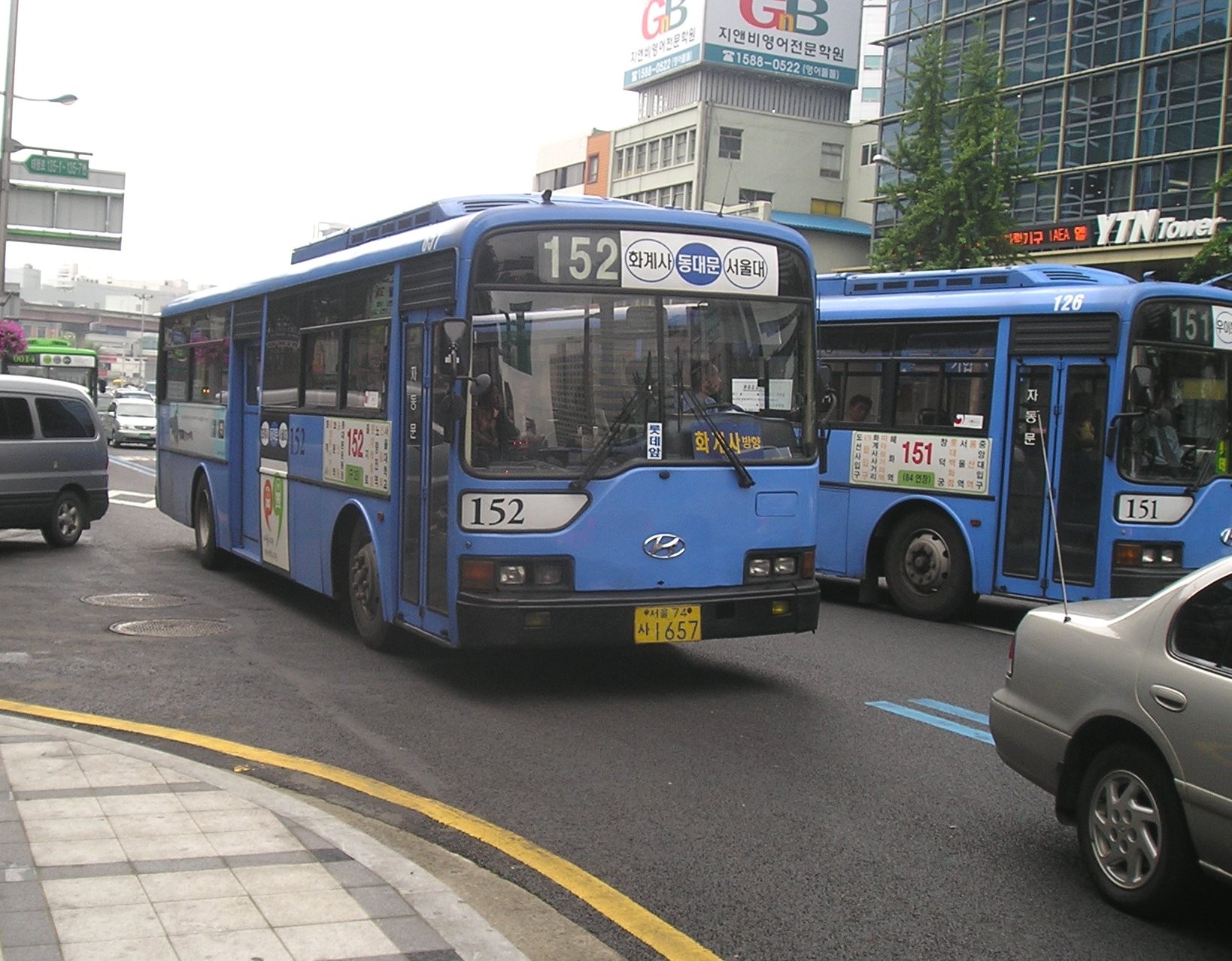
Photo credit
STA3816 / CC BY-SA 3.0. Resized/cropped for display; the photograph retains its license.

The discount system becomes more useful when you combine subway and bus. T-money users are eligible for a transfer discount when switching between bus and subway — or between two buses — up to four times per journey. To qualify, you must tap your card on the reader beside the bus door when you exit the bus, not just when you board. The transfer must happen within 30 minutes of alighting (extended to 60 minutes for travel between 21:00 and 07:00 the following morning), and within 10 km of your previous stop.
Climate Card holders on a short-term pass ride with unlimited access within the service range, so the transfer question is effectively moot — every qualifying journey within Seoul is already covered by the flat fee. One exception to note: the Sinbundang Line and GTX are excluded from the Climate Card service range, and exiting at a station outside the covered area results in an additional charge.
Official reference: english.visitseoul.net · english.visitkorea.or.kr
Operating hours and what to do if you miss the last train
Seoul subway trains run non-stop from approximately 05:30 until midnight. The exact last departure varies by line and terminus, so if your evening plan runs close to midnight it is worth checking the specific line's timetable rather than assuming all lines close at the same moment.
After midnight, N buses (night buses, indicated by an 'N' prefix on the route number) operate on key routes through the city from around 00:00 until approximately 04:00. Night bus fares are higher than standard bus fares and follow the same tap-in card system. Taxis are the other after-midnight option — regular orange cabs and black deluxe taxis both use meters and accept T-money as payment, though late-night surcharges apply between certain hours.
Plan evening activities with enough buffer to board before the last departure, particularly if you are heading to a district served by only one line. If you are travelling from a venue in Hongdae, Itaewon or Gangnam late in the evening, note which line serves your accommodation and check whether that line's last train departs slightly earlier than the overall midnight guideline.
Official reference: english.visitseoul.net
Reading station signs and finding the right exit
Every Seoul subway station displays signs in Korean, English, and Chinese. Line colours are consistent throughout the system — Line 2 is always green, Line 5 always purple — so once you know your line colour you can follow it through any interchange station without needing to read Korean.
Each station has numbered exits, and the exit number matters more than a street-level address in many Seoul neighborhoods. Locals and businesses routinely give directions as 'Exit 3' or 'Exit 5' rather than a street name. When looking up a destination in advance, confirm the exit number; arriving at the wrong side of a large interchange station can mean a significant walk above ground.
Transfers within a station follow overhead signs displaying the line colour and direction. At major interchange stations such as City Hall, Jongno 3-ga or Express Bus Terminal, the connecting corridor can be several minutes on foot, so factor that into your timing if you have a close connection.
Official reference: english.visitseoul.net
The Seoul Subway app for English-language navigation
Seoul Metropolitan Government launched an official subway app specifically for foreign residents and tourists in April 2023. It provides real-time timetables, platform direction guidance based on your current location, car congestion levels to help you pick a less crowded carriage, and an exit and restroom finder inside the station. For visitors unfamiliar with Korean, these features address the practical gaps that bilingual signage alone cannot cover.
Several other English-language apps also support Seoul subway navigation, including the Kakao Maps subway view and Naver Maps, both of which display route options, transfer points and estimated journey times in English. These are editorial suggestions based on publicly available information — verify current availability and features in your app store before travel.
Connectivity inside stations is generally reliable in Seoul, but downloading a route or confirming your exit number before you descend underground removes any dependence on signal quality mid-journey.
Sources and trip notes
Official information checked 20 September 2026. Routes are editorial suggestions. Check date-specific conditions with the operator before travel; photographs are archival.
KEEP THE GOOD FINDS
This could be part of your Korea.
Save this guide alongside your other ideas. You can come back to compare, plan, or explore something new.