Korean Comfort Soups: Three Bowls Every First-Time Visitor Should Know
Three soups appear on nearly every Korean table long before bibimbap does: samgyetang, a whole-chicken ginseng broth eaten hot in the heart of summer; dwaeji-gukbap, Busan's pork-and-rice staple seasoned at the table; and kalguksu, hand-cut noodles in a broth that changes city by city. Here is what each bowl contains, how to eat it, and where to find it.
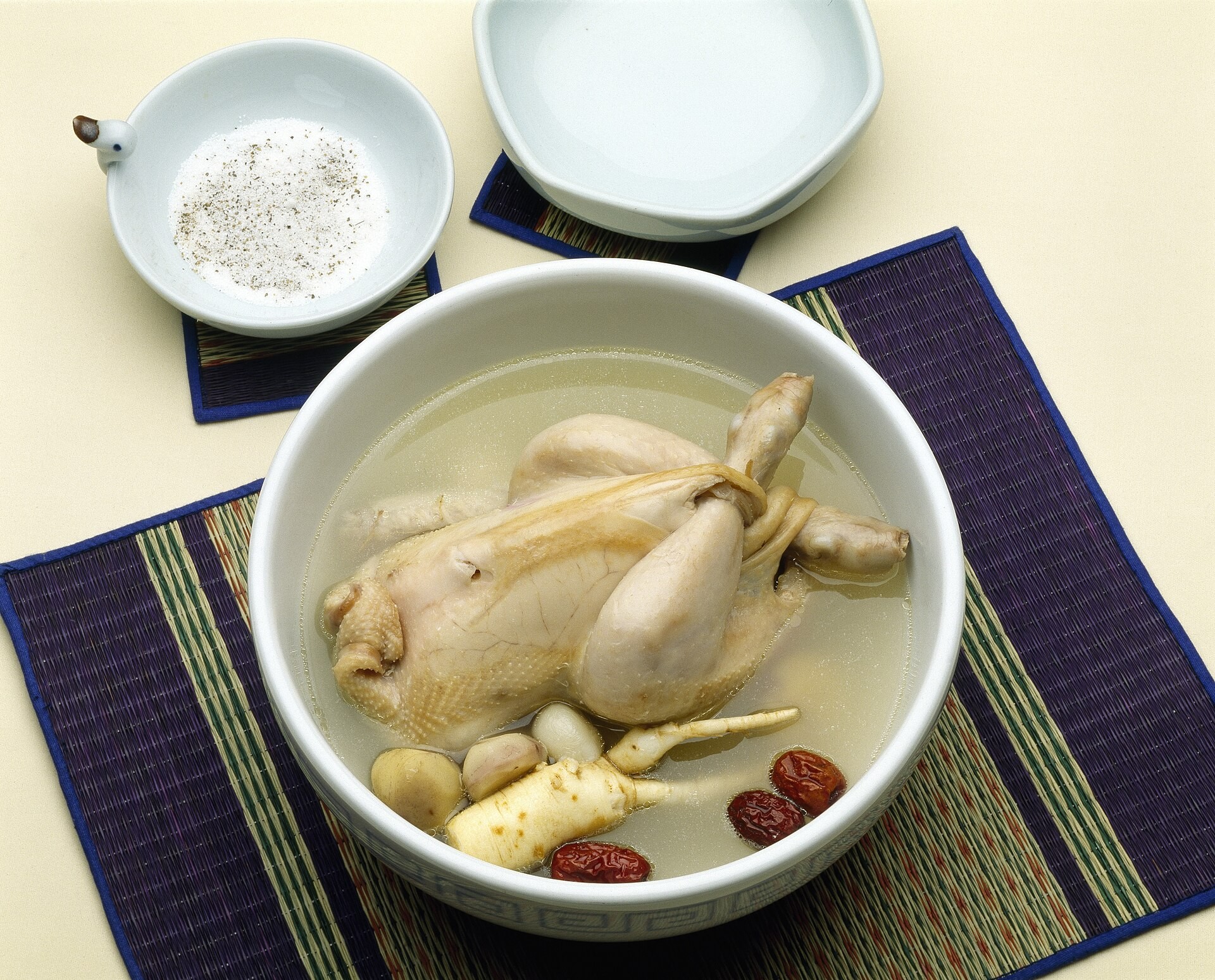

Samgyetang (삼계탕) — why Koreans eat boiling chicken soup in peak summer
Lunch — especially on Sambok summer days
Samgyetang
Whole young chicken stuffed with glutinous rice, garlic, jujubes and ginseng; simmered until the broth is pale and rich. Seasoned at the table with salt and pepper.
Fit it into your day: Jongno-gu, Seoul (near Gyeongbokgung Palace)
Samgyetang is a whole young chicken stuffed with glutinous rice, garlic, jujubes and ginseng, then simmered low and slow until the broth turns a pale, almost ivory colour. The chicken is soft enough to pull apart with chopsticks, and the broth is deeply savoury and slightly herbal from the ginseng — rich without being heavy.
The custom of eating it in midsummer is rooted in a Korean philosophy called iyeol chiyeol, meaning 'fight heat with heat.' Rather than avoiding hot food on the hottest days of the year, Koreans have historically believed that a nourishing, warming bowl replenishes the energy lost to summer heat. This tradition is most keenly observed during Sambok — the three hottest days of the lunar calendar, known individually as Chobok, Jungbok and Malbok. On those days, specialist restaurants fill up and queues form outside. According to Visit Seoul's official food guide, Tosokchon Samgyetang near Gyeongbokgung in Jongno-gu is among the best-known addresses for the dish in the city; arrive expecting a line that can stretch into the car park, though it reportedly moves quickly.
At the table, samgyetang is seasoned to taste with salt and pepper — both are provided. The standard method is to debone the meat with your chopsticks, dip pieces in a small pile of salt, and alternate bites with spoonfuls of the stuffing rice, which has absorbed all the broth's flavour inside the cavity. The dish is available year-round at specialist restaurants, but summer — particularly the Sambok days — is when it carries full cultural weight.
Official reference: english.visitseoul.net
Dwaeji-gukbap (돼지국밥) — Busan's pork-and-rice soul food, and how to season it
Any meal — many restaurants open 24 hours
Dwaeji-gukbap
Milky pork-bone broth with boiled pork, served with rice either mixed in or on the side. Season at the table with chives, salted shrimp and kimchi. Not inherently spicy.
Fit it into your day: Seomyeon, Busanjin-gu, Busan (near Seomyeon Station, Metro Line 1)
Dwaeji-gukbap translates simply as pork (dwaeji) and rice-soup (gukbap). A milky pork-bone broth — sometimes clear, sometimes opaque depending on whether bones or meat alone are used — arrives with slices or chunks of boiled pork already in the bowl. Rice is either mixed in or served on the side (a style called ttaro); if you prefer them separate, ask for ttaro gukbap when you order.
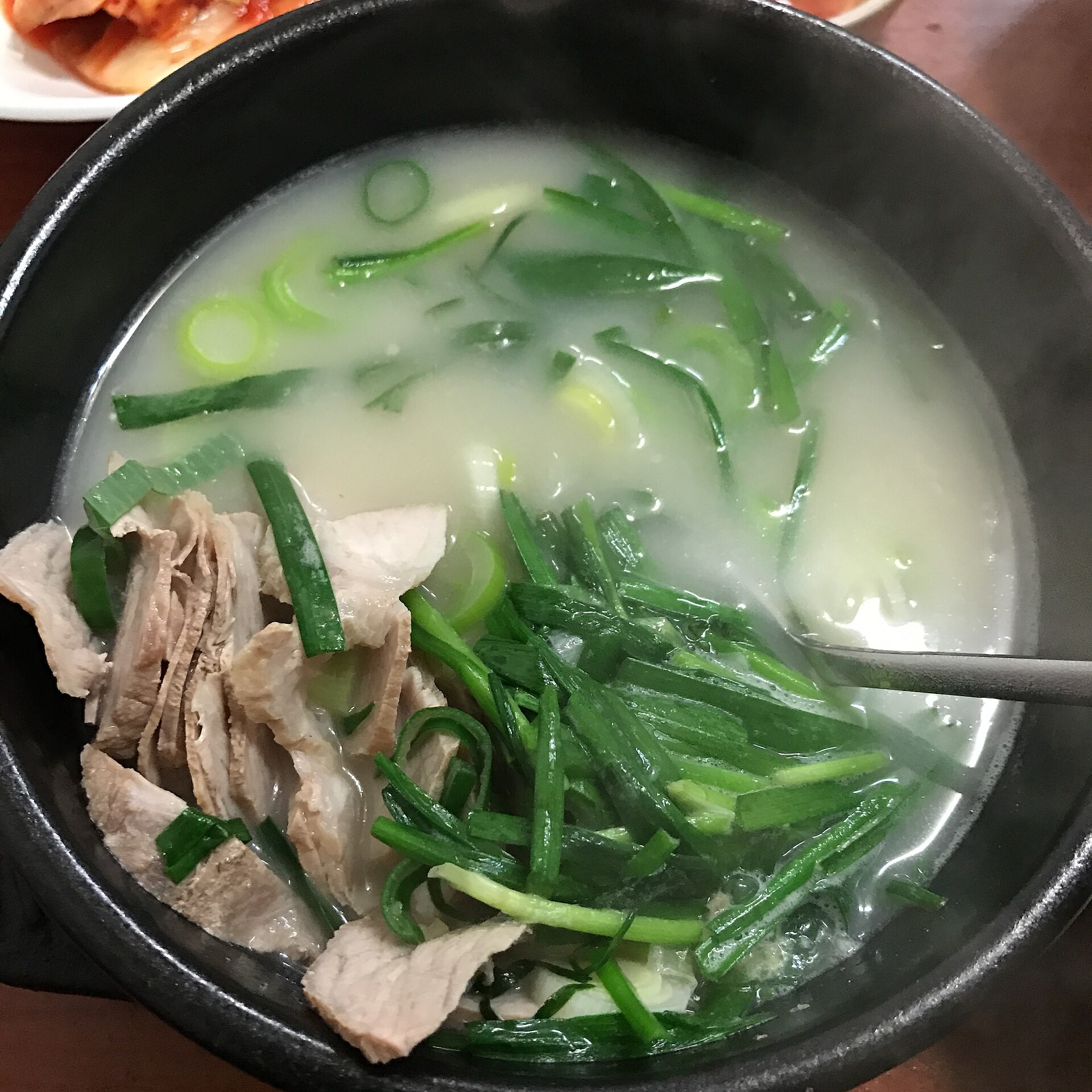

According to Korea Tourism Organization's official guide to the dish, the correct way to begin is to add chives to the soup first, then taste the broth before reaching for the condiments. Each table comes with chopped chives, salted shrimp (saeujeot) and kimchi; use these to build the seasoning to your preference, spoon by spoon. Some restaurants also add noodles on request. The broth itself is not spicy — the chilli heat, if any, comes entirely from what you stir in yourself, making it one of the more approachable bowls for visitors watching their spice tolerance.
Busan is so identified with this dish that the KTO describes it as the city's representative local food, and a 2019 survey cited by Busan Ilbo found over 700 dedicated dwaejigukbap restaurants in the city. The Seomyeon district has a concentrated cluster along Seomyeon-ro 68beon-gil — sometimes called Seomyeon Local Food Street — within easy reach of Seomyeon Station on Busan Metro Line 1. Many restaurants open 24 hours, so the bowl works equally well as a late-night meal or an early breakfast. Spring is noted as the best season for fresh chives in the bowl, though the dish is eaten throughout the year.
Official reference: english.visitkorea.or.kr
How to read a dwaeji-gukbap menu
Menu categories at a dwaejigukbap restaurant can look complicated at first glance. 'Offal only' (naejang) means the bowl contains pork offal without sliced meat; 'sundae only' means the Korean pork blood sausage replaces the meat; 'mixed' (seokkeo) combines meat with offal or sundae; and 'assorted' gives you a sample of everything. If you want a simple, unfussy introduction, a plain meat bowl is the most straightforward starting point — it delivers the clean, savoury pork flavour that defines the dish without any textural surprises.
You may also encounter the term toryeom on older menus or in conversations with staff. This is a traditional warming technique in which hot broth is poured over cold rice repeatedly and drained until the bowl reaches an ideal temperature — a method that predates electric rice cookers. It is less common now but still practised at some long-standing restaurants.
| Korean term | What's in the bowl | Good for |
|---|---|---|
| Gogi gukbap (고기국밥) | Sliced boiled pork in pork-bone broth | First-timers; clean savoury flavour |
| Naejang gukbap (내장국밥) | Pork offal only; chewy texture | Those who enjoy offal |
| Sundae gukbap (순대국밥) | Korean pork blood sausage in broth | Fans of sundae street food |
| Seokkeo gukbap (섞어국밥) | Mixed meat and offal or sundae | Tasting multiple textures |
| Modeum gukbap (모듬국밥) | Assorted — a bit of everything | Adventurous eaters |
Official reference: english.visitkorea.or.kr
Kalguksu (칼국수) — what 'knife-cut noodles' means, and why the broth varies so widely
Lunch or dinner — suits rainy or cold days especially well
Kalguksu — Daejeon style
Hand-cut wheat noodles in a broth that varies by restaurant: beef bone, chicken, anchovy or Manila clam. Daejeon has over 700 specialist restaurants and is the city most associated with the dish.
Fit it into your day: Daejeon (near Daejeon Station, Metro Line 1)
Lunch
Kalguksu — Myeongdong style
Rich, slightly thick broth with hand-cut noodles and dumplings; the Myeongdong Kyoja restaurant has served this style since 1970 according to the KTO.
Fit it into your day: Myeongdong, Jung-gu, Seoul
The name is literal: kal means knife, guksu means noodles. The dough is rolled by hand and cut with a knife rather than extruded through a machine, which gives the noodles a slightly rough, uneven surface that holds broth well. According to the Korea Tourism Organization's guide to the dish, kalguksu is named after the tool used to make the noodles rather than any particular ingredient — which is why the broth can be almost anything.
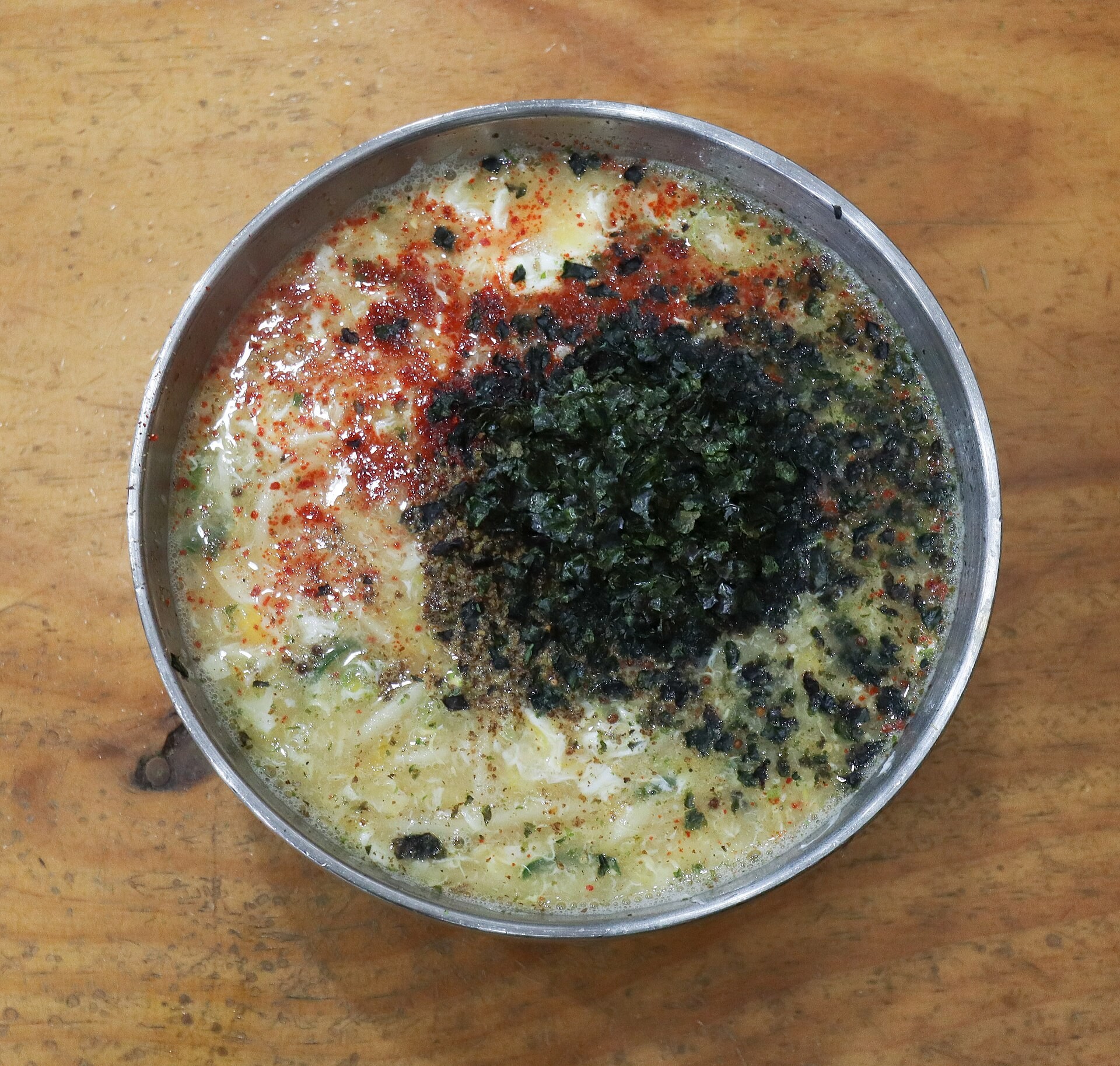
Photo credit
Mobius6 / CC BY-SA 4.0. Resized/cropped for display; the photograph retains its license.

In practice, kalguksu restaurants in Korea use four main bases: beef bone broth (rich and deeply savoury, similar in spirit to seolleongtang), chicken broth, anchovy broth (lighter and more umami-forward), and Manila clam broth (bajirak kalguksu — briny and clean). Some areas produce regional variants: Daejeon is known for combinations such as perilla-seed beef-bone broth, and there is even a local style built around surf clams whose flavour stays inside the shell rather than melting into the soup. Because none of the standard versions include chilli, kalguksu is generally the mildest and most beginner-friendly of the three soups covered here.
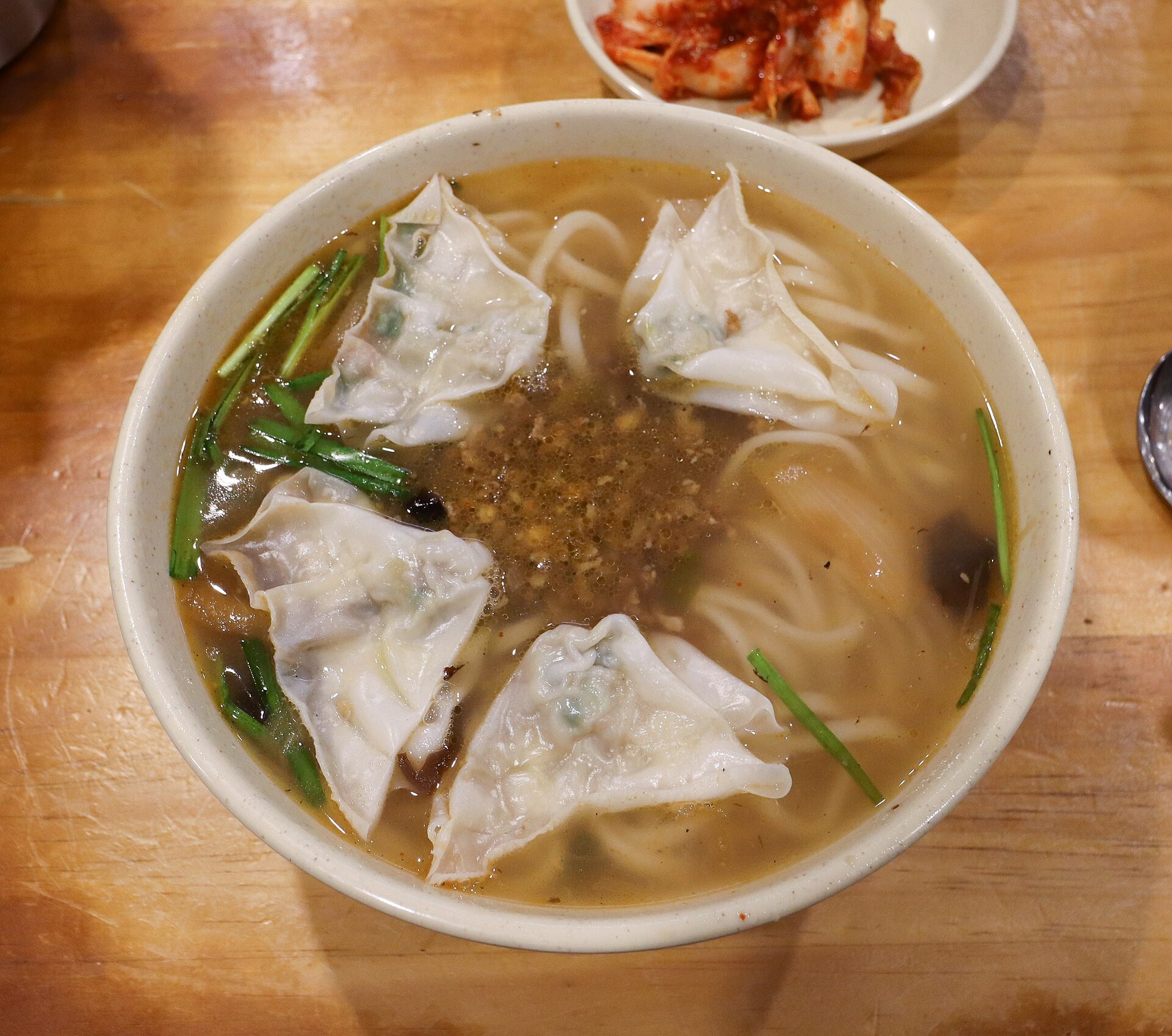
Photo credit
Mobius6 / CC BY-SA 4.0. Resized/cropped for display; the photograph retains its license.

Daejeon, the transport hub of South Korea, is the city most strongly associated with kalguksu — the KTO notes over 700 specialist restaurants there, with many long-standing establishments. In Seoul, Myeongdong Kyoja (open since 1970, according to the KTO's own restaurant listing) is the standard reference for a rich Myeongdong-style bowl, built on a thick, slightly starchy chicken-and-dumpling broth. Both cities are easy to reach by KTX from Seoul Station, and Daejeon in particular makes a practical half-day detour on a journey between Seoul and Busan.
Official reference: english.visitkorea.or.kr
Which bowl fits your trip? A quick comparison
The three soups suit different travellers, cities and moments. Samgyetang is a full meal in a single earthenware pot — it works as a solo lunch, requires no side-ordering and is deeply filling. It is available throughout the year but is most culturally resonant during the summer Sambok days; if your visit falls during those dates, joining the queue at a specialist restaurant is itself part of the experience.
Dwaeji-gukbap is Busan's dish, and while you can find versions elsewhere, the Seomyeon alley concentration makes it a natural anchor for any food-focused Busan afternoon. The 24-hour availability means it can absorb a late arrival or an early start. Kalguksu, by contrast, is the most geographically distributed of the three: a bowl in Daejeon on the way south, a bowl at Myeongdong Kyoja in Seoul for convenience, or even a clam version near a coastal market — the broth format travels.
Official reference: english.visitseoul.net · english.visitkorea.or.kr · english.visitkorea.or.kr
Practical notes before you sit down
All three soups are typically ordered by specifying the bowl type when you arrive — there is rarely a long decision process. At samgyetang restaurants you usually choose between a standard pot or a black-chicken (ogol) variant where available; at dwaeji-gukbap restaurants the key choice is the meat type (see the menu guide above); at kalguksu restaurants the broth style is usually fixed by the house.
Payment at smaller gukbap and kalguksu restaurants is most commonly made after eating, at a counter, and many older establishments are cash-preferred — it is worth carrying some Korean won for smaller neighbourhood spots. Most restaurants at the addresses named by the KTO and Visit Seoul operate full menus in Korean, though English menus are noted as available at several Busan dwaejigukbap establishments listed in the official guide. If you are navigating in Korean, the three dish names in Korean characters — 삼계탕, 돼지국밥, 칼국수 — are worth saving to your phone.
- Save the Korean characters for each dish: 삼계탕 (samgyetang), 돼지국밥 (dwaeji-gukbap), 칼국수 (kalguksu).
- For dwaeji-gukbap, decide before ordering whether you want rice mixed in or on the side (ttaro); if you want it separate, say 'ttaro juseyo' (따로 주세요).
- Add condiments gradually at the dwaeji-gukbap table: chives first, taste, then salted shrimp or salt as needed.
- For samgyetang, season with the provided salt and pepper; debone the chicken with your chopsticks and dip the meat in salt.
- Carry Korean won for smaller neighbourhood restaurants; confirm payment method before ordering if in doubt.
Official reference: english.visitkorea.or.kr · english.visitseoul.net
Sources and trip notes
Official information checked 20 September 2026. Routes are editorial suggestions. Check date-specific conditions with the operator before travel; photographs are archival.
KEEP THE GOOD FINDS
This could be part of your Korea.
Save this guide alongside your other ideas. You can come back to compare, plan, or explore something new.