What to Bring to Korea: A Practical Packing List That Actually Fits a Carry-On
Korea has a convenience store on almost every corner and Olive Young pharmacies throughout every city, so most toiletries can be skipped entirely. The items that genuinely require advance preparation are your arrival card, power adapter for 220V outlets, and any prescription medicine documentation — everything else can be bought on arrival for less than you'd pay at home.
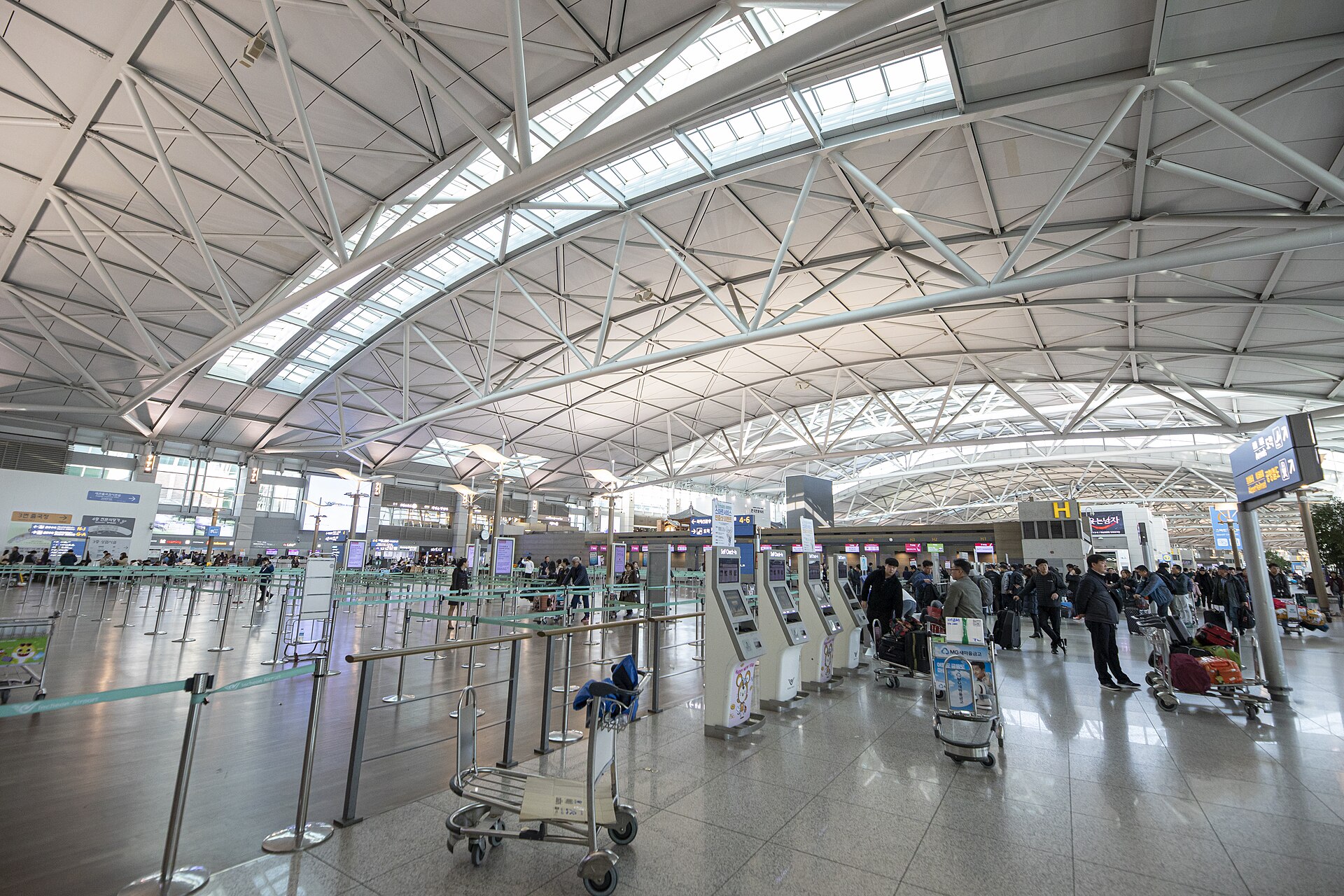
Photo credit
Arne Müseler / CC BY-SA 3.0 de. Resized/cropped for display; the photograph retains its license.

Documents to prepare before you land
Three documents matter before you reach immigration. First, your passport — straightforward, but check the expiry date well ahead of your trip. Second, an arrival card: most international visitors entering Korea are required to submit one. You can complete it online at e-arrivalcard.go.kr up to three days before your arrival date (Korea Standard Time). Once submitted online, no printed copy is needed at the immigration counter. Holders of a valid residence card, K-ETA, or e-Group visa are exempt.
Third, a customs declaration form if you are carrying goods valued over USD 800 in total, more than USD 10,000 in cash, or items that otherwise require declaration. Passengers arriving at Incheon Terminal 2 or Gimpo Airport can submit this form via the Korea Customs Declaration for Travelers mobile app before landing; those arriving elsewhere fill in a paper form on the plane. Families travelling together need only one form between them. The form must be completed in Korean or English.
Filling in the arrival card online takes under five minutes and removes one queue on arrival. Do it the evening before you fly.
- Go to e-arrivalcard.go.kr (available in English, Korean, Japanese, Chinese, Vietnamese, Thai and Russian).
- Complete and submit your arrival card within the three-day window before your scheduled arrival in Korea.
- Screenshot or save the confirmation — though no printed copy is required, having it on your phone is useful.
- If you are carrying declarable goods or cash over USD 10,000, download the Korea Customs Declaration for Travelers app and submit your customs form before landing (Incheon T2 and Gimpo only); otherwise fill in the paper form during the flight.
Official reference: english.visitkorea.or.kr
Power adapter vs voltage converter: what you actually need
Korea runs on 220V at 60Hz, with two round-pin outlets (Type C and Type F). If you are travelling from a country that uses 110V — including the United States and Canada — this is the one item worth checking before you pack.
The good news: most modern phone chargers, laptop bricks and camera batteries are dual-voltage, meaning they work on both 110V and 220V without any conversion. Look at the small print on your charger label. If it reads something like '100–240V', you only need a plug adapter to change the pin shape — not a voltage converter. If it reads only '110V' or '120V', you need a converter as well.
Plug adapters are sold at hotel front desks, airport shops, major duty-free stores and convenience stores throughout Korea, so forgetting one is not a crisis. That said, buying one before departure costs less and saves you hunting for one on a tired first evening.
- Check the label on each charger and device brick you plan to bring — look for the voltage range.
- If the label shows '100–240V', pack only a Type C or Type F plug adapter.
- If the label shows a single voltage below 200V, you need a voltage converter in addition to a plug adapter.
- If you forget, adapters are available at Incheon Airport shops, hotel front desks and convenience stores nationwide.
Official reference: english.visitkorea.or.kr
Connectivity: eSIM, SIM card or roaming
Korea's major airports — Incheon, Gimpo, Gimhae and Jeju — have roaming centres operated by local carriers (KT, SK Telecom and LG U+), where visitors can register for roaming, buy a prepaid physical SIM card or pick up an eSIM. Physical USIM cards are also sold at CU, GS25, 7-Eleven and Emart24 convenience stores, though stock varies by branch.
If you prefer to sort connectivity before departure, eSIMs can be purchased online and activated by scanning a QR code — no physical card required. Check that your phone supports eSIM before purchasing. Those who want a local number rather than just data should opt for a physical SIM.
Free public Wi-Fi is available at most airports, subway stations, train stations and many public areas across Korea, which makes brief connectivity gaps manageable if your SIM purchase takes a few minutes on arrival.
Official reference: english.visitkorea.or.kr
Prescription medicines and the liquid rules at Incheon security
Standard international carry-on liquid rules apply at Incheon: each individual container must be 100 ml or less (measured by container size, not remaining content), and all liquid, spray and gel items must fit in a single one-litre transparent zip-lock bag per person. This covers everything from toner and sunscreen to toothpaste and gochujang — yes, chilli paste counts as a gel.
Prescription liquid medicines over 100 ml require a doctor's note or prescription in Korean or English to clear Incheon security. Importantly, you may only carry the quantity needed for use during the flight as carry-on baggage; any additional supply must be checked. If you carry insulin or another liquid medication and do not have a prescription document, you are limited to the standard 100 ml container rule.
Solid medications — tablets, capsules and powders — can be carried in both hand luggage and checked baggage without a doctor's note, though quantities may vary by airline. Syringes and needles for medical use are permitted in both carry-on and checked baggage. If you have an implanted pacemaker or electronic medical device, carry your identification card; you may be directed to a separate screening area at the discretion of the officer.
Portable power banks must be carried on — they cannot go in checked baggage. Lithium batteries up to 100Wh are generally permitted as carry-on; those between 100Wh and 160Wh require airline approval (up to two per person); anything over 160Wh is not allowed. Check your power bank's label for its Wh rating before you pack.
- If you carry prescription liquid medicine over 100 ml, obtain a doctor's note or prescription in Korean or English before departure.
- Pack only the in-flight quantity of liquid medicine in your carry-on; check any remaining supply.
- Place all liquid, spray and gel carry-on items (100 ml containers or smaller) in a single transparent 1-litre zip-lock bag.
- Check your portable battery's Wh rating — over 160Wh is prohibited on flights entirely.
Official reference: www.airport.kr
Toiletries and skincare: what Korea already sells better
Korea has dense retail coverage for personal care products. Olive Young health and beauty stores operate throughout Seoul and in cities across the country, stocking sunscreen, skincare, sheet masks, shampoo, conditioner, body lotion, toothpaste and a wide range of over-the-counter health products. Convenience store chains — CU, GS25, 7-Eleven and others — carry travel-size and full-size versions of the same basics, and are typically open around the clock.
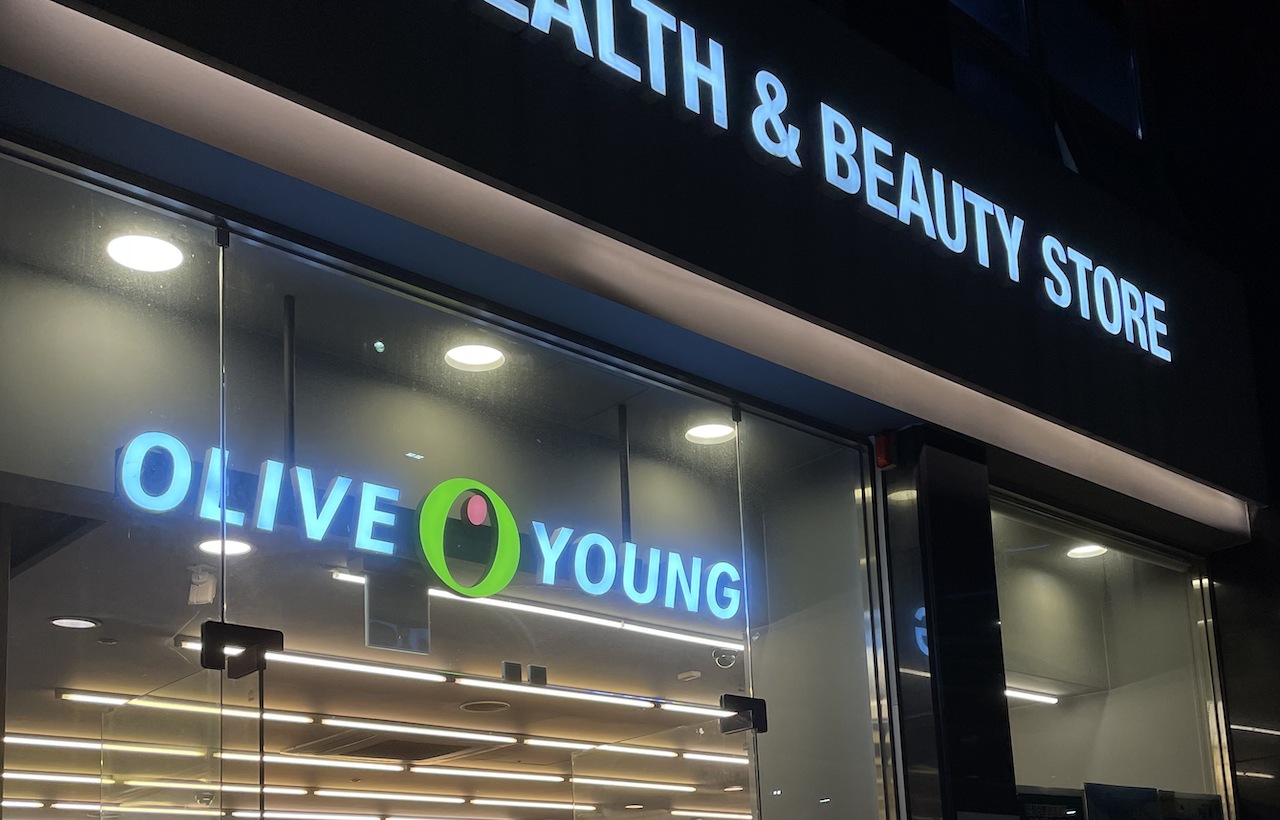
Photo credit
Pkccccj / CC BY-SA 4.0. Resized/cropped for display; the photograph retains its license.

In practical terms: leave full-size sunscreen, shampoo, lotion and skincare at home. Bringing travel-size amounts for the first night is reasonable, but restocking on arrival is cheaper and often gives you access to a wider product range than you would find at home. Korean sunscreen in particular is widely regarded as high-quality and comes in formulas that are difficult to source outside the country.
Over-the-counter pain relief, cold medicine and digestive tablets are available at pharmacies (약국, yakguk) and some convenience stores throughout Korea, though brand names will differ from what you are used to. A small personal supply of your preferred OTC medicine for the first couple of days is reasonable, but there is no need to pack a full travel pharmacy.
Official reference: english.visitkorea.or.kr
Bring from home vs. buy in Korea: a quick reference
Use the table below to make the final call on what goes in your carry-on. The guiding principle: if Korea sells it cheaper and you can buy it within an hour of landing, leave it at home.
For clothing, pack for the season you are visiting. Korea has four distinct seasons with hot, humid summers and cold winters. Laundromats and coin-operated dryers are widely available, so there is no need to over-pack for longer trips.
| Item | Bring from home? | Notes |
|---|---|---|
| Passport + arrival card | Yes — must have | Complete arrival card at e-arrivalcard.go.kr up to 3 days before departure |
| Power adapter (Type C/F) | Recommended if from 110V country | Also sold at Korean airports, hotel desks and convenience stores |
| Prescription medicines | Yes | Carry a doctor's note or prescription in Korean or English for any liquid medicine over 100 ml |
| eSIM or SIM card | Optional — can buy in advance online | Also available at Incheon Airport roaming centres and major convenience store chains |
| Sunscreen | Skip it | Wide range available at Olive Young and convenience stores |
| Skincare and toiletries | Travel sizes only for night one | Full-size products are cheaper and more varied in Korea |
| OTC cold or pain medicine | Small personal supply recommended | Available at pharmacies nationwide, but familiar brand names will differ |
| Portable battery (power bank) | Yes, if under 160Wh | Over 160Wh is prohibited on all flights; must be carried on, not checked |
| Clothing | Pack for the season | Laundromats widely available; no need to over-pack |
Official reference: english.visitkorea.or.kr · english.visitkorea.or.kr · www.airport.kr
Items that may surprise you at security
A few items catch first-time visitors off guard at Incheon. Gels include more than toiletries: gochujang (red chilli paste), doenjang (soybean paste) and similar condiments all count as gels under carry-on rules and must follow the 100 ml container limit. If you are bringing Korean food souvenirs home on the return leg, paste-type products need to be checked or kept to small containers in your zip-lock bag.
Alcohol is unrestricted below 24% in both carry-on and checked baggage (subject to liquid rules in carry-on). Between 24% and 70%, up to 5 litres per person is allowed in checked baggage only. Anything 70% or above is not permitted in either.
Knives, tools and sharp-tipped hiking or trekking poles must be checked, not carried on. Electronic cigarettes must be carried on and cannot be checked. Weapons of any kind — including replicas — are prohibited. When departing Korea, cash amounts exceeding USD 10,000 must be declared at customs and accompanied by a Foreign Exchange Transaction Report confirmation.
If you need a transparent zip-lock bag and did not bring one, they are available at the central convenience store on the third floor of Incheon Airport's passenger terminal and at airport bookstores.
Official reference: www.airport.kr
Sources and trip notes
Official information checked 27 September 2026. Routes are editorial suggestions. Check date-specific conditions with the operator before travel; photographs are archival.
KEEP THE GOOD FINDS
This could be part of your Korea.
Save this guide alongside your other ideas. You can come back to compare, plan, or explore something new.