Seogwipo Half-Day Walk: Waterfalls, Harbour and Olle Market
A free afternoon in Seogwipo fits four walkable stops: Cheonjiyeon Falls, Seogwipo Port, Saeyeongyo Bridge and Maeil Olle Market — all linked by flat, waymarked paths through the city centre. The full loop takes around three to four hours including stops, needs no car, and ends at a market open until 21:00 in summer.
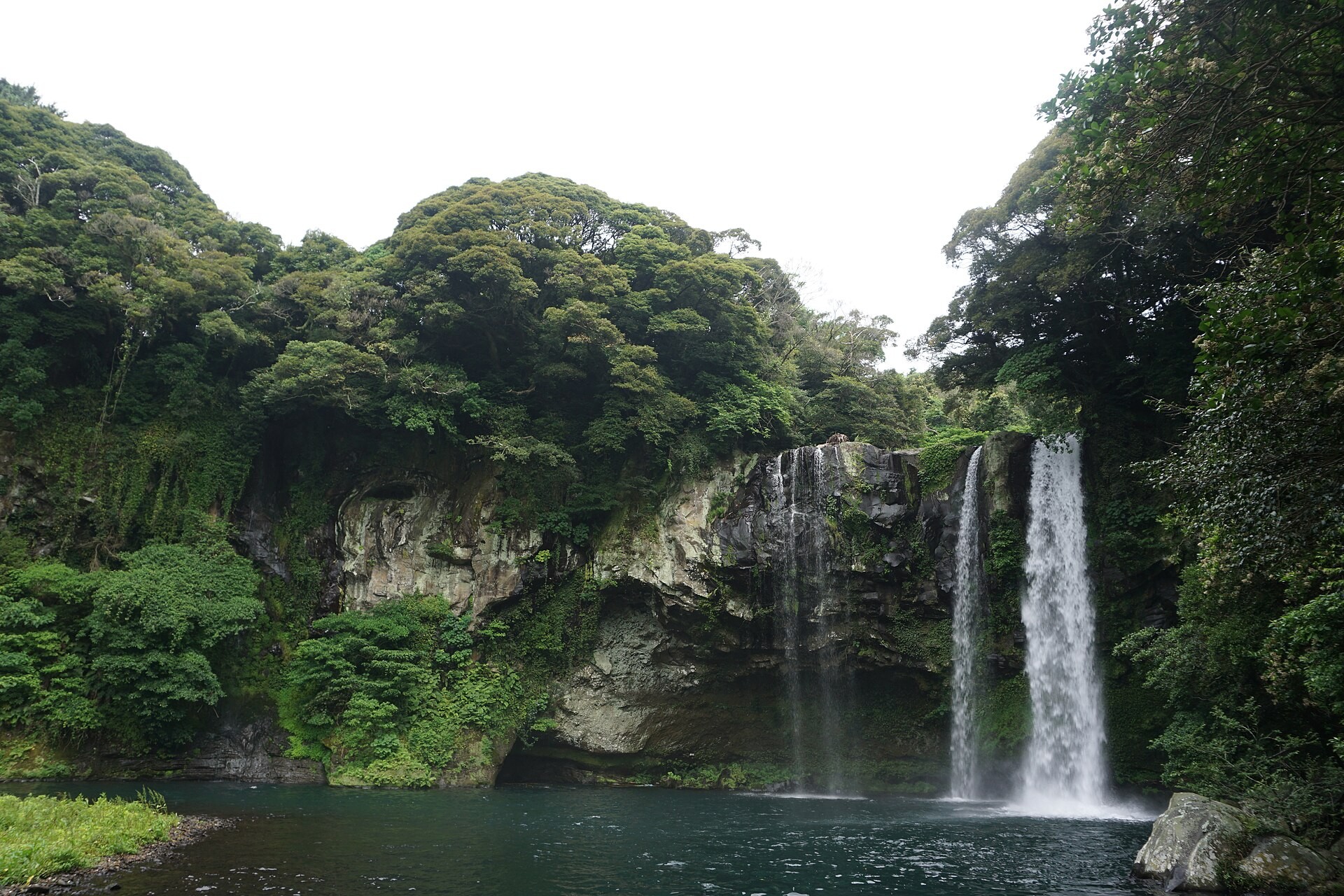
Photo credit
Yhnn0065 This photo was taken with Sony ILCE-6000 / CC BY-SA 3.0. Resized/cropped for display; the photograph retains its license.

The route at a glance: what fits and how long it takes
The core sequence runs Cheonjiyeon Falls → Seogwipo Port → Saeyeongyo Bridge → Maeil Olle Market. Each leg is a short walk through central Seogwipo, and the market sits close to the Cheonjiyeon entrance, so the loop closes naturally without backtracking. A relaxed pace with time at each stop adds up to three to four hours — realistic for a post-lunch start and a market dinner before sunset.
The path broadly follows parts of Jeju Olle Trail Route 6, which passes through central Seogwipo and is rated low difficulty on relatively flat terrain. Visitors of most fitness levels should find the terrain comfortable; the falls approach is a maintained valley trail that the official source describes as suitable for all ages.
If you have an extra hour, Oedolgae Rock and Chilsimni Park extend the route along the coast from downtown Seogwipo. This section is covered separately below as an optional add-on rather than a core stop, because it adds distance and the market is the natural closing point for most afternoon visitors.
Official reference: www.visitjeju.net · www.visitjeju.net
Stop 1 — Cheonjiyeon Falls: start here, not at the harbour
Cheonjiyeon Falls makes the clearest starting point because its entrance anchors the whole neighbourhood. The name translates roughly as 'a pond formed where heaven and earth meet', and the waterfall drops 22 metres into a wide pool below — 12 metres across at the face. The approach from the entrance gate is a roughly one-kilometre valley walk along a covered artists' walkway with art displays on either side, making the route to the falls itself worth the time rather than just the destination.
Two natural monument designations add context without padding the visit: the valley's Elaeocarpus tree habitat (Natural Monument No. 163) and its subtropical forest (No. 379) are protected zones, and the pond is home to giant mottled eels recognised under Natural Monument No. 27. These designations explain why logging, plant collection and wildlife capture are prohibited within the area.
The falls are open from 09:00 to 22:00 with last admission at 21:20, so an early-afternoon start leaves ample margin. Visiting around mid-afternoon means you see the falls in daylight and still reach the market well before its summer closing time. Check entry conditions and any admission fees with the official Visit Jeju listing before you go.
Official reference: www.visitjeju.net
Stop 2 — Seogwipo Port and Saeyeongyo Bridge
From Cheonjiyeon it is a short, pleasant walk downhill to Seogwipo's working harbour. The official itinerary describes this leg as easy to navigate because Saeyeongyo Bridge — one of the city's most recognisable landmarks — acts as a visual guide from the port area. The bridge connects the harbour district to Saeseom, a small uninhabited island, via a 1.1-kilometre walkway designed with references to traditional marine vessels, including sail-shaped elements and round staircases.
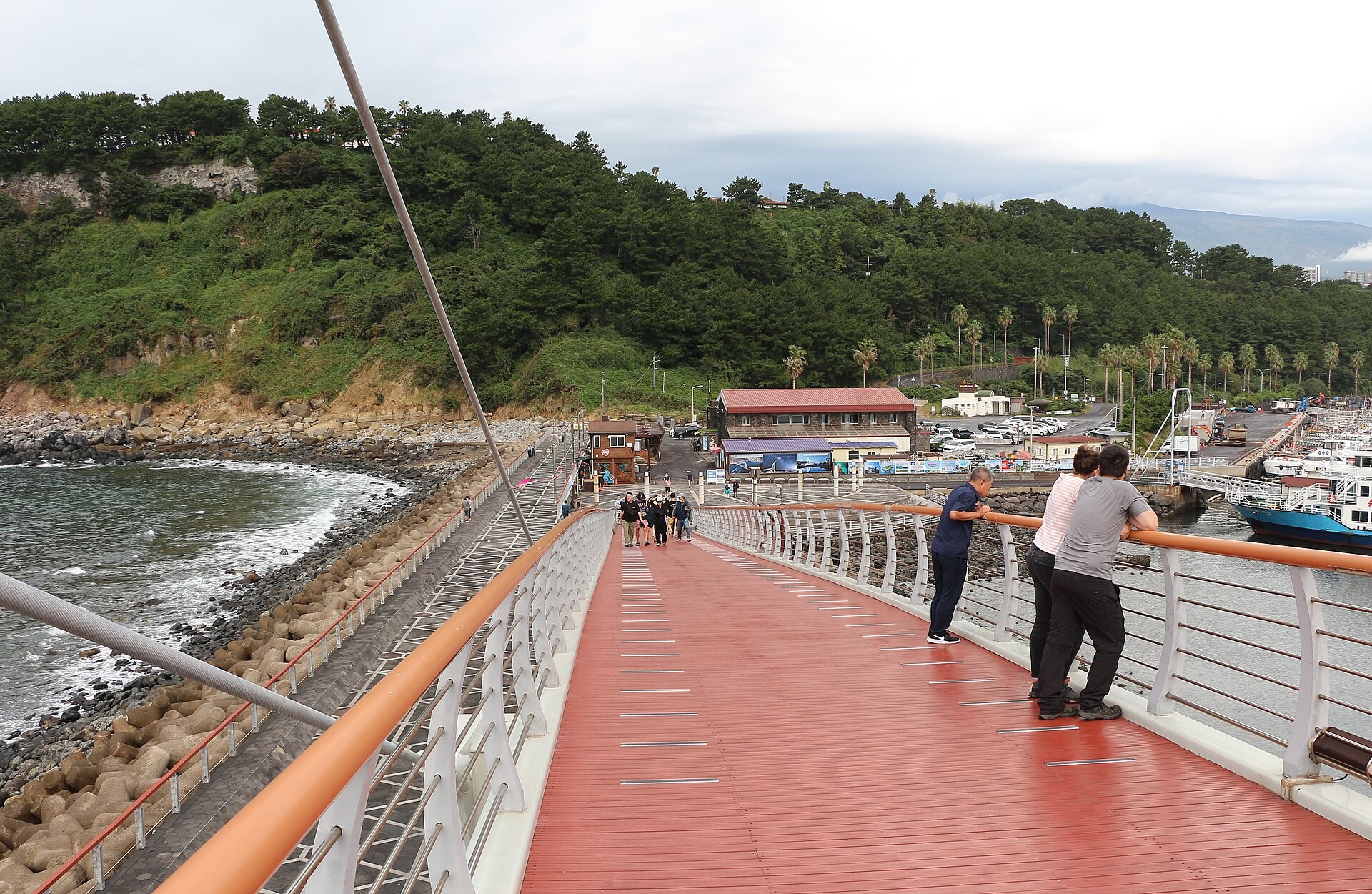
Photo credit
Bernard Gagnon / CC0. Resized/cropped for display; the photograph retains its license.

The bridge and island path are popular in the evening for the ocean breeze and the view back across the harbour toward central Seogwipo. If your timing puts you here in the late afternoon, this is where the golden-hour light tends to reward a pause. Musical benches along the walkway make it a natural rest stop between the falls and the market.
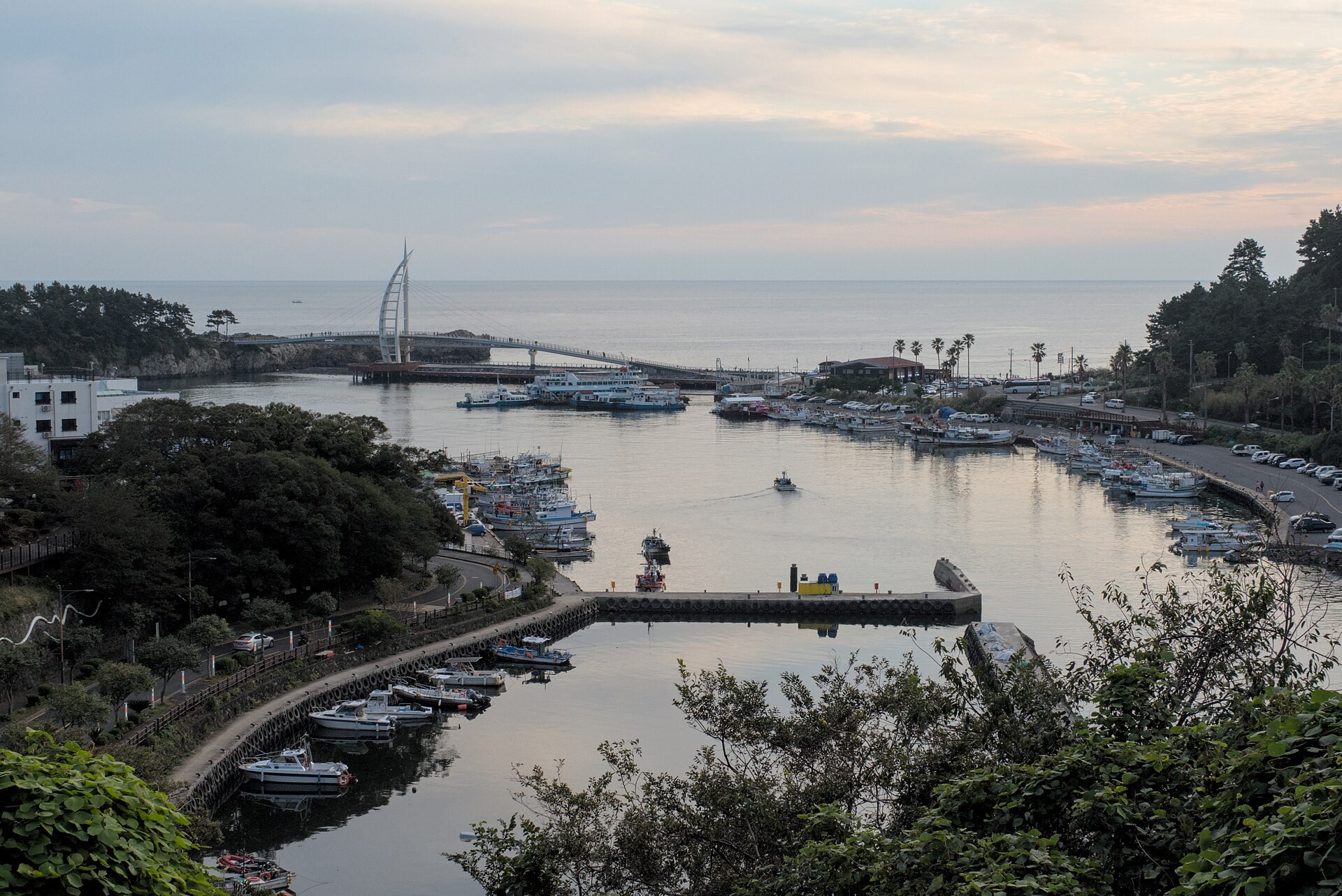

Saeseom itself is small and uninhabited, so treat this stop as a walk and a view rather than an extended exploration. Allow twenty to thirty minutes here before moving toward Olle Market.
Official reference: www.visitjeju.net
Optional detour — Oedolgae Rock and the coastal path
Jeju Olle Trail Route 6 continues from central Seogwipo through Chilsimni Park — a coastal green space — toward Oedolgae Rock, a solitary basalt stack rising from the sea off Seogwipo's southern cliffs. This section adds meaningful walking distance and is best considered by visitors who have more than four hours or who prioritise a clifftop coastal view over market time.
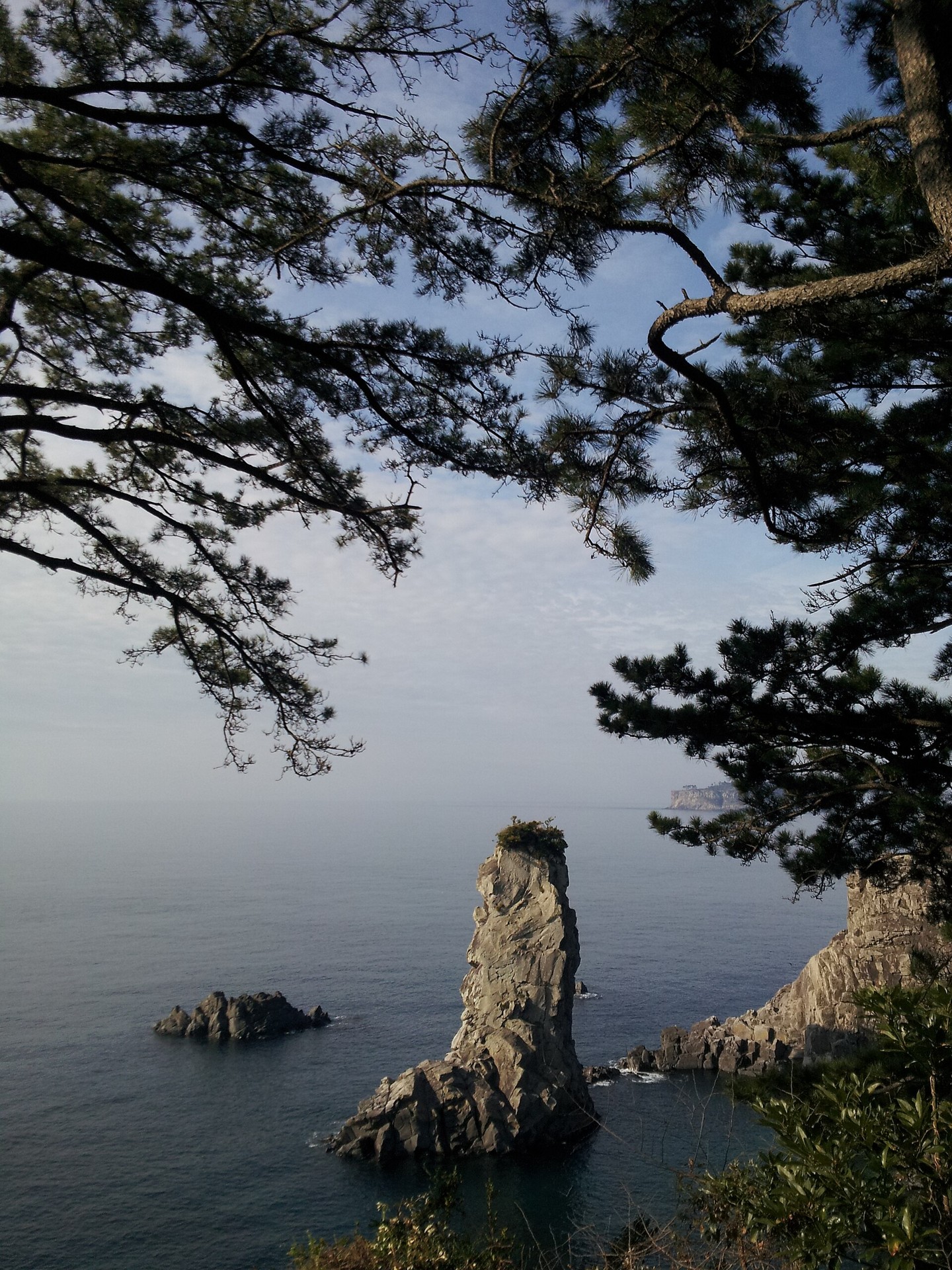
Photo credit
Tool79 / CC BY-SA 4.0. Resized/cropped for display; the photograph retains its license.

If you do add this leg, it works better before the harbour stop than after — heading out to Oedolgae and then looping back toward the port and market keeps the sequence logical. Confirm trail access conditions locally before setting out, as coastal paths can be affected by weather.
Official reference: www.visitjeju.net
Stop 3 — Seogwipo Maeil Olle Market: the natural end point
The market sits close to Lee Jung-seop Street and the Cheonjiyeon entrance — which is why it closes the loop so naturally. As Seogwipo's largest and oldest permanent traditional market, it operates year-round with summer hours of 07:00–21:00 and winter hours of 07:00–20:00, though individual stalls may vary. An afternoon arrival gives you full browsing time before the evening crowd builds.
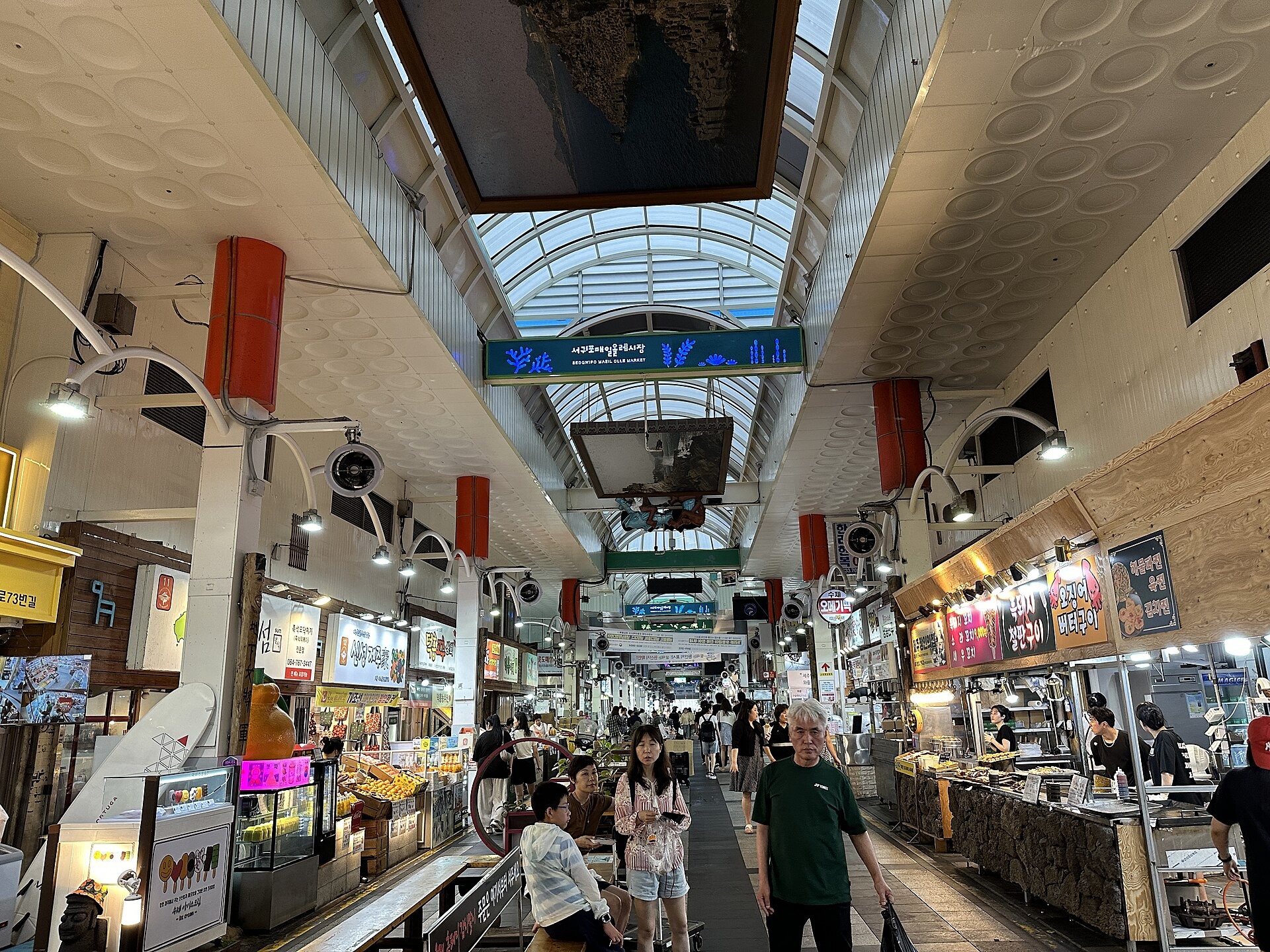
Photo credit
Seefooddiet / CC BY-SA 4.0. Resized/cropped for display; the photograph retains its license.

The market has shifted its focus toward Jeju local specialties in recent years to serve the high proportion of visiting tourists. Seafood stalls line the covered arcade with live tanks, and the range of produce, snacks and prepared food makes it easy to turn a browse into a meal. Benches outside the market make it straightforward to eat close to the water after picking up food inside.
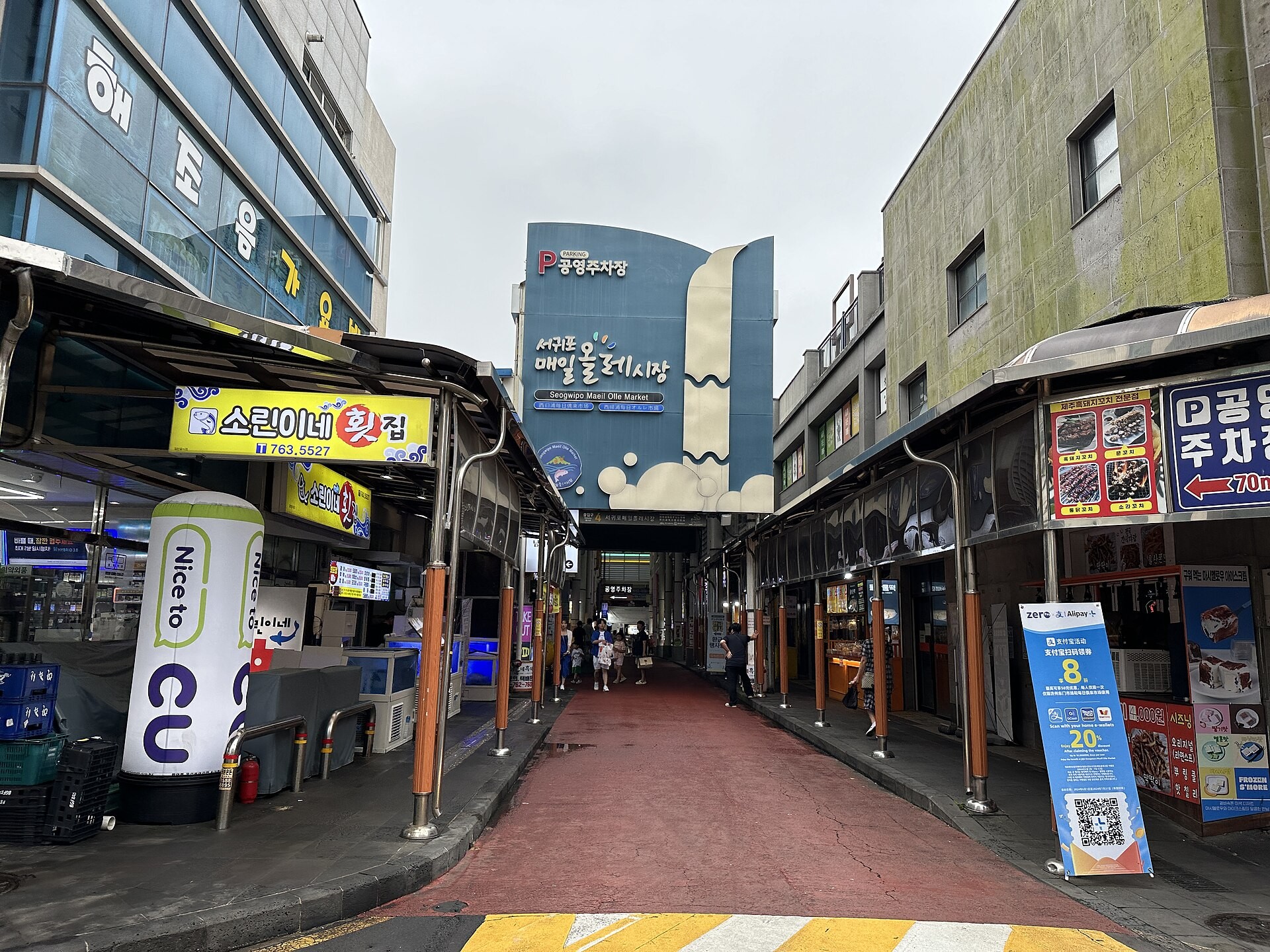
Photo credit
Seefooddiet / CC BY-SA 4.0. Resized/cropped for display; the photograph retains its license.

Nearby attractions noted on the official listing include Lee Jung-seop Street and Jeongbang Falls, so if you finish early there are further options within walking distance.
Official reference: visitjeju.net
What to eat at Olle Market and when to stop
afternoon snack
Gimbap and tteokbokki
Rice rolls and spicy rice cakes — quick, portable market staples sold at covered stalls inside the arcade
Fit it into your day: Seogwipo Maeil Olle Market
afternoon snack
Kimchi pancakes (kimchi jeon)
Savoury fried pancakes with fermented cabbage — a traditional market staple named alongside the other snack options at Olle Market
Fit it into your day: Seogwipo Maeil Olle Market
early dinner
Jeju silver hairtail sashimi (galchi hoe)
Freshly cut silver hairtail fish, a Jeju specialty sold at the market's dedicated seafood stalls alongside live-fish tanks
Fit it into your day: Seogwipo Maeil Olle Market seafood section
early dinner
Red tilefish sashimi (okdom hoe)
Red tilefish is a prized Jeju variety served fresh at the market's specialised seafood stores — closely associated with the island's fishing culture
Fit it into your day: Seogwipo Maeil Olle Market seafood section
afternoon snack
Omegi-tteok
A Jeju-specific rice cake made with millet — a regional snack found at market stalls and distinct from mainland Korean tteok varieties
Fit it into your day: Seogwipo Maeil Olle Market
The market is the main food stop on this route, and the options split usefully between quick afternoon snacks and a more substantial early-evening meal depending on when you arrive.
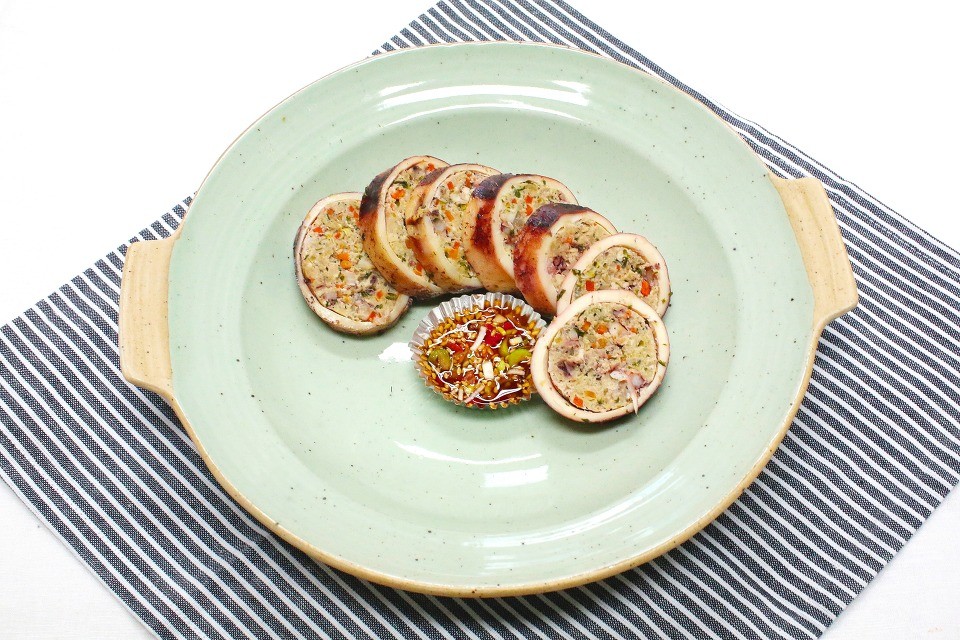
Photo credit
(Shinae Bang) 방신애 / CC BY 4.0. Resized/cropped for display; the photograph retains its license.

For a mid-afternoon snack after the falls and bridge, gimbap and tteokbokki are both easy to carry — the official source names these alongside kimchi pancakes as traditional staples sold at the market stalls. The covered arcade makes eating while standing straightforward, and the benches outside work well if you want to sit near the harbour.
For a fuller stop closer to dinner, the market's specialised seafood stalls sell Jeju silver hairtail, fresh mackerel and red tilefish, typically served fresh as sashimi. These Jeju-specific fish are among the most localised choices you can make in Seogwipo and reflect what the market has become known for among both local and visiting buyers.
Omegi-tteok — a Jeju-specific rice cake made with millet — is sold at market stalls and makes a good standalone snack at any point. It is a regional specialty you are unlikely to find in the same form elsewhere in Korea, which makes it worth trying even if you plan a bigger meal later.
Official reference: visitjeju.net · www.visitjeju.net
Getting there without a car, and timing your start
No car is needed for this route. Bus 600 from Jeju Airport runs to Seogwipo; the official market listing names the Saetgijeong Park stop as the get-off point, from which the market is a 900-metre walk. Total journey time from the airport is noted as approximately one hour, though bus frequency and journey time can vary — check current schedules before travelling.
A practical starting order is to take the bus to the market area first to get oriented, then walk to Cheonjiyeon (which the market listing confirms is close by), complete the waterfall visit, head to the port and bridge, and return to the market for food. Alternatively, arriving at Cheonjiyeon first and working clockwise to the market works equally well if you are coming from accommodation already in the Seogwipo area.
For timing: Cheonjiyeon opens at 09:00, but a start between 13:00 and 14:00 works well for a half-day afternoon plan. This puts you at the bridge around golden hour and at the market with time to eat before the 21:00 summer closing. The falls themselves stay open until 22:00, so there is no risk of missing them on an afternoon schedule. Confirm current admission conditions and any entry fees directly with the official Visit Jeju listings before your trip.
- Take bus 600 from Jeju Airport toward Seogwipo and alight at the Saetgijeong Park stop
- Walk approximately 900 m to the Maeil Olle Market / Cheonjiyeon Falls area to get oriented
- Enter Cheonjiyeon Falls and walk the 1 km valley trail to the waterfall (open 09:00–22:00, last admission 21:20)
- Walk down from the falls to Seogwipo Port — Saeyeongyo Bridge is the visible landmark guiding you to the harbour
- Cross onto Saeyeongyo Bridge and walk toward Saeseom Island for the harbour view and a rest stop
- Return to the market area for food — gimbap and snacks for a lighter stop, sashimi at the seafood stalls for a fuller meal
- Optional: if time allows before the market, extend toward Oedolgae Rock via Chilsimni Park along Olle Trail Route 6
Official reference: visitjeju.net · www.visitjeju.net
Sources and trip notes
Official information checked 20 September 2026. Routes are editorial suggestions. Check date-specific conditions with the operator before travel; photographs are archival.
KEEP THE GOOD FINDS
This could be part of your Korea.
Save this guide alongside your other ideas. You can come back to compare, plan, or explore something new.