Sokcho Beyond Seoraksan: Beach Market, Lighthouse Walk and Abai Village
Most visitors treat Sokcho as a gateway to Seoraksan and leave the same day. But the town itself has a seafood market worth a morning, a hand-pulled ferry to a historic refugee village, a lakeside walk along Cheongchoho and a beach with mountain views. Adding one full day in Sokcho town before or after Seoraksan changes the trip entirely.
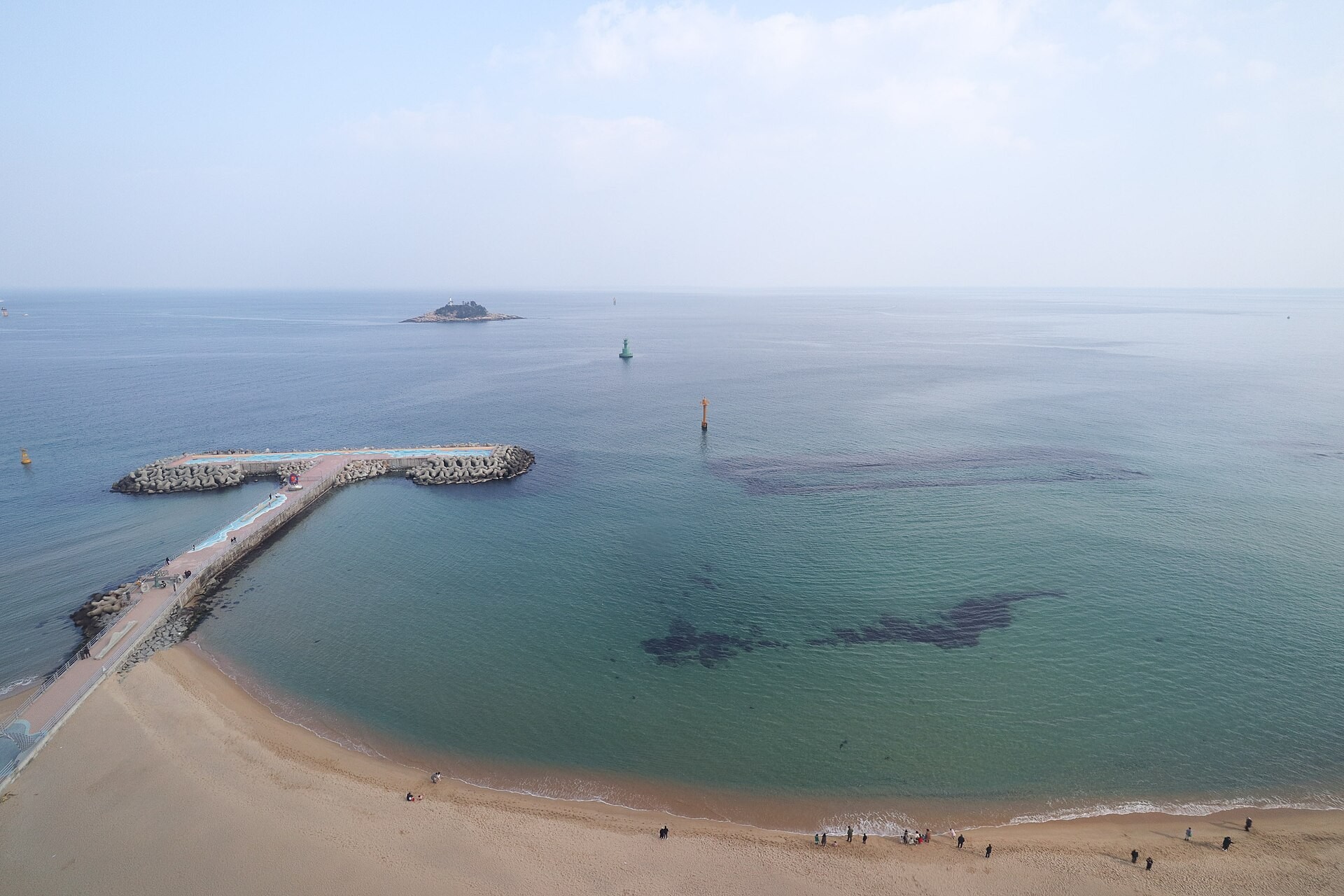
Photo credit
Mobius6 / CC BY-SA 4.0. Resized/cropped for display; the photograph retains its license.

Sokcho Tourist and Fishery Market: Dried Seafood and Local Snacks
Late morning snack or lunch
Ojingeo sundae
Squid stuffed with a mixture of vegetables and glass noodles, then steamed and sliced
Fit it into your day: Sokcho Tourist and Fishery Market
Afternoon snack or take-home
Dried squid
Whole squid dried and pressed flat, sold as a snack or souvenir at market stalls
Fit it into your day: Sokcho Tourist and Fishery Market
Morning snack
Grilled whole squid
Fresh squid grilled on a stick over charcoal, served whole with a salt dip
Fit it into your day: Sokcho Tourist and Fishery Market
Sokcho Tourist and Fishery Market, formerly known as Jungang Market, sits in the center of Sokcho city. The market specializes in dried seafood, with stalls displaying squid, seaweed and anchovy in neatly arranged rows. Fresh fish is also sold, though the selection varies by season and weather.

Photo credit
(Shinae Bang) 방신애 / CC BY 4.0. Resized/cropped for display; the photograph retains its license.

The market is compact enough to walk through in about thirty minutes, but allow more time if you plan to eat. Several stalls serve prepared food including ojingeo sundae and grilled fish. The atmosphere is more local than Busan's larger markets, with fewer tourists and more residents doing their daily shopping.
The market opens early in the morning and winds down by late afternoon. Seasonal availability affects what you find: summer brings fresh squid and crab, while winter features dried pollack and other preserved seafood. The narrow alleys between stalls are part of the experience, with vendors occasionally offering samples to passing visitors.
Beyond the seafood, the market sells ready-made side dishes like pickled garlic, seasoned seaweed and dried anchovy bundles. These make practical souvenirs that survive a bus ride back to Seoul. Several stalls near the entrance sell freshly grilled whole squid on sticks, which is best eaten while warm.
Official reference: english.visitkorea.or.kr
Abai Village Ferry: A Hand-Pulled Crossing to a Refugee Settlement
Lunch
Abai sundae
A North Korean style blood sausage with a coarser grain filling, specific to the Abai Village area
Fit it into your day: Abai Village, Sokcho
The Abai Village gaetbae is a small platform ferry that crosses the narrow channel between Sokcho's mainland and the village. What makes it unusual is the propulsion method: passengers pull themselves across on a rope. The crossing takes only a few minutes and is one of Sokcho's most distinctive experiences.
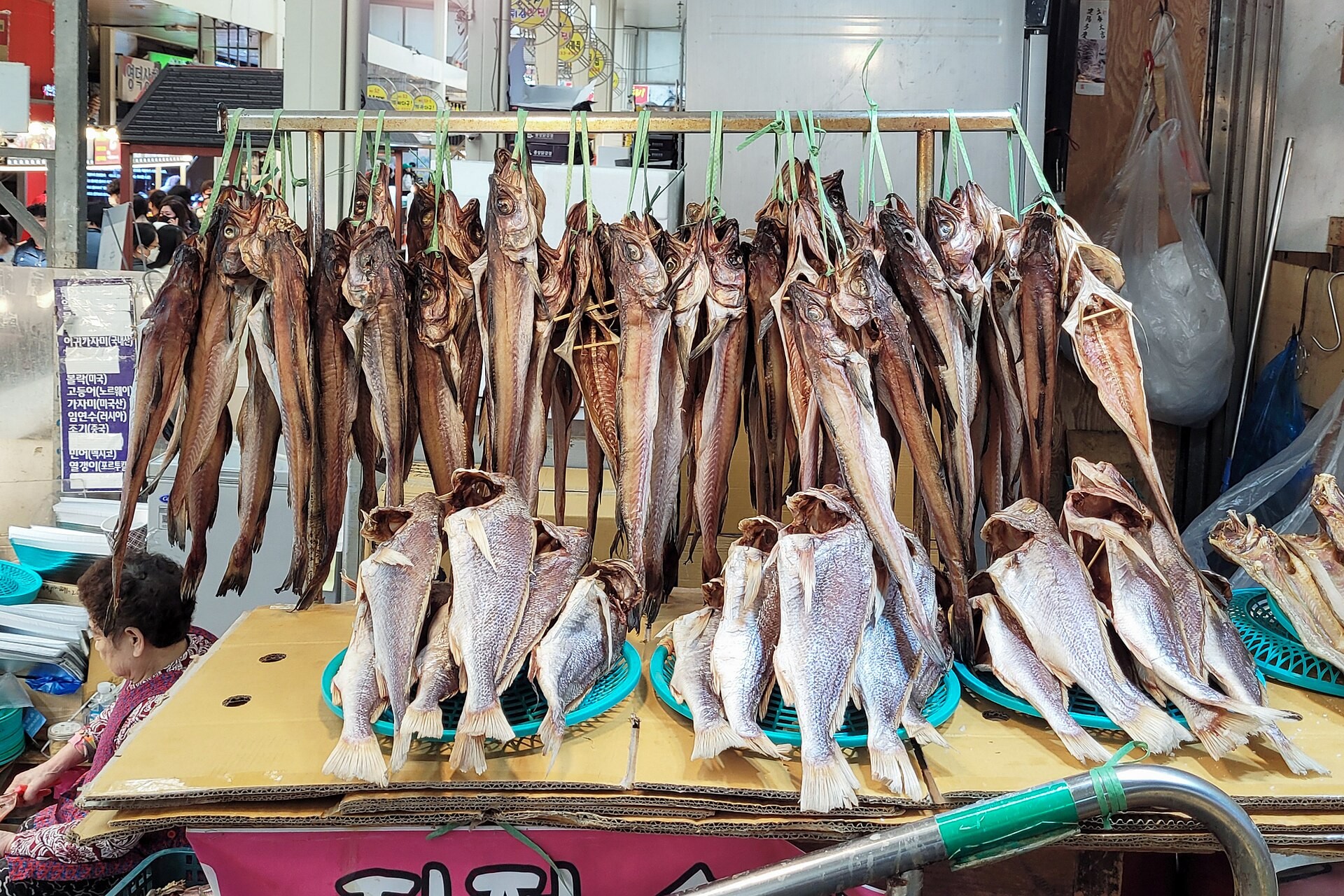
Photo credit
Bernard Gagnon / CC0. Resized/cropped for display; the photograph retains its license.

Abai Village was established by refugees from North Korea who settled here during the Korean War. The area retains a residential character and is known for abai sundae, a local variation of Korean blood sausage with a coarser filling than the Seoul version. Walk through the village, try the local food and return by the same ferry.
The village itself is small enough to walk through in twenty minutes. Restaurants line the main path, most serving abai sundae and ojingeo sundae as their primary dishes. The food here is straightforward and filling, and the experience of eating in the village adds context to the meal. After eating, walk to the far end of the village for a view across the channel back toward Sokcho city.
Official reference: english.visitkorea.or.kr
Cheongchoho Lake: A Quiet Walk Between Sea and Mountains
Cheongchoho is a natural lagoon on the edge of Sokcho where fresh water from the mountains meets seawater from the coast. A walking path follows the lake shore, offering views of Seoraksan to the west and the ocean to the east.
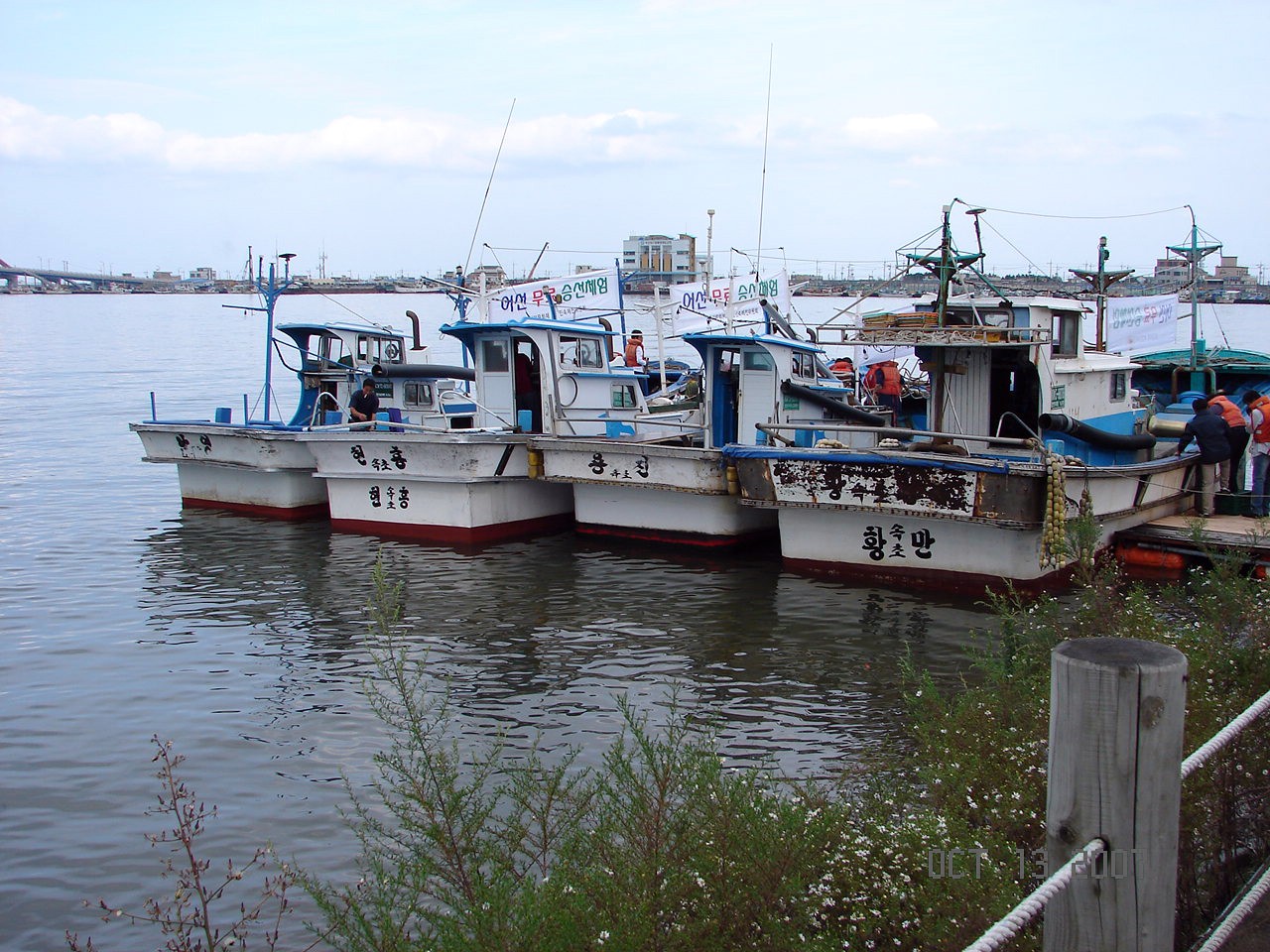
Photo credit
Steve46814 ( talk ) / CC BY-SA 3.0. Resized/cropped for display; the photograph retains its license.

The walk is flat and takes about forty minutes to complete at a relaxed pace. Early morning or late afternoon light makes the mountain reflections strongest. There is no admission fee and the path is accessible year-round.
Birdwatchers sometimes spot migratory waterfowl on the lake during spring and autumn. The path is paved and flat, suitable for visitors of all fitness levels. Benches along the route provide rest stops with views across the water toward the Taebaek mountain range.
The lake is technically a lagoon, formed where the Ssangcheon Stream meets the East Sea. The mixing of fresh and salt water creates a distinctive ecosystem. In spring, cherry blossoms line portions of the walking path. The Sokcho Eye, a large observation wheel near the lake, offers elevated views but is a separate paid attraction.
Official reference: www.mcst.go.kr
Yeonggeumjeong: Coastal Views from a Hilltop Pavilion
Yeonggeumjeong is a traditional Korean pavilion perched on a rocky outcrop along the Sokcho coastline. From the top, you can see Sokcho Beach stretching to the north and the open sea to the east. On clear days, the Seoraksan peaks are visible to the west.
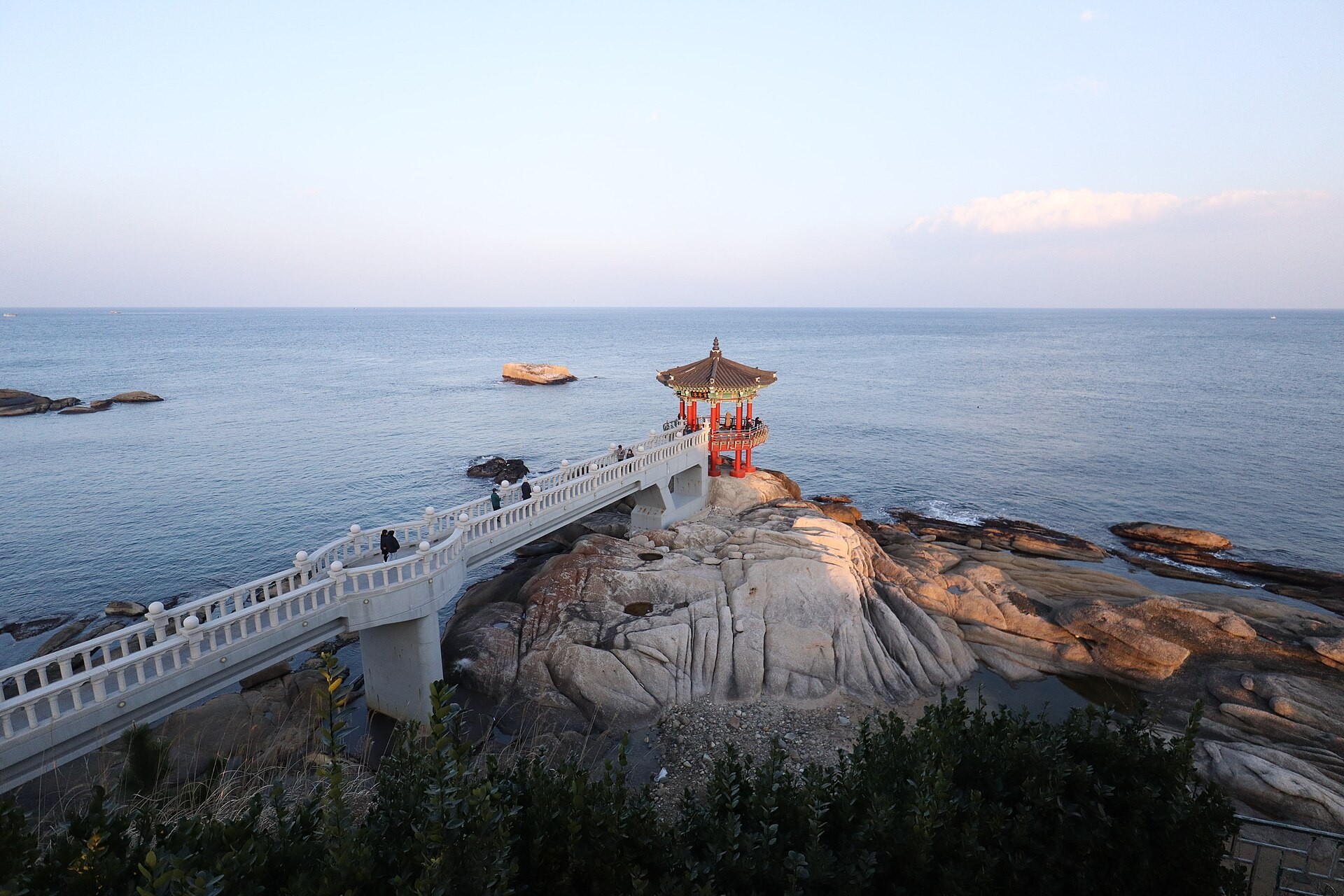
Photo credit
Mobius6 / CC BY-SA 4.0. Resized/cropped for display; the photograph retains its license.

The climb to the pavilion is short but steep, taking about ten minutes from the road. It works well as a brief stop between the beach and the lake, especially around sunset. There is no admission fee.
Official reference: english.visitkorea.or.kr
Sokcho Beach: Where the Mountains Meet the Coast
Sokcho Beach sits between the town center and the Seoraksan foothills. Unlike Busan's busy city beaches, Sokcho Beach is relatively quiet outside summer weekends. The pine trees behind the beach provide shade and the water is clean.
Photo credit
kallerna / CC BY-SA 4.0. Resized/cropped for display; the photograph retains its license.

The beach is within walking distance of Yeonggeumjeong and the Cheongchoho lake path, making it easy to combine in a single afternoon loop. During summer months the beach has basic facilities. Outside peak season it remains open but services are limited.
Sokcho Beach is less developed than Gyeongpo Beach in nearby Gangneung. This gives it a quieter character that appeals to visitors looking for a low-key coastal experience. Local fishing boats sometimes dock near the southern end of the beach, and the surrounding pine forest creates a natural windbreak.
Official reference: english.visitkorea.or.kr
How to Plan One Day in Sokcho Town
Start at the Tourist Market in the morning when the seafood stalls are freshest. Walk or take a short taxi to the Abai Village ferry for lunch. In the afternoon, follow the Cheongchoho lake path, then climb to Yeonggeumjeong and end at Sokcho Beach.
This sequence covers the main attractions in a comfortable loop without backtracking. Save Seoraksan for a separate full day. Most visitors find that adding one town day transforms Sokcho from a transit stop into a destination.
An alternative sequence works if you arrive in Sokcho by afternoon bus: start with the Cheongchoho Lake walk, climb to Yeonggeumjeong for sunset views, and save the market and Abai Village for the following morning before heading to Seoraksan.
Budget roughly four to five hours for the full Sokcho town loop, not including meals. The market and Abai Village together need about two hours. The lake walk and Yeonggeumjeong add another ninety minutes. Factor in transit time between stops and a lunch break, and the full day fills comfortably without rushing.
- Morning: Sokcho Tourist and Fishery Market for dried seafood and ojingeo sundae.
- Late morning: Walk or taxi to Abai Village gaetbae ferry. Try abai sundae for lunch.
- Early afternoon: Walk the Cheongchoho Lake path for mountain and sea views.
- Late afternoon: Climb to Yeonggeumjeong pavilion, then walk to Sokcho Beach.
- Next day: Separate full day for Seoraksan hiking.
Official reference: english.visitkorea.or.kr · english.visitkorea.or.kr
Getting to Sokcho and Moving Around Town
Sokcho is reachable by express bus from Seoul's Dong Seoul Terminal in about two and a half hours. The KTX does not currently run to Sokcho directly, so the bus is the standard choice. From Gangneung, local buses and taxis cover the remaining distance.
Within Sokcho town, distances between the market, Abai Village, the lake and the beach are short enough to walk between, though a taxi can save time. Accommodation options cluster near the beach and along the road toward Seoraksan.
If you are combining Sokcho with Gangneung, the intercity bus between the two cities takes about one hour. This makes it feasible to spend one day in Gangneung for coffee street and Gyeongpo Beach, then shift to Sokcho for the town attractions and Seoraksan on consecutive days. Book return bus tickets to Seoul in advance during peak travel periods, as seats fill quickly on weekend afternoons.
Official reference: english.visitkorea.or.kr
Sources and trip notes
Official information checked 19 September 2026. Routes are editorial suggestions. Check date-specific conditions with the operator before travel; photographs are archival.
KEEP THE GOOD FINDS
This could be part of your Korea.
Save this guide alongside your other ideas. You can come back to compare, plan, or explore something new.