
Living in Korea Guide 2026
Daily life as a foreigner — delivery apps, banking, transport, cafes & practical survival tips.
Living in Korea is a unique experience that blends ultra-modern convenience with rich cultural traditions. Whether you’re a student, expat, digital nomad, or long-term visitor, understanding Korean daily life will make your experience infinitely richer and smoother.
This guide covers the practical aspects of daily life in Korea — from convenience stores and delivery culture to jjimjilbang, PC bang, and the unwritten social rules that every foreigner should know.
Daily Life Essentials
Convenience Stores (편의점)
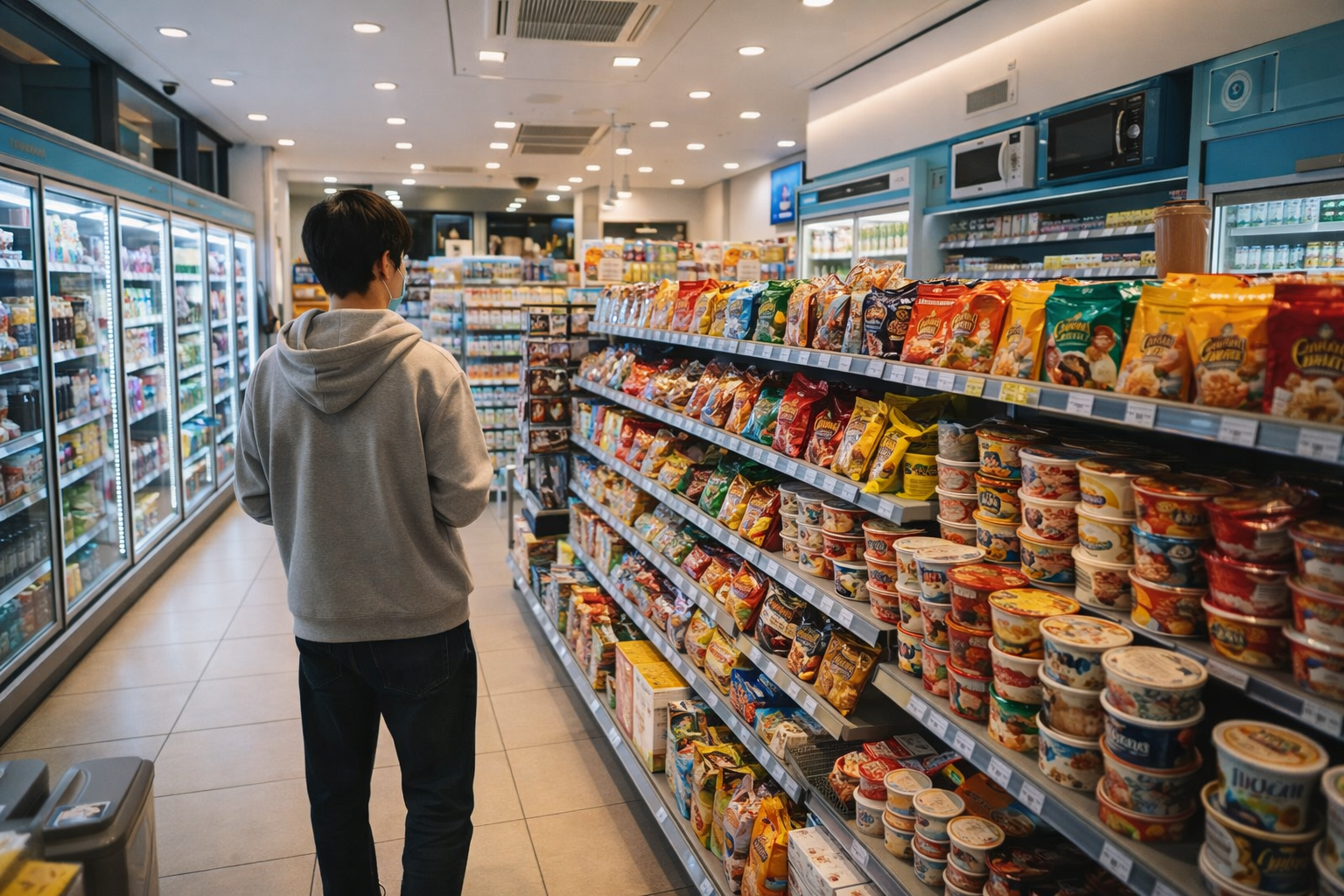
Korean convenience stores are a lifestyle, not just a shop. Open 24/7, they serve as mini restaurants (with seating and microwaves), ATMs, mail drop-offs, and even concert ticket booths. The big four: GS25, CU, 7-Eleven, Emart24.
Must-try convenience store items: triangle gimbap, cup ramyeon, banana milk, corn dogs, ice cream. Full convenience store guide →
Food Delivery (배달)
Korea’s delivery culture is unmatched. Anything from restaurant meals to coffee, groceries, and even pharmacy items can be delivered in under 30 minutes. Key apps: Baemin, Coupang Eats, Yogiyo. Even McDonald’s delivers. Delivery app guide →
Banking & Phone
Opening a Korean bank account and getting a phone number are the first steps to functioning in Korea. Most services require a Korean phone number. Major banks: KEB Hana, Shinhan, Woori — all have English-speaking branches in Seoul. Bank guide → | Phone guide →
Transportation
Korea’s public transport is world-class. The subway is clean, safe, and runs until midnight. Buses cover every corner. Taxis are affordable. The T-money card works on everything. T-money guide →
Uniquely Korean Experiences
Jjimjilbang (찜질방) — Korean Spa
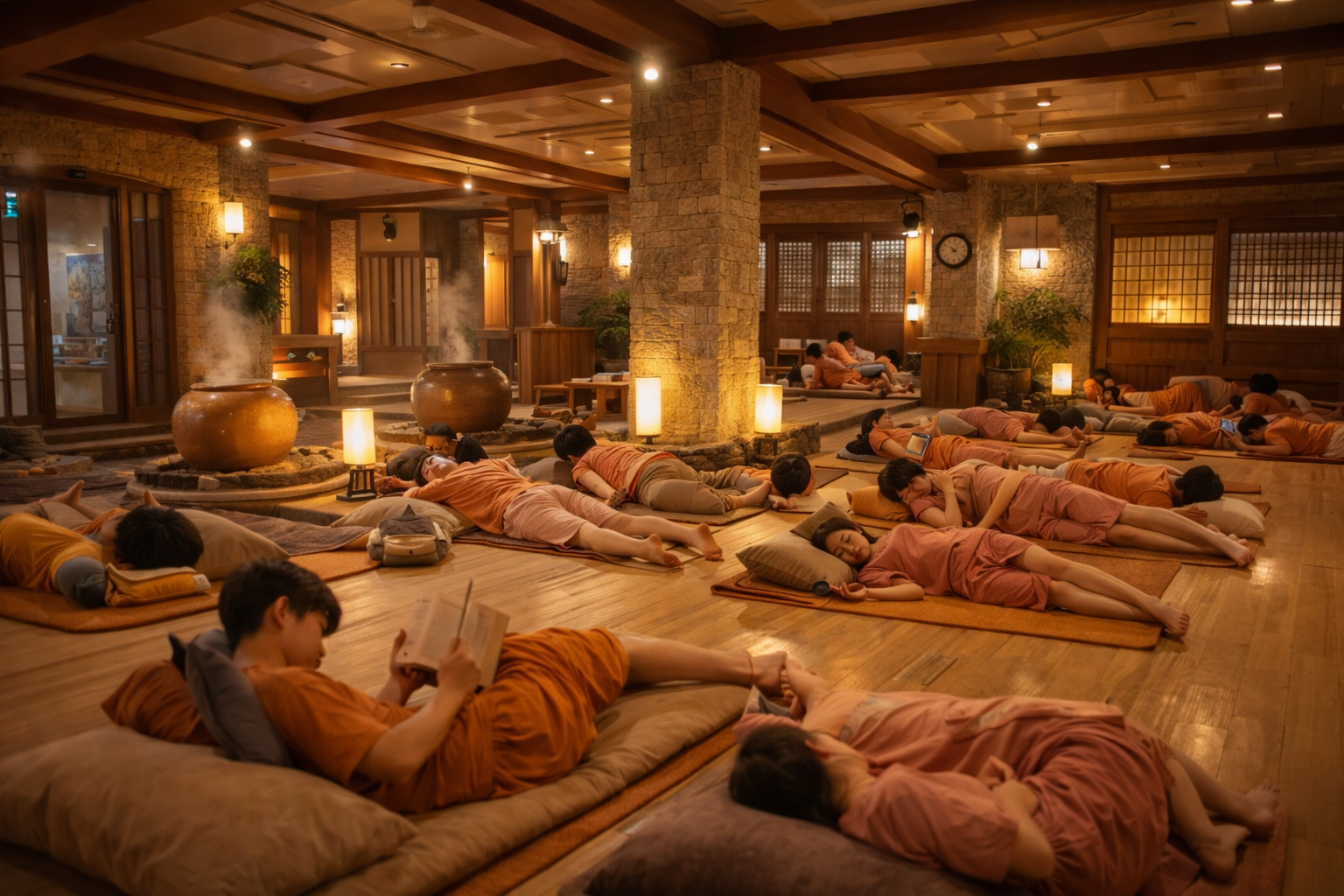
A full-body experience combining hot baths, saunas, steam rooms, and communal sleeping areas. Open 24/7, jjimjilbang are used for relaxation, socializing, and even overnight stays. Entry: ₩10,000-15,000 ($7-11). Essential etiquette: nude bathing in gender-separated areas, wear the provided uniform in co-ed areas. Jjimjilbang guide →
PC Bang (PC방) — Gaming Cafes
High-performance gaming cafes with the latest PCs, gaming chairs, and food/drink service. Open 24/7. ₩1,000-1,500/hour ($0.75-$1.10). A cornerstone of Korean gaming culture and a social hub for young Koreans. PC bang guide →
Noraebang (노래방) — Karaoke
Private room karaoke with friends. Every neighborhood has multiple noraebangs. ₩15,000-25,000 per hour per room. Songs available in Korean, English, Japanese, Chinese, and more. A quintessential Korean social activity.
Korean Cafe Culture
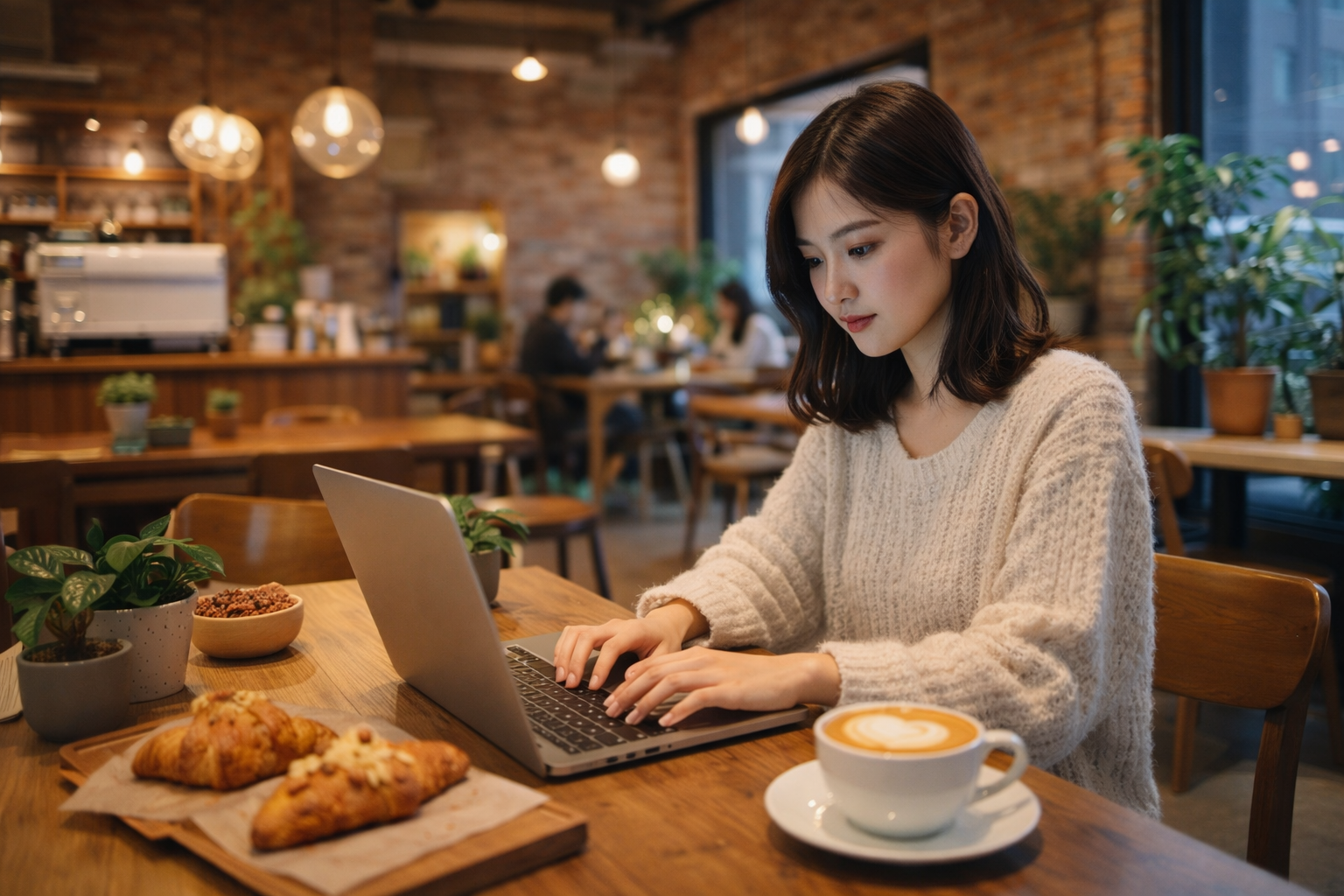
Korea has over 90,000 cafes — more per capita than almost any country. Cafes are study spaces, meeting spots, and aesthetic experiences. From themed cafes (animal, comics, art) to specialty coffee roasters, Korean cafe culture is an experience in itself. Cafe guide →
Korean Massage
From traditional Korean massage (경락) to sport massage and foot reflexology, Korea offers affordable body care. Many jjimjilbang include massage services. Standalone massage shops: ₩30,000-80,000/hour. Massage guide →
Social & Cultural Tips
- Age hierarchy (나이) — Age determines language formality and social dynamics in Korea. Always ask age early in friendships — it’s not rude, it’s necessary.
- Drinking culture — Alcohol is central to Korean socializing. Pour for others (never pour your own), receive drinks with two hands from elders, and turn your head away when drinking with seniors.
- Shoes off indoors — Remove shoes in homes, many restaurants (look for elevated seating areas), and some offices.
- Bowing — A slight bow (15-30°) is the standard greeting. Deeper bows show more respect.
- Group culture — Koreans value group harmony. Splitting a restaurant bill individually is uncommon — one person pays, others reciprocate next time.
- Ppalli ppalli (빨리빨리) — Korea’s “hurry hurry” culture means everything is fast — delivery, service, walking speed. Don’t take it personally if things feel rushed.
Cost of Living
| Expense | Monthly Cost (Seoul) |
|---|---|
| Rent (studio, non-Gangnam) | $400 – $700 |
| Rent (studio, Gangnam) | $600 – $1,200 |
| Food (eating out daily) | $300 – $500 |
| Transportation | $50 – $80 |
| Phone plan | $20 – $40 |
| Utilities | $50 – $100 |
| Total | $820 – $1,620 |
Useful Apps for Life in Korea
- Kakao Talk — Korea’s universal messaging app. Everyone uses it. Essential.
- Naver Map / Kakao Map — Better than Google Maps for Korea. Bus/subway navigation, restaurant search.
- Papago — Best Korean-English translator. Camera translation for menus and signs.
- Baemin — Food delivery
- Coupang — E-commerce (like Amazon). Rocket delivery = next-day or same-day.
- Kakao T — Taxi hailing
- 당근마켓 (Danggeun Market) — Secondhand marketplace (like Craigslist)
Next Steps
- Convenience store guide — Your 24/7 lifeline in Korea
- Korean cafe culture — Best cafes and what to try
- PC bang experience — Gaming culture guide
- K-Food guide — Must-try Korean dishes
- Travel essentials — SIM, transport, and more
Plan Your Korea Trip
From beauty treatments to street food — discover everything Korea has to offer.